
31 high-volume facilities receive life-saving maternal equipment
"Our focus is not only on supplying equipment but also ensuring that it is properly utilised through continuous training, supervision and maintenance."
Speaking during the flag-off ceremony, Ayume said the investment would strengthen emergency obstetric and newborn care services at some of the country's busiest health facilities, where demand for maternal services is highest.
Thirty-one high-volume public health facilities across Uganda have received life-saving maternal and newborn care equipment — worth approximately sh2.1 billion — aimed at strengthening emergency obstetric and newborn care services and improving survival among mothers and babies.
The consignment was flagged off on Tuesday (July 7) by the State Minister for Primary Health Care, Dr Charles Ayume.
It will be distributed to 16 health centre IVs and 15 health centre IIIs in 14 districts under the Empowering Families, Growing Futures initiative funded by Rotary.
The equipment includes delivery beds, radiant warmers, patient monitors, baby cots, phototherapy machines, newborn resuscitation units, kangaroo mother care chairs and other essential equipment used in managing childbirth complications and caring for sick and premature newborns.
He, however, stressed that providing equipment alone would not improve health outcomes unless it is backed by proper utilisation.
"Our focus is not only on supplying equipment but also ensuring that it is properly utilised through continuous training, supervision and maintenance."
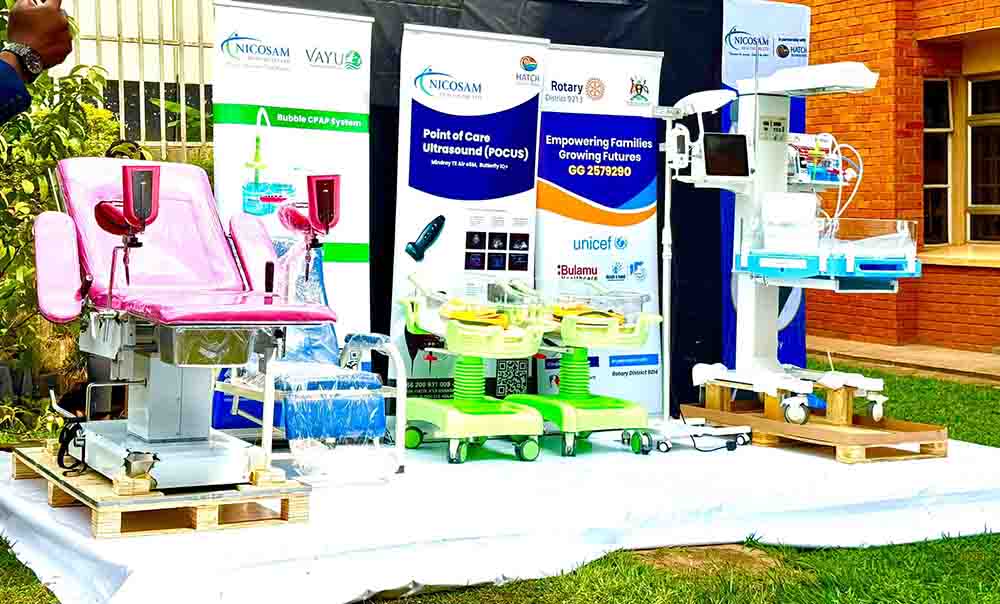
The minister commended Rotary for supporting government efforts to improve maternal and newborn health, describing the partnership as an important contribution towards reducing preventable deaths among mothers and infants.
The minister commended Rotary for supporting government efforts to improve maternal and newborn health, describing the partnership as an important contribution towards reducing preventable deaths among mothers and infants.
According to Mugahi, health workers under the programme are already undergoing specialised training in essential newborn care, with additional training on the Helping Mothers Survive programme expected to improve the management of life-threatening complications such as postpartum haemorrhage, pre-eclampsia, eclampsia and obstructed labour.
"The equipment will have the greatest impact when combined with skilled health workers who can quickly identify and manage complications affecting mothers and newborns," he said.
The initiative is expected to improve the quality of care provided at high-volume facilities, particularly in emergency situations where access to specialised equipment can mean the difference between life and death for both mothers and their babies.
Uganda has made progress in reducing maternal and newborn deaths over the years, but complications during pregnancy, childbirth and the immediate postnatal period remain a major public health challenge.
Health experts say timely access to emergency obstetric care, appropriate equipment and skilled health workers is critical to improving survival outcomes.