
Kalangala records zero maternal deaths as six-year health program transforms maternal care
Dr Wambete urged the district to prioritise recruitment of health workers, strengthen medical supply chains and integrate donor-supported interventions into routine government health services to sustain the gains.
Children at Mabigo landing site in Kalangala district collecting water at one of the tap stands that were installed under the Heroes for Gender Transformative Action Program by Amref Health Africa Uganda and its partners. (Credit: Lawrence Mulondo)
KALANGALA - Kalangala District has recorded a remarkable improvement in maternal and reproductive health, with nine high-volume public health facilities reporting zero maternal deaths by June 26, 2026, marking a significant achievement after these facilities registered 67 maternal deaths per 100,000 live births in 2020.
The milestone follows six years of interventions under the Heroes for Gender Transformative Action programme, implemented by a consortium comprising Amref Health Africa Uganda, Cordaid and Mifumi, with funding from the Embassy of the Netherlands in Uganda and the Embassy of Iceland.
The programme supported nine of the district's 16 community health facilities, including Kalangala Health Centre IV, Bukasa Health Centre IV, Bukasa Health Centre III, Mazinga Health Centre III, Bufumira Health Centre III, Bwendero Health Centre III, Mugoye Health Centre III, Kakyanga Health Centre II, Mulabana Health Centre II and Kasekulo Health Centre II.
Speaking during the programme's close-out event at the district headquarters, the Kalangala cluster coordinator, Dr Amos Wambete, attributed the progress to strengthened health systems, improved referral services, community mobilisation and closer collaboration between Village Health Teams and health facilities.
He said the interventions had increased awareness about the importance of early antenatal care, while regular outreaches to remote island communities enabled more pregnant women to access health services.
The proportion of mothers attending their first antenatal visit during the first trimester rose from 75% in 2020 to 76% this year. More significantly, health facility deliveries among women attending antenatal care increased from 44% to 55%, reflecting growing public confidence in maternity services.
Dr Wambete noted that although the district has registered fewer pregnancies, largely due to migration within fishing communities and increased family planning uptake, more women are now choosing to deliver in health facilities instead of at home or with traditional birth attendants.
He also reported improvements in fourth antenatal care attendance, which increased from 77% to 78% despite the World Health Organisation's recommendation for eight antenatal visits and referrals of high-risk pregnancies outside the district.
Teenage pregnancies also declined from 15% to 12% over the six-year period, a change he attributed to improved access to comprehensive sexuality education, youth-friendly services and stronger family planning programmes.
Family planning uptake increased from 63% to 77% following sustained community sensitisation, increased male involvement, improved contraceptive availability and strengthened counselling services.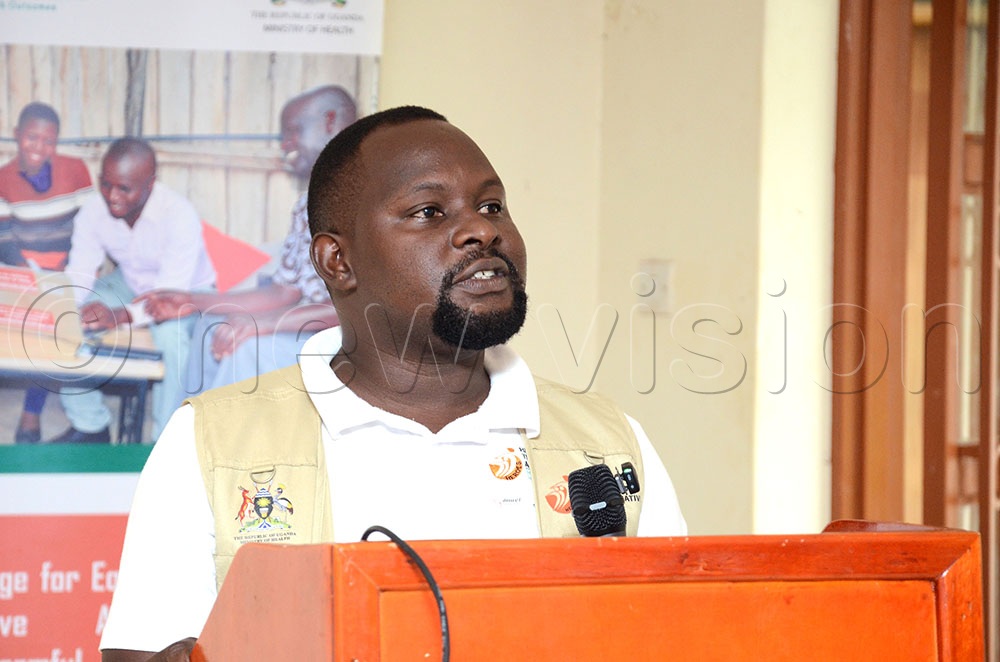
Dr Amos Wambete, the Kalangala cluster coordinator for the Heroes for Gender Transformative Action Program addressing during the programme's close-out event at the district headquarters recently. (Credit: Lawrence Mulondo)
Investments beyond health facilities
Besides improving clinical services, the programme invested heavily in water, sanitation and hygiene infrastructure in schools, health facilities and communities.
Five handwashing facilities, two VIP toilet blocks with incinerators and ten public water points were constructed, while water purification systems now provide safe drinking water to more than 2,000 residents in schools and landing sites.
The programme also strengthened gender-based violence prevention and response systems. Reported GBV cases increased from 47% to 96%, an indication that survivors are increasingly confident in reporting abuse and accessing available support services.
A shelter for survivors was established alongside livelihood support initiatives to promote economic independence.
Health Unit Management Committees also became more effective, with compliance to national governance guidelines improving from 70% to 97, while female representation on the committees increased from 38% to 50%.
Lives saved on remote islands
Health workers say the programme has transformed service delivery in some of Kalangala's most isolated communities.
Lilian Nabatanzi, the in-charge of Kakyanga Health Centre II, recalled that many expectant mothers previously sought antenatal care only in the eighth month of pregnancy, limiting opportunities to detect complications early.
Through community follow-up systems, pregnancy testing, peer support groups and close collaboration with Village Health Teams, women are now identified early and monitored throughout pregnancy.
She said the introduction of ambulance boat referrals has significantly reduced delays in accessing emergency obstetric care, enabling expectant mothers from distant islands to reach Kalangala Health Centre IV within 30 minutes.
Mulabana Health Centre II in-charge Fred Kabanda said early antenatal attendance at the facility rose from 10% to 50% after introducing community follow-up mechanisms and integrated outreaches. The facility also acquired emergency maternity equipment through Results-Based Financing, improving its ability to manage obstetric emergencies.
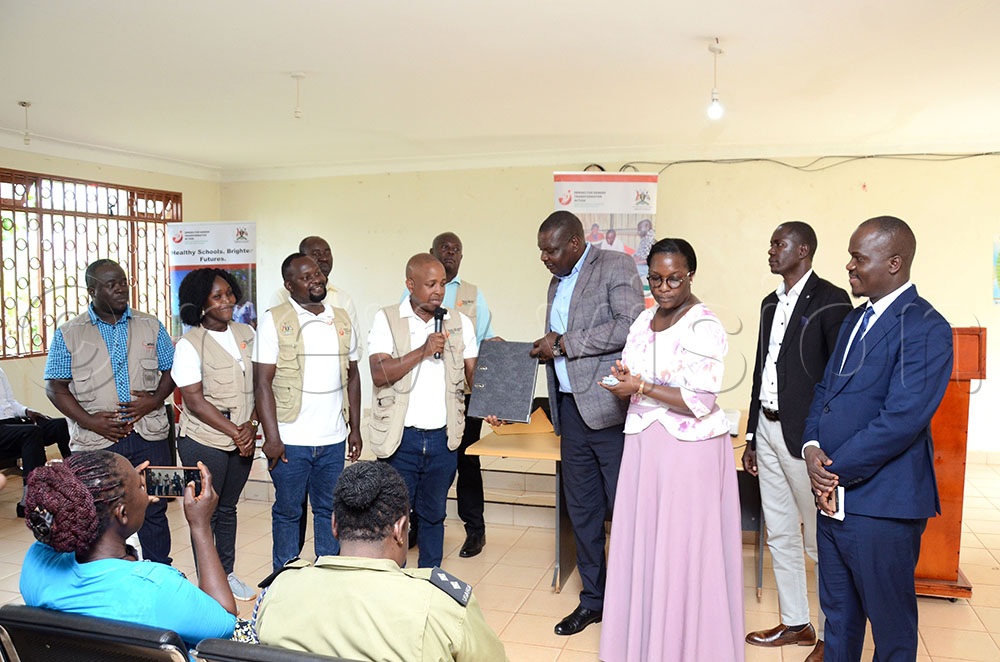
Dr Patrick Kagurusi (fourth from Left) the Amref Health Africa Uganda Country Manager handing over paperwork about the Heroes for Gender Transformative Action Program to Christopher Ssebuuma and officer of the Chief Administrative Office as other officials look on. This was during the programme's close-out event at the district headquarters recently. (Credit: Lawrence Mulondo)
Sustaining the gains
Despite the progress, stakeholders acknowledged persistent challenges, including transport constraints across the islands, shortages of health workers, periodic medicine stock-outs and limited funding.
Dr Wambete urged the district to prioritise recruitment of health workers, strengthen medical supply chains and integrate donor-supported interventions into routine government health services to sustain the gains.
Amref Health Africa Uganda Country Manager Dr Patrick Kagurusi said the project addressed unique challenges facing Kalangala, including high HIV prevalence, teenage pregnancy, gender inequality and limited access to quality reproductive health services.
He said the programme strengthened health facilities through mentorship, equipment, referral systems and capacity building while empowering communities to prevent gender-based violence and make informed reproductive health decisions.
Assistant District Health Officer for Maternal Health Jane Namukasa said the district has already integrated sexual and reproductive health services into routine maternal and child health programmes, while supervision structures established under the project will continue supporting service delivery.
Kalangala District Chairperson Agnes Lunkuse called on both political and technical leaders to protect the investments made through the programme by mobilising local resources and forging new partnerships.
Deputy Resident District Commissioner Henry Ssebunya praised the implementing partners and donors, saying the programme had fundamentally transformed access to healthcare and other social services across the island district.
Although the Heroes programme has officially come to an end, district leaders remain optimistic that the systems established over the past six years will continue driving improvements in maternal, child and reproductive health, ensuring that Kalangala sustains its hard-earned gains in saving mothers' and girls' lives.