
Japanese tea ceremony brings "One time, One meeting" philosophy to Kampala
Sado, also known as Chanoyu, is much more than drinking tea. It is a ritual built around discipline, mindfulness, hospitality, and respect between host and guest.
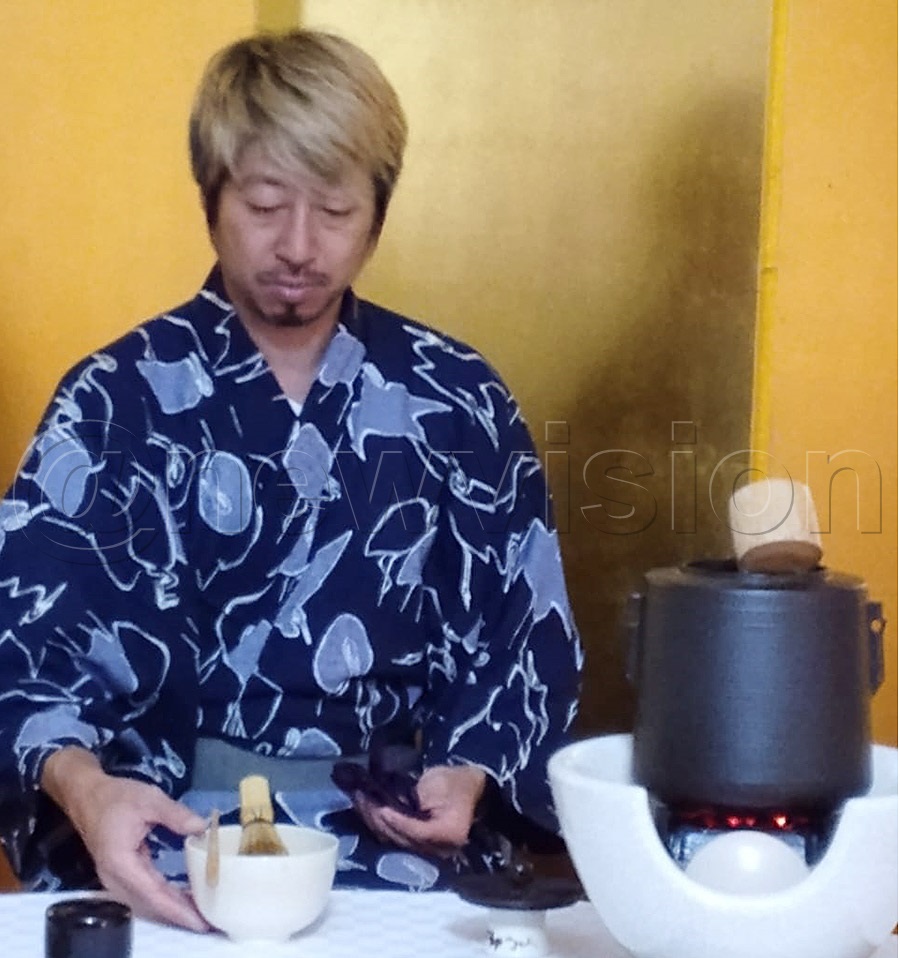
Deputy Head of Mission Norimasa Yoshida during a Japanese tea ceremony at his residence in Nakasero. Photo by Titus Kakembo
The room fell quiet as the tea was prepared.
There was no hurried pouring, no clattering of cups, and no casual passing of a teapot from one guest to another. Every movement appeared deliberate.
This was Sado, the Japanese tea ceremony, demonstrated at the Nakasero residence of the Deputy Head of Mission of the Embassy of Japan in Uganda on August 20, 2026.
Sado, also known as Chanoyu, is much more than drinking tea. It is a ritual built around discipline, mindfulness, hospitality, and respect between host and guest.
“It is a special event that occurs once in a lifetime,” said Rie Yasumoto, Second Secretary at the Embassy of Japan in Uganda. “It is a treasured moment between the guest and the host.”
At the heart of the ceremony is the Japanese philosophy of ichigo ichie, which roughly translates as “one time, one meeting.” Yasumoto explained that the philosophy recognises every encounter as unique because the same people may never meet in exactly the same circumstances again. “Every meeting can never be the same. Therefore, each encounter ought to be treated with utmost respect,” she said.
A ritual with centuries of history
The ceremony has a long history in Japan. According to Rie Norimasa, the Deputy Head of Mission, tea was introduced to Japan from China, initially becoming associated with the nobility and Buddhist monks. Over time, the practice evolved into a highly refined cultural tradition.
He traced its development to the 16th century, when the celebrated Japanese tea master Sen no Rikyu established principles that continue to influence the ceremony. By then, the emphasis was not simply on the quality of the tea but on the spirit in which it was prepared and served. “The host serves the guests with heartfelt care and hospitality,” Norimasa explained.
The ceremony was once particularly associated with the samurai and aristocratic classes, but its appeal has since spread widely. Today, people practise Sado as a cultural tradition, a hobby, and a form of personal discipline. It has also become a way of introducing Japanese culture to people around the world.
The art of making a bowl of tea
On this afternoon in Kampala, chef Yoshifumi Yamaguchi took centre stage. The ingredients appeared remarkably simple: about one teaspoon of matcha, 60–80 millilitres of hot water, a bamboo whisk, and a bowl. But simplicity, in this case, did not mean carelessness.
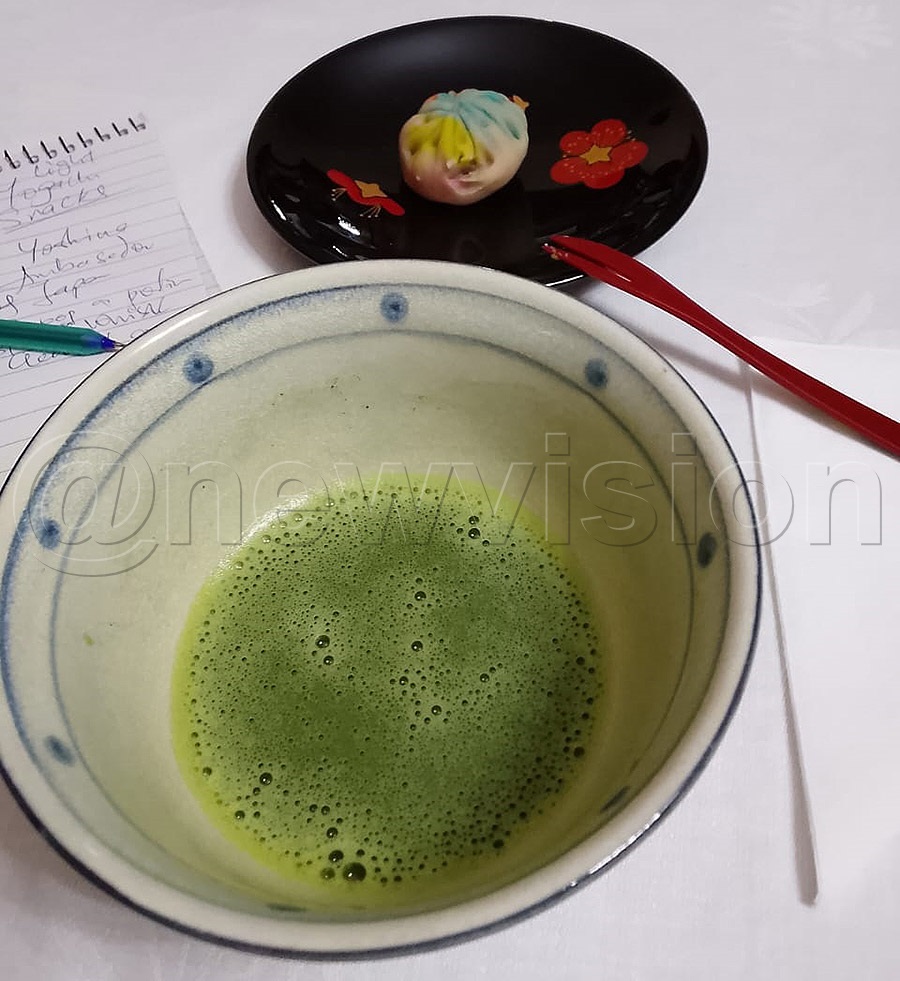
Yamaguchi wore a cloth tucked into his waist belt, which he used to carefully wipe the bowl. He measured the matcha with a traditional tea scoop before adding the hot water. Then came the most recognisable movement: holding the bowl firmly, he whisked the green tea until it became smooth and frothy. The guests watched closely.
The resulting drink was vivid green, earthy, and slightly bitter, a taste quite different from the sweetened black tea familiar to many Ugandans.
More than a drink
For the Japanese, however, the significance of Sado extends beyond taste. Yasumoto said matcha is associated with several health benefits, including antioxidants and improved concentration.
But the deeper benefit of the ceremony is perhaps the opportunity to slow down. In a world increasingly dominated by mobile phones, deadlines, and hurried encounters, the ceremony demands attention to the present moment. The host concentrates on preparing the tea. The guest concentrates on receiving it. For a few minutes, nothing else appears to matter. That is where ichigo ichie becomes more than a Japanese phrase. It becomes an invitation to appreciate the particular moment in which people find themselves.
A cultural bridge in Kampala
The demonstration also showed how cultural traditions can travel far beyond their places of origin. For Ugandan guests, the ceremony offered a glimpse into a culture in which ordinary activities can be transformed into rituals of beauty, discipline, and hospitality.
The afternoon eventually moved from the formal preparation of tea to conversation and refreshments, including snacks and spaghetti served with ice cubes. Yet it was the small details of Sado that lingered: the quiet preparation, the carefully handled bowl, the whisk moving rhythmically through the green tea, and the host's attention to the guests.
In the end, the ceremony was not really about tea. It was about the encounter.
And, as ichigo ichie reminds its practitioners, an encounter is never quite repeated.
Once the moment has passed, it belongs to memory.