
Alex Mukulu tribute: In his own words
As an art form, drama is about conflict: the protagonist and the antagonist, the oppressor and the oppressed. In Uganda, the conflict that we have outside theatre, in society, is much larger and hotter than anything on stage, so when you come up with Romeo and Juliet-type theatre it just doesn’t work any more.
Alex Mukulu launching Jimmy Katumba's album at the National Theatre, Friday (Sept 22, 2006). (Photo by Ayiga Ondoga)
________________
Alex Mukulu breathed his last on Saturday, August 15, 2026, after a struggle with liver complications. He had earlier compiled his thoughts on a number of issues:
Theatre and technology
I was very young when I started acting; it was in my school years. I got into professional productions in the 1980s. Back then, there was only one television station and one radio station to speak of. There was no competition for what we were doing. Today, we are competing with so many things; people have so many entertainment options other than going to the theatre. We are also competing with a lot of technology today.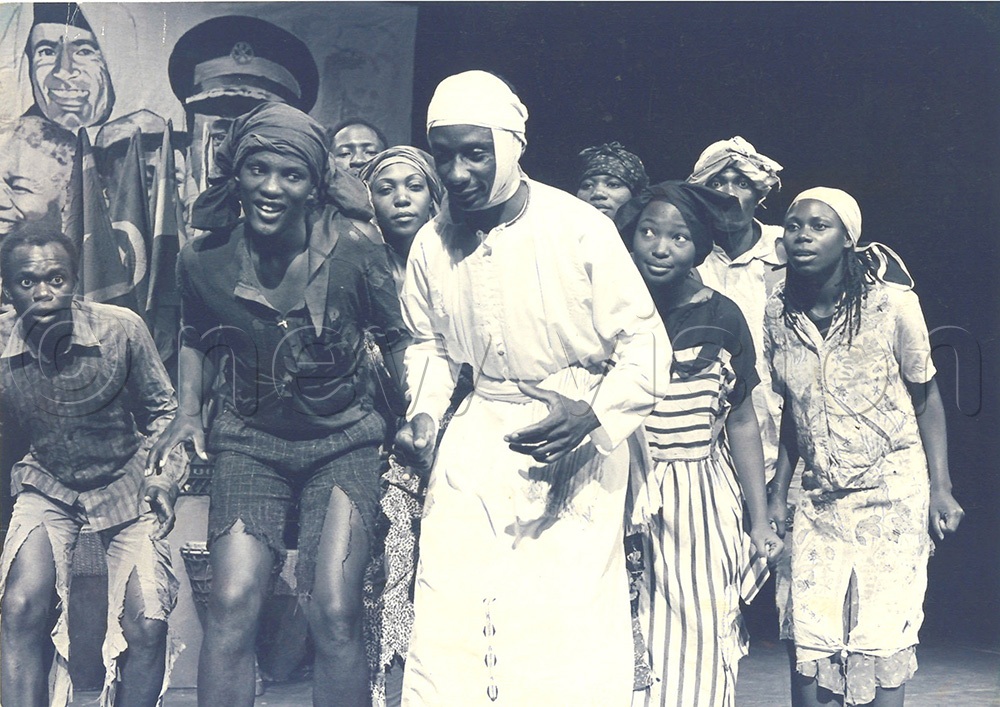
Alex Mukulu in white Kanzu in action with Concern International in ‘Wounds of Africa during their tour to the US, 15th May 1994. (Credit: New Vision Archives)
The disadvantage with technology is that it can take over and define what we have to do on stage. The advantage is that you become stronger and more effective when you overcome that, but very few people have the capacity to work above technology. A lot of people, however, are working with technology; they are finding new ways of presenting their work through technology, and in many instances the technology itself is the main attraction.
Theatre in decline
I think theatre in Uganda is in decline. It is partially about that competition with other events and options, but it is also about the current context. Furthermore, I am not convinced that the craft itself is up to scratch today; there is something lacking in skills levels and in the training, in my opinion.
You have to go political, you have to go partisan, you have to make a statement about something. If you speak about dictatorship or resistance or revolution, you will stir up trouble for yourself. That is why theatre has become mundane. There is very little serious theatre in Uganda anymore. People have moved instead into comedy. Theatre makers have to address social and political issues in order to sustain relevance. They are doing that in comedy in ways that people laugh about it, and nobody gets hurt or arrested.
Character
Ugandan theatre seems to be lacking in character; it is without deep motives or integrity. We need to generate character. Just as it is important for theatre, character is also important for our society. Lack of character leads to corruption. Everyone is talking about poverty; we are told that because we are poor, we are not okay. That itself is a corrupting concept. Richness can be found in things other than material wealth. In poverty, you can still find inspiration, integrity, and character. Poverty of spirit is the real danger.
Cultural values versus nationalism
The personal discipline that nurtures our growth and well-being, both intellectually and spiritually, should be got through the arts. As human beings in Uganda, we are not strong enough; we don’t have character, we don’t have pride in who we are.
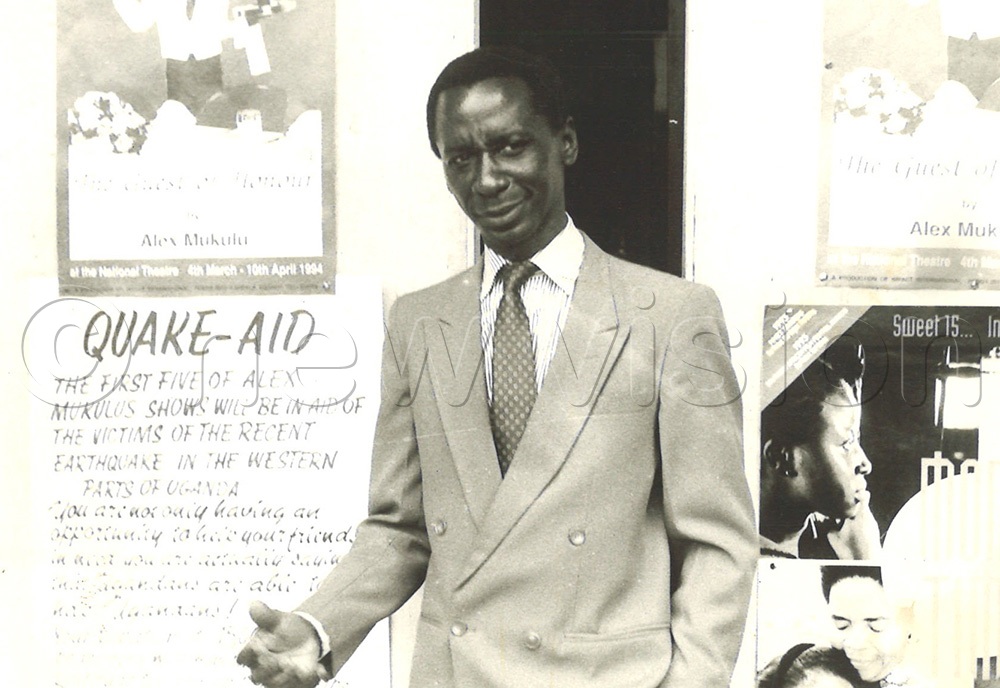
Alex Mukulu promoting his new production in Kampala early, 4th March 1994. (Credit: New Vision Archives)
We can’t have pride when we don’t have values. We are told “be patriotic, be nationalistic”, but we don’t even know what a “nation” is. What does “Uganda” mean to the man on the street, to someone who is poor, for example? That is why people turn to tribalism, because in tribalism people find meaning about what they are. Each tribe has reasons for why they are who they are; they have cultural values. Tribal and cultural values are therefore much more coherent for Ugandans than a vague image of nationalism. There is very little in a nationalistic argument that is tangible, that people can hold on to.
The problem is that the cultural institutions, namely the designated tribal kingdoms, are supposed to have ears but not a mouth. They cannot engage in political issues. However, any social issue becomes a political issue; the two are usually indivisible. So, you have the strange situation of honouring the cultural institutions but disempowering them at the same time. No wonder there is so much cultural division in this country!
Globalisation
On top of that, you have the challenge of globalisation. Before we have properly formed a national identity, we are expected to participate in global affairs and fit our economy into the global economy. We don’t have a global currency or a global passport, but we are supposed to adhere to rules and regulations prescribed by the USA and others. What choice do we have in the matter?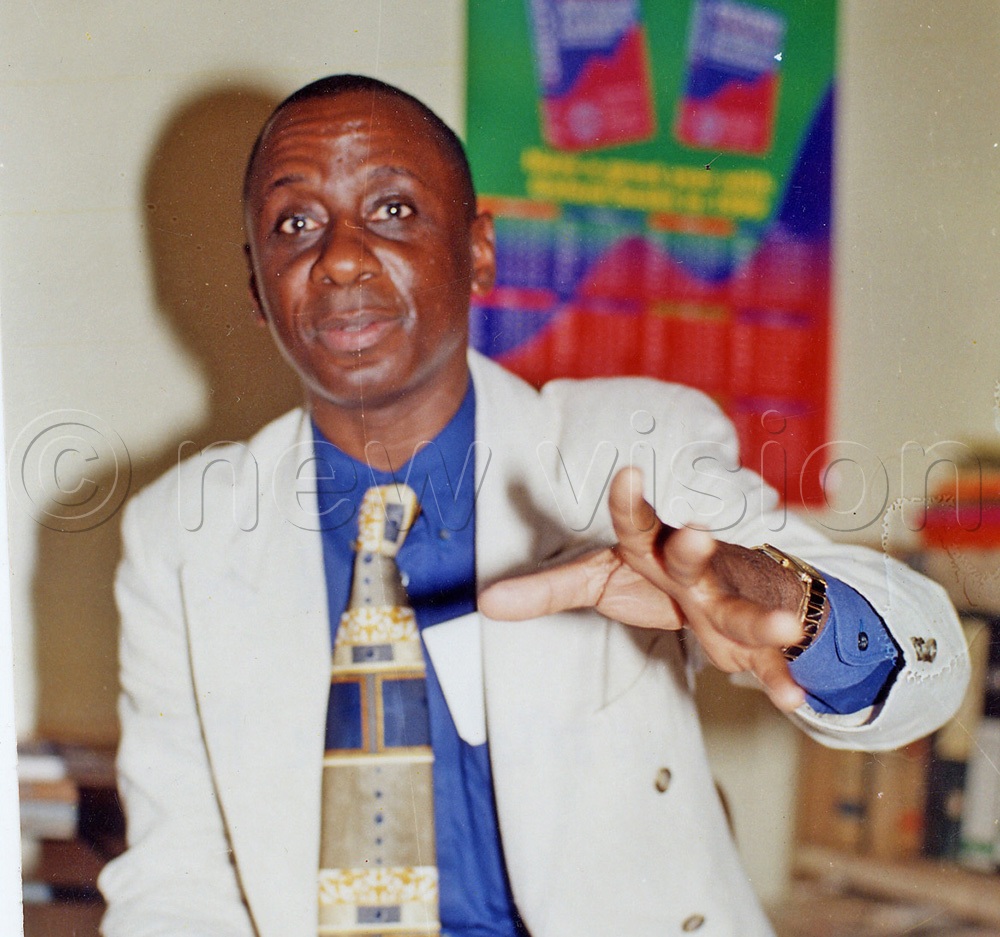
Alex Mukulu in his youth. (Credit: New Vision Archives)
For artists globalization represents both an opportunity and threat. The threat comes from domination by one culture over another, and especially the influx of foreign cultures into our society. Despite these challenges and imbalances, global exchange can be very healthy for artists. There is so much to give and receive. People want to know who you are and what you want. It can open you up to aspects of yourself you never knew before. Cultural exchange stimulates creativity and imagination.
A changing world
A lot is changing in today’s world, and there are new ways of doing things. There is a lot of hype about festivals. Sometimes it is not a strength; it is a weakness when you have twenty groups in one show. The talent, or lack of it, can be buried in the mass. It is not always about having big audiences; what is important is to communicate, even if it is to one, two or three people.
Music, dance and drama have a greater presence in the education system now, and with more meaning. That’s very encouraging. Passing on knowledge is important. The experience of the older generation, such as myself, should not be in vain. We need to package it so that people can derive some knowledge or benefit from our experiences. I am currently writing a play, a kind of thank-you story, but it is really a protest. I hope it serves as something useful for the younger generations that follow.
The article was first published in 2017, in Voices: Reflections on Art and Culture in Uganda, a publication of the Mimeta Centre for Culture and Development