
MPs demand clarity on curriculum rollout timelines, TVET reforms
On curriculum reforms, the ministry said a draft National Curriculum Assessment and Placement Policy has been developed and is awaiting Cabinet approval.
Parliament’s committee chairperson on education and sports, James Kubeketerya (NRM, Bunya County East). (File)
________________
Parliament’s committee on education and sports has demanded clear timelines for the Government's implementation of reforms in technical education and curriculum rollout.
The concerns were raised on February 18 and 19, 2026, during an engagement with officials from the education ministry, the Technical and Vocational Education and Training (TVET) Council, the National Curriculum Development Centre (NCDC), the Uganda National Examinations Board (UNEB), and the National Council for Higher Education (NCHE).
Committee chairperson James Kubeketerya (NRM, Bunya County East) said the meeting followed scrutiny of the National Budget Framework Paper for the 2026/2027 financial year, during which entities demanded an increase in their operational budgets.
Curriculum reforms, teacher retooling
On curriculum reforms, the ministry said a draft National Curriculum Assessment and Placement Policy has been developed and is awaiting Cabinet approval.
NCDC finance and administration director Dr Bernadette Nambi Karuhanga told the committee that once approved, it will guide curriculum development, assessment, certification and placement and inform amendments to the NCDC Act, UNEB Act and the Education Act.
Karuhanga said additional funding is needed to sustain the reforms. She said budget priorities include reviewing the primary and A-Level curriculum to make them competence-based, teacher retooling, instructional materials distribution, and strengthening monitoring mechanisms.
“We recommend that the budget committee of parliament provide an additional shillings 20.388 billion to enable the centre to execute the unfunded priorities and also provide funding to increase staffing levels to at least 65 per cent by recruiting 19 additional staff,” she said.
Karuhanga added that many teachers require extensive retooling to effectively deliver the competence-based curriculum (CBC), but noted that this has been affected by the funding gaps.
“Many teachers require extensive retooling, retraining to effectively deliver the competence-based curriculum. This needs to continue for about five years or more to ensure that teachers are well-grounded in delivering a CBC,” she said.
According to Karuhanga, limited exposure to learner-centred methodologies, continuous assessment, and competence-focused teaching poses a major challenge, particularly at upper secondary level.
“Teachers need to be reoriented through continuous CPDs to integrate values and skills such as critical thinking, research and problem solving without compromising academic depth,” she said.
Karuhanga also warned that shortages of textbooks, laboratories, workshops and digital tools, especially in rural schools, could undermine implementation of practical and skills-based learning.
“Budgetary limitations threaten the long-term sustainability of the reviews, particularly at primary, lower and upper secondary levels,” she said, adding that increased costs linked to project work, practical subjects and ICT integration risk widening inequalities among learners.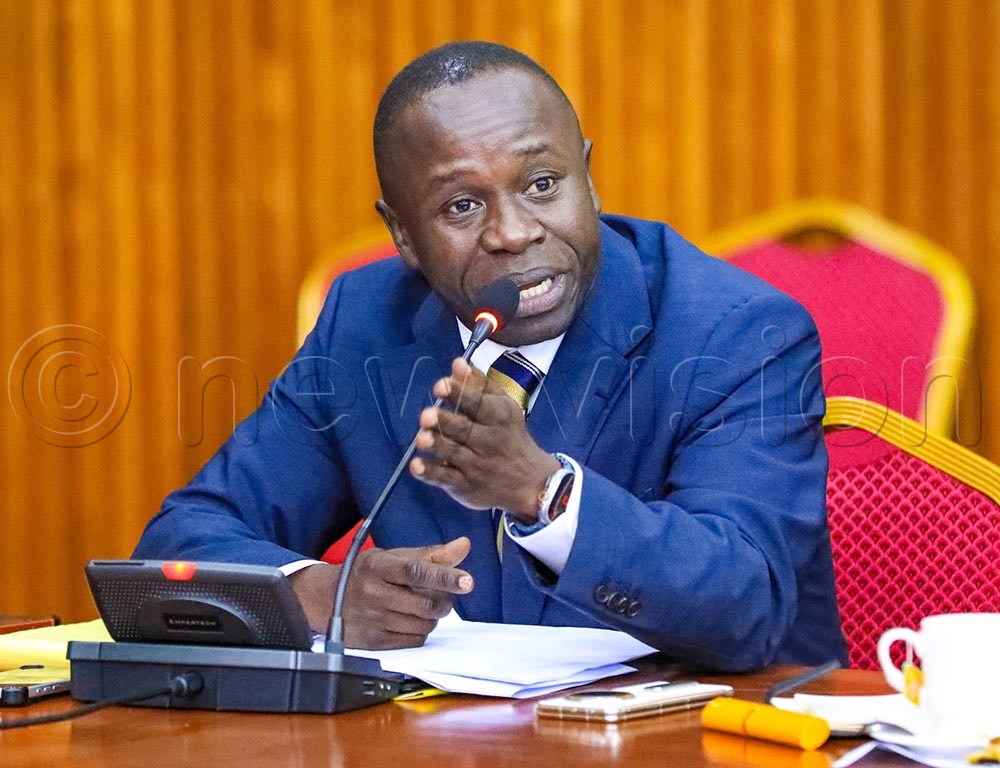
Sports state minister Peter Ogwang. (File)
Sports state minister Peter Ogwang reiterated that three sets of regulations have been drafted to operationalise the legal framework, but full implementation has been constrained by financial limitations.
However, he said the ministry remains committed to operationalising the TVET system, establishing sector skills councils, and finalising regulations and standards.
Funding gaps stall TVET reforms
The committee also examined the financial position of the TVET Council, which is tasked with implementing the Technical and Vocational Education and Training Act, 2025.
Kubeketerya noted that the council had initially requested sh68bn, but only about shillings 12 billion was provided.
TVET Council of Uganda executive director Moses Kasakya told the committee that the council has faced serious funding constraints in the 2025/2026 financial year.
“The initial budget was shillings 68 billion, largely earmarked for a one-off establishment and operationalisation cost. However, following the guidance on the limitations of resource envelope, the council revised its budget to shillings 12.36 billion,” he said.
He added that the shortfall had delayed key reforms.
“The council operated without funds from July 2025, and the situation has not changed to date.”