
UNEB seeks increase in examiners’ marking fees amid sh62bn funding gap
UNEB says its current unit costs were approved nine years ago and no longer reflect the realities of administering examinations.
The request was presented today (Wednesday, February 18th) before the Education Committee by State Minister for Sports, Peter Ogwang, alongside officials from the Ministry of Education and Sports.
KAMPALA - The Uganda National Examinations Board (UNEB) has asked Parliament to approve an increase in marking fees for examiners, citing inflation and expanded assessment demands under the new curriculum.
The request was presented today (Wednesday, February 18th) before the Education Committee by State Minister for Sports, Peter Ogwang, alongside officials from the Ministry of Education and Sports.
UNEB says its current unit costs were approved nine years ago and no longer reflect the realities of administering examinations.
Appearing before the committee, UNEB Executive Director Dan Odongo said the board requires sh111.24 billion to execute its mandate but currently has only sh48.82 billion available, leaving a funding gap of sh62.02 billion.
Odongo told MPs that the current rates paid to examiners were set nearly a decade ago and have been eroded by inflation and reforms in assessment.
“The current unit costs of conducting examinations were approved over 9 years ago. So, the rates have been affected by inflation and the change in the assessment landscape that has brought on board competency assessment. Therefore, there is need to revise upwards the unit costs of administering examinations across all three levels of assessment to match the demands of assessment reforms and enable the board to implement its mandate,” Odongo said.
Proposed increments
Under the old Primary Leaving Examination (PLE) curriculum, examiners were paid sh720 per script. Under the new curriculum, this rose slightly to sh756. UNEB is now proposing an increase to sh1,000 per script.
For the Uganda Certificate of Education (UCE), the old rate was sh850 per script. It increased to sh1,260 under the new curriculum. UNEB is seeking to raise it to sh1,500, but noted that an ideal rate would be sh2,000.
At the Uganda Advanced Certificate of Education (UACE) level, the old rate stood at sh1,100 per script and was adjusted to sh1,488 under the new curriculum. The board is proposing that this be increased to sh2,000.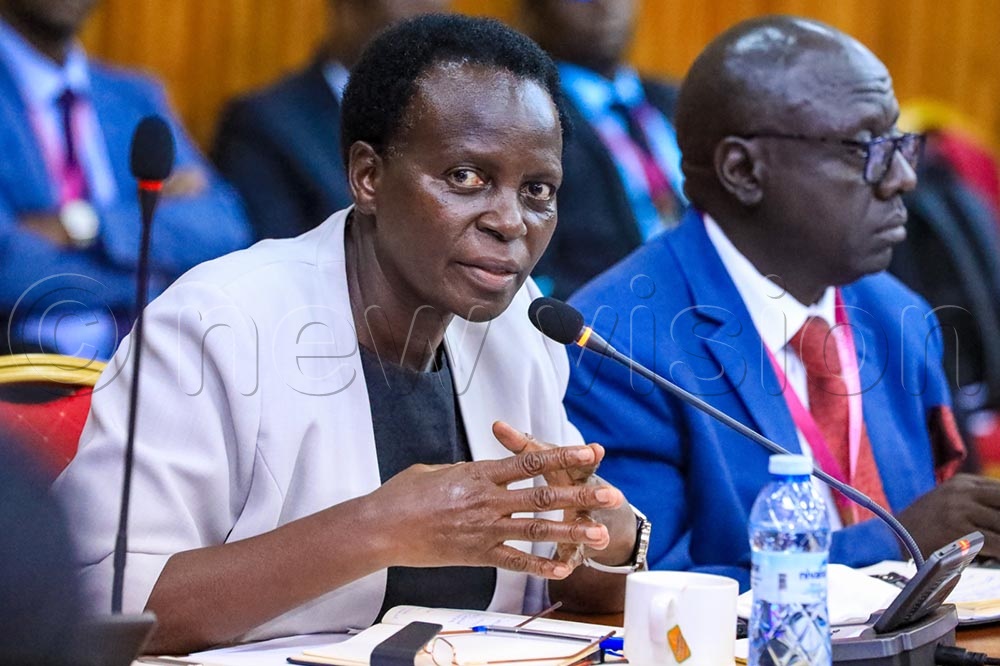
Kedrace Turyagyenda, the Permanent Secretary for the Ministry of Education and Sports.
UNEB is also seeking to raise invigilation fees from sh35,000 under the old curriculum and sh45,000 under the new curriculum to sh60,000.
Committee chairperson James Kubeketerya (NRM, Bunya County East) said the Budget Committee had asked for justification for such increases for making fees for UNEB.
Emmanuel Ongiertho (FDC Jonam County, Pakwach) expressed concern about funding gaps affecting examination integrity.
“I am shocked that with all the sensitive nature of UNEB, we are still bargaining on such an important issue. When we don't fund such areas, we create gaps for cheating. We don’t want to find that the way these examiners are marking is tweaked due to poor facilitation,” Ongiertho said.
Janet Grace Okori-Moe (NRM, Abim District Woman Representative) said the committee should support UNEB’s request and improve public understanding of examination results.
“The money UNEB is asking is not too much, and we need to do our part, and as a committee, we need to look for this money and ensure that UNEB is successful,” she said.
Philip Ilukol (NRM, Napore West County, Karenga) commended UNEB for safeguarding academic standards, saying, “UNEB has worked to remove dirt in academia. They have tried. I would propose that we support UNEB,” Ilukol said.
Deputy Chairperson of the Education Committee Molly Asiimwe sought clarification on workload, asking how many scripts a teacher marks per day.
In response, Odong explained that each examiner is assigned a predetermined number of scripts and that every script passes through several hands to ensure accuracy and eliminate bias.