
Kabale public library digital community opens new opportunities for learners
Under the partnership, ATC established digital communities in 14 districts, providing communities with access to computers, internet connectivity and digital literacy training. "The initiative forms part of ATC Uganda's broader commitment to bridging the digital divide and improving access to digital tools and skills in underserved communities," Kabagambe said.
Kabagambe said the facility is particularly important to secondary school learners because Information and Communication Technology (ICT) is now part of the secondary school curriculum. (Credit: Nelson Ahimbisibwe)
KABALE - The establishment of a digital community at Kabale Public Library is giving learners, students and members of the wider community access to computers, internet connectivity and digital skills training, helping to bridge the technology gap in the Kigezi sub-region.
The facility, established by American Tower Corporation (ATC) Uganda in partnership with the National Library of Uganda (NLU), was officially commissioned on September 29, 2026, by Mikael (Mika) Cleverley, the United States Chargé d’Affaires ad interim in Uganda.
The digital community, which started operations in 2024, has so far benefited more than 3,000 people through computer and digital literacy training
Located at the Southern Division headquarters on the Kabale-Katuna Road, the facility is accessible to learners from surrounding schools and institutions, as well as residents from different parts of Kabale Municipality.
Its beneficiaries include pupils and students from Kikungiri Primary School, Ndorwa Primary and Secondary Schools, Kabale University and St Ignatius University, as well as members of the wider community with varying levels of literacy and digital experience.
The facility provides computers, internet connectivity, digital literacy training and other technology-enabled learning opportunities at no cost to beneficiaries.
Dorothy Kabagambe Ssemanda, the ATC Uganda chief executive officer, said the digital community is part of the company's wider efforts to increase access to technology and equip underserved communities with skills needed in an increasingly digital economy.
She said ATC Uganda entered into a partnership with the National Library of Uganda in 2023 to expand digital access and skills development through public and community libraries.
Under the partnership, ATC established digital communities in 14 districts, providing communities with access to computers, internet connectivity and digital literacy training.
"The initiative forms part of ATC Uganda's broader commitment to bridging the digital divide and improving access to digital tools and skills in underserved communities," Kabagambe said.
She urged beneficiaries to use the free internet and computers mainly for educational research, acquiring knowledge and discovering innovations, rather than spending most of their time on social media for leisure.
Kabagambe said the facility is particularly important to secondary school learners because Information and Communication Technology (ICT) is now part of the secondary school curriculum.
She said the digital community provides practical opportunities for learners who may not have adequate access to computers and reliable internet in their schools.
"Students can come here and acquire hands-on ICT skills, conduct research and access information that can support their education," she said.
More digital communities
Kabagambe said ATC Uganda has so far established 84 digital communities across the country.
Of these, 59 are computer hubs established in schools and communities, while 25 are Electronic Medical Records hubs located in health centres.
Stella Sekweyama, the ATC Uganda head of human resources, said the Kabale facility offers free training to pupils, students and members of the community interested in acquiring computer skills.
She said ATC partnered with Window International to provide structured training, with one class conducted in the morning and another in the afternoon.
Sekweyama said trainees who successfully complete the one-month course are awarded certificates.
"The training is open to members of the community who want to improve their computer knowledge and digital skills," she said.
Skills open doors
For some beneficiaries, the facility has provided skills that have translated into employment and community opportunities.
Alfred Mujuni, a resident of Karubanda ward in Southern Division, Kabale Municipality, said the project gave him an opportunity to acquire computer skills that he had previously been unable to afford.
Mujuni, who is in his 60s, said he had worked in different offices but lacked computer knowledge despite having an interest in learning how to use computers.
He said the cost of computer training had previously prevented him from acquiring the skills.
"The establishment of the digital community at Southern Division headquarters was a blessing to me. I immediately joined the training and started learning computer skills," Mujuni said.
He said the skills he acquired later contributed to his selection as a secretary in his area under the Government's Parish Development Model (PDM) programme.
Mujuni encouraged other members of the community, particularly older people who may feel left behind by technological changes, to take advantage of the free training.
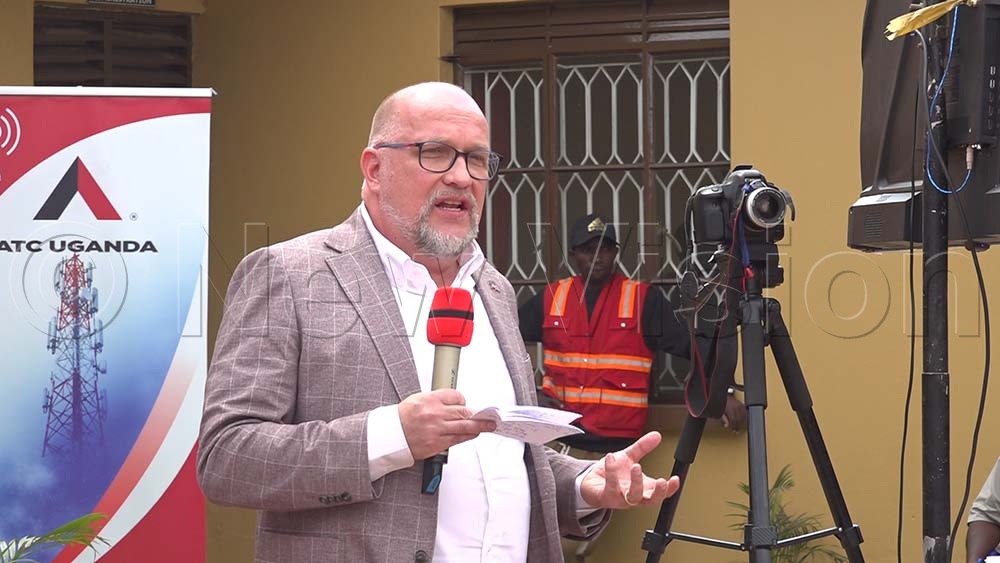
Mikael (Mika) Cleverley, the United States Chargé d’Affaires and interim in Uganda. (Credit: Nelson Ahimbisibwe)
A boost to education
Barham Aijuka, an information officer at Uganda College of Commerce (UCC) Kabale, described the establishment of the digital community as an important opportunity for learners to improve their ICT skills.
He said access to computers and internet connectivity enables learners to supplement classroom learning through research and access to educational materials.
Calls for expansion and security
Local leaders welcomed the facility but called for additional support to expand the infrastructure.
Hassan Rwamango, the principal assistant town clerk of Southern Division, and Macklean Ninsiima Batware, the division LC3 chairperson, commended ATC Uganda for establishing the digital community.
However, they appealed for support to construct a bigger structure to accommodate the increasing number of users.
Rwamango said the current structure is relatively small compared with the number of people interested in using the facility.
Batware said expanding the facility would enable more residents to benefit from the computers, internet and training programmes.
Kabagambe also urged the authorities hosting the facility to protect it against vandalism so that it can continue benefiting the community.
She said safeguarding the equipment was essential for the sustainability of the programme.
Michael Muramira Kyakashari, the Kabale deputy resident district commissioner, directed Southern Division authorities to install closed-circuit television (CCTV) cameras around the structure hosting the project.
He said the cameras would help monitor the facility and identify people who might attempt to vandalise or steal the equipment.
US Embassy commends initiative
While commissioning the facility, Cleverley commended ATC Uganda for its contribution to Uganda's communication infrastructure and digital development.
He said communication infrastructure plays an important role in the country's economic development because it enables people and businesses to connect and access information.
Cleverley urged students and local authorities to embrace innovation and create opportunities where new ideas can be developed.
He said facilities such as the digital community can help young people access knowledge, develop ideas and explore markets for innovative products and services.
He also encouraged local authorities to create spaces where innovators can develop and test their ideas, saying this could contribute to the growth of economic opportunities within districts.
The Kabale digital community is emerging as a learning and innovation hub where learners, professionals and members of the community can acquire practical digital skills, conduct research and access information.
With continued investment in infrastructure, security and training, local leaders say the facility has the potential to serve an even larger section of the community and contribute to efforts to bridge the digital divide in Kigezi and Uganda as a whole.