
Kabale University seeks stronger US partnerships in research, innovation
The call was made by the Acting Vice Chancellor of Kabale University, Prof. Johnny Mugisha, during an engagement with the US Acting Ambassador to Uganda, Mikael (Mika) Cleverley, who visited the Kigezi region.
Acting Vice Chancellor of Kabale University, Prof. Johnny Mugisha, during an engagement with the US Acting Ambassador to Uganda, Mikael (Mika) Cleverley, at Kabale University. (Photo by Nelson Ahimbisibwe)
________________
Kabale University has called for stronger partnerships with United States institutions in research, innovation, academic exchanges and skills development as it seeks to expand its contribution to the development of Kigezi and Uganda.
The call was made by the Acting Vice Chancellor of Kabale University, Prof. Johnny Mugisha, during an engagement with the US Acting Ambassador to Uganda, Mikael (Mika) Cleverley, who visited the Kigezi region.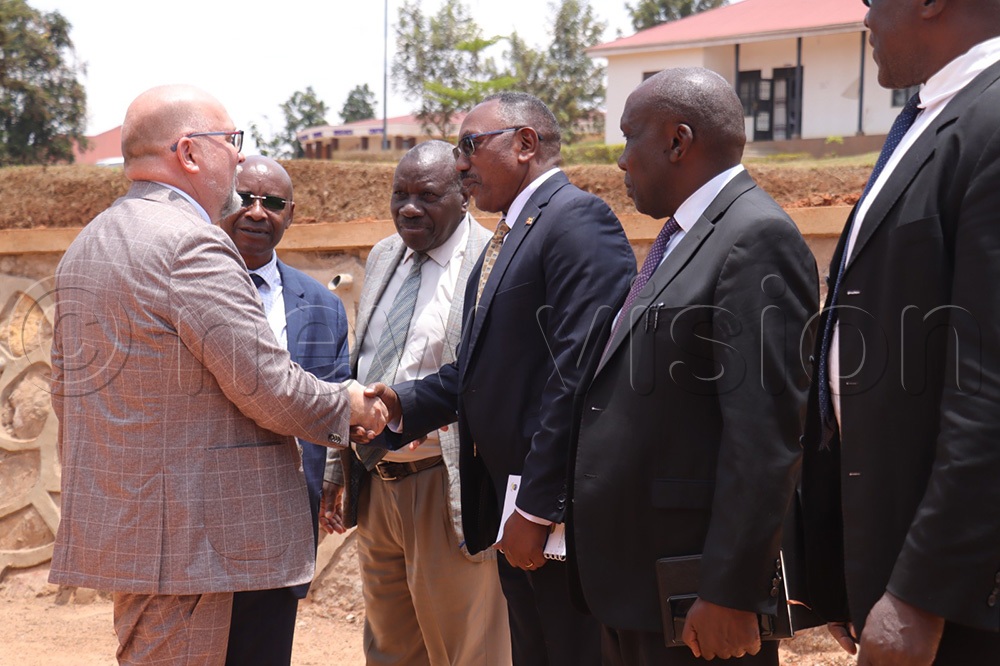
U.S. Acting Ambassador to Uganda, Mikael (Mika) Cleverley, being welcomed at Kabale University. (Photo by Nelson Ahimbisibwe)
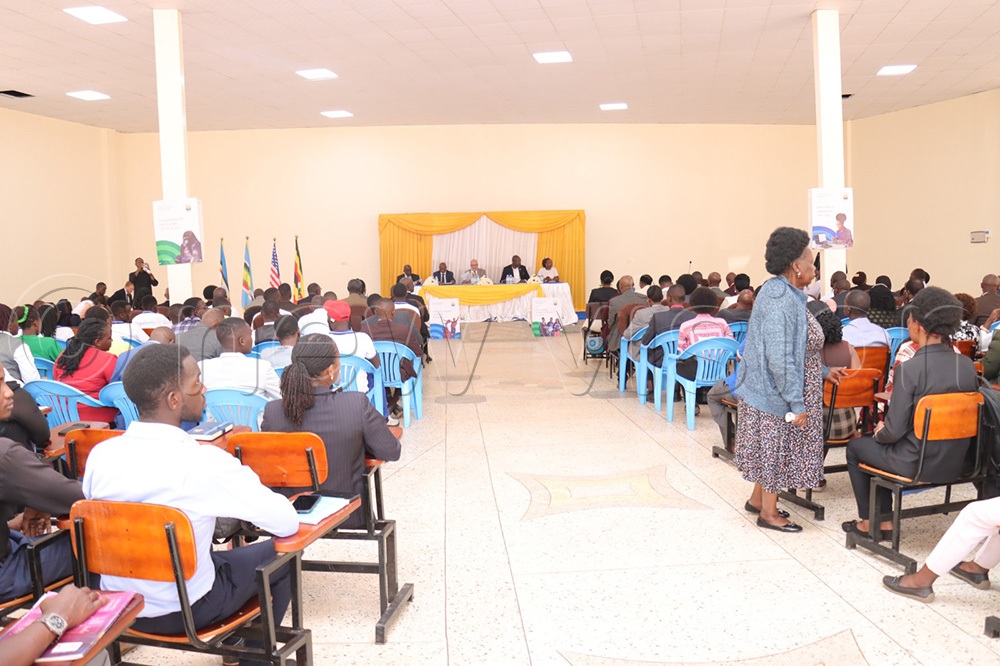
The meeting provided an opportunity for university students, academic staff and other stakeholders to interact with the American diplomat and discuss areas where the United States and Kabale University could deepen collaboration.
Prof. Mugisha said the university was seeking partnerships with US institutions to strengthen its capacity in innovation, entrepreneurship, research, health, agriculture, tourism and digital transformation.
He said Kabale University had students with innovations that had the potential to be commercialised, but required technical and financial support to turn their ideas into viable enterprises.
“Our students have some innovations with potential to be commercialised to shape the future they want. However, they need a boost – both technical and financial – which they could get through partnerships and collaborations with their peers and mentors in US Universities and relevant Institutions,” Prof. Mugisha said.
The university identified innovation and entrepreneurship as priority areas for collaboration, particularly in youth empowerment and job creation, agribusiness and value addition, research commercialisation and digital transformation.
Prof. Mugisha said the university's Business Incubation Centre, KABBIC, established with support from the United Nations Development Programme, was expected to create more than 10,000 jobs and empower 150,000 farmers through agribusiness innovation.
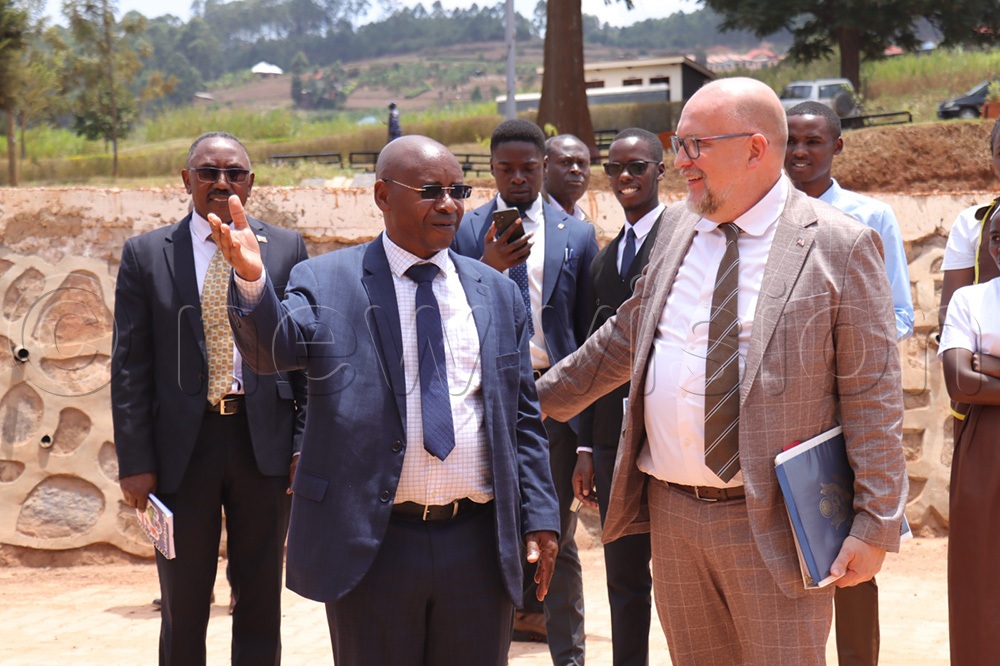
U.S. Acting Ambassador to Uganda, Mikael (Mika) Cleverley, with Acting Vice Chancellor of Kabale University, Prof. Johnny Mugisha and Kabale District Resident Commissioner, Rtd Maj Godfrey Katamba. (Photo by Nelson Ahimbisibwe)
The centre is intended to contribute to food security, market access and industrialisation in Kigezi and beyond.
The university also highlighted the Spark Innovation Hub, which has received core funding and infrastructure from MTN Uganda Foundation, technical expertise from Centenary Technology Services and policy support from the Ministry of ICT and National Guidance.
According to Prof. Mugisha, the innovation hubs provide digital skills training, online entrepreneurship opportunities and platforms through which students, faculty and community partners can develop practical solutions to local challenges.
He said the hubs could provide an avenue for connecting Kabale University students and staff with innovation ecosystems in the United States.
University seeks central research laboratory
Kabale University also wants to establish a Central Research Laboratory that would serve the university and the wider Kigezi region, including neighbouring countries.
Prof. Mugisha said the university's location near the borders of the Democratic Republic of Congo, Rwanda and Tanzania placed it in a strategic position to conduct research, diagnostics and surveillance on transboundary diseases affecting people, livestock, crops and the environment.
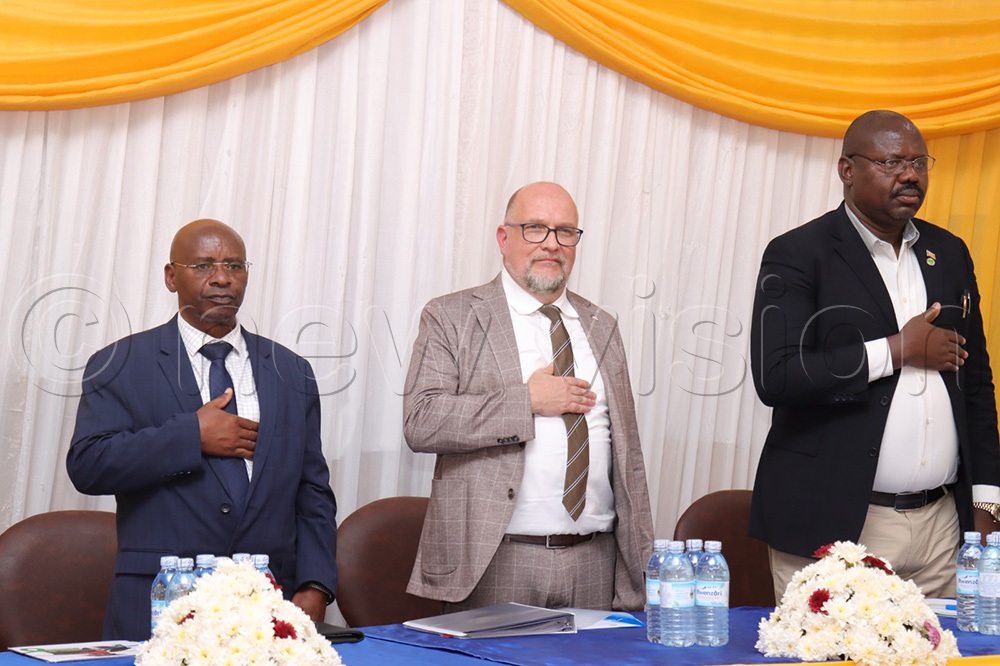
U.S. Acting Ambassador to Uganda, Mikael (Mika) Cleverley, with Acting Vice Chancellor of Kabale University, Prof. Johnny Mugisha. (Photo by Nelson Ahimbisibwe)
He cited diseases and threats such as Ebola, brucellosis and Banana Xanthomonas Wilt as some of the areas requiring research and surveillance.
Prof. Mugisha said such a facility would reduce the costs and delays associated with transporting samples to laboratories concentrated in Kampala, while strengthening regional scientific capacity and biosafety.
The university also wants to develop Living Labs where students, researchers, communities, policymakers and external partners can work together to develop and test solutions to social and economic challenges.
The proposed Living Labs would include demonstration farms, farmer field schools, ICT platforms and training centres.
Priority areas would include climate resilience, soil fertility management, water conservation, climate-smart agriculture, post-harvest handling, agribusiness, digital transformation and rural health.
Prof. Mugisha said partnerships with US research institutions and donor organisations could provide technical expertise, mentorship, joint grant applications, student and staff exchanges, and infrastructure for the proposed laboratory and Living Labs.
Tourism, medicine also priorities
The university further proposed partnerships to establish and develop a Tourism and Hospitality Centre of Excellence.
Prof. Mugisha said Kabale University's location in one of Uganda's major tourism destinations provided an opportunity for the institution to strengthen tourism education and research.
The proposed centre would focus on eco-tourism and community-based tourism while equipping graduates with practical skills required by the industry.
The university is seeking support from US professors and researchers in curriculum development, teaching, research, innovation and student-led tourism projects.
It also wants partnerships in capacity building, infrastructure development, technology transfer, e-learning and access to library resources and academic journals.
In the health sector, Kabale University already has links with US-supported organisations.
Health Volunteers Overseas, with support from the American government, has partnered with Kabale University to strengthen clinical capacity and address shortages of educators at the university's School of Medicine and Kabale Regional Referral Hospital.
The programme deploys certified medical professionals for short-term assignments focusing on teaching, mentorship and clinical capacity building in anaesthesia, paediatrics and child health, and internal medicine.
The university also highlighted a relationship with American lawyer Joel P. Leonard and his wife, Dr Claudia Leonard, an HVO volunteer.
The Leonards have donated personal resources valued at $25,000 (about sh98 million) towards improving internet connectivity and ICT infrastructure at the university.
The donations included wireless access points, Cisco network equipment and solar-powered backup systems for critical network infrastructure.
Responding to the university's proposals, Amb. Cleverley described Kabale University as an important institution in the sub-region, noting its development from a community-owned institution founded in 2002 into a public university in 2015.
He said the university had developed strengths in medicine and health sciences, engineering, agriculture and environmental studies.
The ambassador also pointed to the broader Uganda-US relationship, which he said encompasses security cooperation, economic development, health and education.
He said the United States was interested in Uganda's agricultural sector, technology ecosystem and energy development, while noting that Kigezi had particular potential in sustainable mountain agriculture, conservation, cross-border trade and tourism.
Amb. Cleverley also highlighted the role of educational exchanges in strengthening relations between the two countries.
He said US Government programmes such as Fulbright had supported Ugandans from Kabale University and across Kigezi to pursue advanced study, professional development and research in the United States.
He described such exchanges as a way of strengthening links between the two peoples through scholars, researchers and personal relationships.
The ambassador challenged students to view themselves as innovators and to use the region's agricultural and natural resources as a foundation for developing businesses and technologies.
He cited agritech, health technology and conservation technology as areas where students could develop solutions to local and global challenges.
He said Kigezi's agricultural base, including Irish potatoes, beans, bananas and livestock, offered opportunities for value addition and enterprise development.
Cleverley also pointed to Lake Bunyonyi, gorilla tourism and the wider tourism sector as areas with potential for partnerships involving American educational institutions and the private sector.
He encouraged students to pursue bold ideas and entrepreneurship, saying innovations in agritech and conservation could emerge from Kigezi.
Call for academic exchanges
Kabale University also proposed expanded student and staff exchange programmes with US institutions.
The proposed cooperation includes collaborative online courses, internship placements, summer schools, visiting professors and virtual classrooms in disciplines such as business management, economics, ICT and social sciences.
The university further seeks joint research projects, co-publications, telemedicine and e-health collaborations, access to innovation laboratories, library resource sharing, conferences and cultural exchange programmes.
However, Prof. Mugisha said the university faces challenges in identifying US institutions interested in its priority areas and accessing those institutions to present its proposals.
He also cited limited strategic infrastructure and financial resources as challenges.
He expressed optimism that the ambassador's visit and engagement with students, local leaders and policymakers would help strengthen connections between Kabale University, US institutions and the international community.
Prof. Mugisha described the engagement as an important step towards practical partnerships and opportunities with US institutions.
The university said stronger international collaboration could contribute to research, innovation, skills development and wider socio-economic transformation in Kigezi and Uganda.