
Stakeholders rally behind growth of Uganda’s avocado industry
While Uganda’s avocado industry has grown rapidly in recent years, driven by rising global demand for Hass avocados and avocado oil, stakeholders noted that the sector still faces bottlenecks that must be addressed to sustain its growth trajectory.
The permanent secretary of the trade ministry, commissioner for external trade, Cleophas Ndorere making his remarks. (Photos by Richard Sanya)
________________
Avocado discussions in Kampala have highlighted both the promise and the structural challenges facing one of Uganda’s fastest-growing agricultural value chains, with stakeholders agreeing that the sector is at a critical stage of expansion.
The dialogue on Thursday, June 18, brought together officials from the trade and agriculture ministries, farmer representatives, processors, exporters, agribusiness investors and the State House Investors Protection Unit (SHIPU).
While Uganda’s avocado industry has grown rapidly in recent years, driven by rising global demand for Hass avocados and avocado oil, stakeholders noted that the sector still faces bottlenecks that must be addressed to sustain its growth trajectory.
Hani Dahlan agribusiness entrepreneur and the founder/CEO of Avotein Farms Limited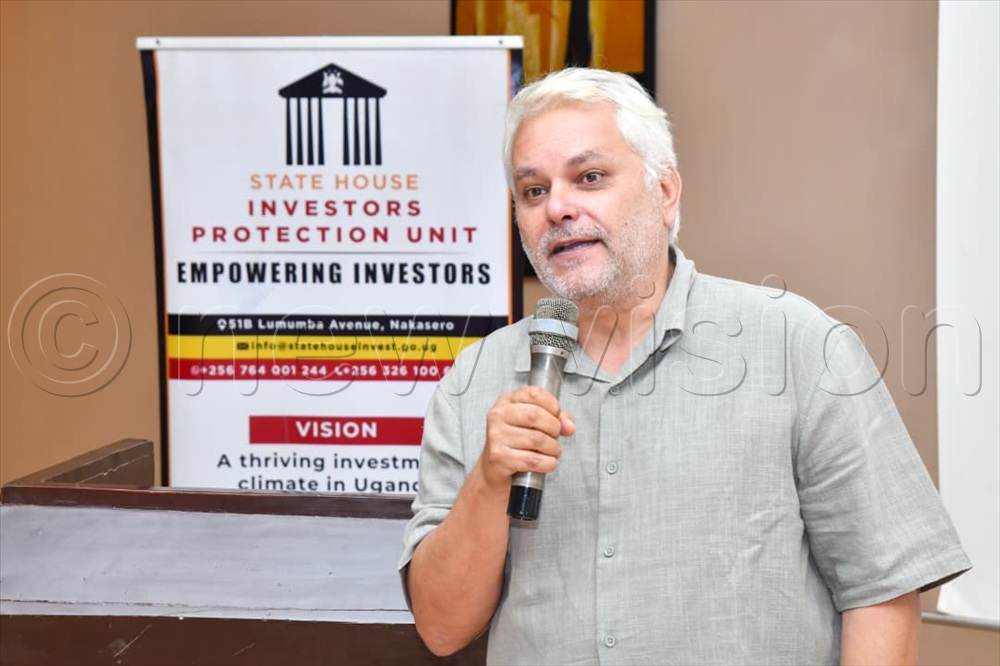
It is estimated that Uganda now has about 7,000 acres under Hass avocado production, with increasing private investment in processing and export-oriented farming. However, concerns persist over inconsistent quality standards, limited production support, weak extension services, competition for raw materials and unresolved issues surrounding cross-border trade.
Representing the permanent secretary of the trade ministry, commissioner for external trade, Cleophas Ndorere, reaffirmed the government's commitment to inclusive consultations aimed at shaping a balanced policy framework for the sector.
He said the government had recognised the need to broaden engagement beyond processors and exporters to include farmers, who remain the backbone of the value chain.
"A comprehensive understanding of the challenges facing the industry requires us to also hear directly from farmers who form the foundation of the entire value chain," Ndorere said during the meeting at Imperial Royale Hotel in Kampala.
He emphasised that government policy would aim to strike a balance between promoting farmer welfare and encouraging industrial investment, value addition and export competitiveness.
"We are committed to ensuring that farmers, processors, exporters and other value chain actors work together in a coordinated environment," he added.
Kaheru Stephen representing Col Edith Nakalema Head of State House Investors Protection Unit
Uganda's avocado production is estimated at between 250,000 and 300,000 metric tonnes annually, making it one of the significant producers in East Africa.
Uganda's avocado exports have recorded steady growth as exporters penetrate new markets in the Middle East, Europe and neighbouring African countries.
Government data indicates that Uganda exported 22.57 million kilograms (22,575 tonnes) of fresh and dried avocados in 2024, earning approximately $12.98m (about sh48b).
Representing SHIPU head Col. Edith Nakalema, Stephen Kaheru acknowledged the sensitive debate surrounding proposals to regulate cross-border avocado trade, particularly the direct purchase of avocados by Kenyan traders from Ugandan farmers.
The issue has divided stakeholders, with some arguing that foreign buyers distort the market and undermine local traders, while others maintain that regional competition benefits farmers through better prices.
"It is true, we are under EAC, but there is something called non-tariff barriers that some countries reserve for themselves," Kaheru said, adding that policy must also consider the survival of young Ugandan traders engaged in the avocado business.
He cautioned against overlooking local players who have invested in the value chain, noting that competition is increasingly intense at farm gate level.
The debate has become central to discussions on how Uganda can balance regional trade commitments with domestic economic priorities.
Former agriculture minister and experienced avocado farmer, Victoria Ssekitoleko described the engagement as a major milestone for the sector, saying it reflected growing government attention to a once-neglected value chain.
Former agriculture minister and experienced avocado farmer, Victoria Ssekitoleko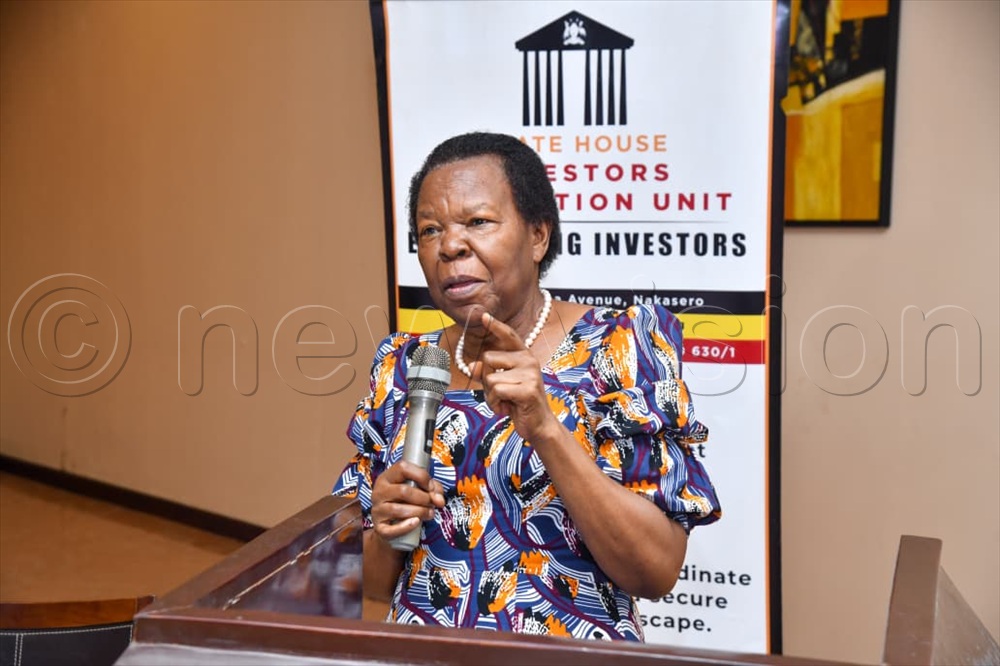
She commended the ministry of trade for initiating structured dialogue but stressed the need for broader institutional participation, particularly from departments responsible for industry development and cooperatives.
Ssekitoleko also raised concerns about the capacity of district-level cooperative structures, arguing that weak technical expertise is undermining farmer organisations.
"We want to support cooperatives, but we want experts in cooperatives in the districts, because that's where the action is," she noted.
From the agriculture ministry’s perspective, the avocado sector represents a strategic opportunity to drive rural transformation and expand Uganda’s agricultural exports.
Agribusiness entrepreneur and Avocado Exporters and Oil Producers Association (ABOGA) chairman Hani Dahlan said international demand for Ugandan Hass avocados remains strong, but production volumes and standards must improve.
Dahlan cautioned that Uganda is still at an early stage in the global avocado industry, comparing its production scale to leading exporters.
"We are still way beyond. We are infants. We haven't started, literally," he said, referencing Mexico’s massive production capacity.
He stressed that export success depends heavily on meeting strict international quality requirements.
"It's not that we want to make it hard for farmers. It's the market," Dahlan said.
Similar concerns were raised by Florian Knaus of Biosyntec Uganda Ltd, who said Uganda already has significant avocado oil processing capacity but lacks sufficient raw material supply.
"Our processing capacity is about 5,000 tonnes every single year," he said, adding that several factories could absorb far more fruit if available.
"The oil factories are there in Uganda. The fruits are not there," he said.