
Parents start coffee project to boost learning centre in Kalungu
To put this into perspective, Uganda’s coffee export earnings reached the tune of $2.3 billion (about sh8.3 trillion) from May 2025 to June 2026.
A handful of ripe coffee cherries from a coffee plantation in Kalungu District, cultivated by local farmers. (Photo by Francis Emorut)
__________________
After attending a training on income generation in Gulu city, David Nyombi, the head of an early childhood development (ECD) centre in Kalungu district, got an idea.
He believed that if the parents of the learners of Kalama Inclusive Home-Based Learning Centre started a coffee project, it would help the centre become financially sustainable.
To his delight, both the school and the parents backed the idea.
The inspired parents came together and planted 700 coffee seedlings on two acres of land with an aim of generating income for the centre.
The coffee seedlings were purchased by Literacy and Adult Basic Education (LABE), Kyambogo University and Sense International.
And now things are looking up.
Nyombi says the centre started with four children but now has 40 learners, including some with disabilities.
“The money we shall get from coffee will help us to pay care givers and pay teachers’ salaries,” he says.
With this in mind, Nyombi believes the coffee project will come in very handy, all thanks to that training in Gulu that was sponsored by Literacy and Adult Basic Education (LABE), an organisation spearheading home-based pre-school learning.
On Friday, LABE officials visited the coffee project located in Kyamulimbwa town council on Friday (July 17) and were impressed with what they saw.
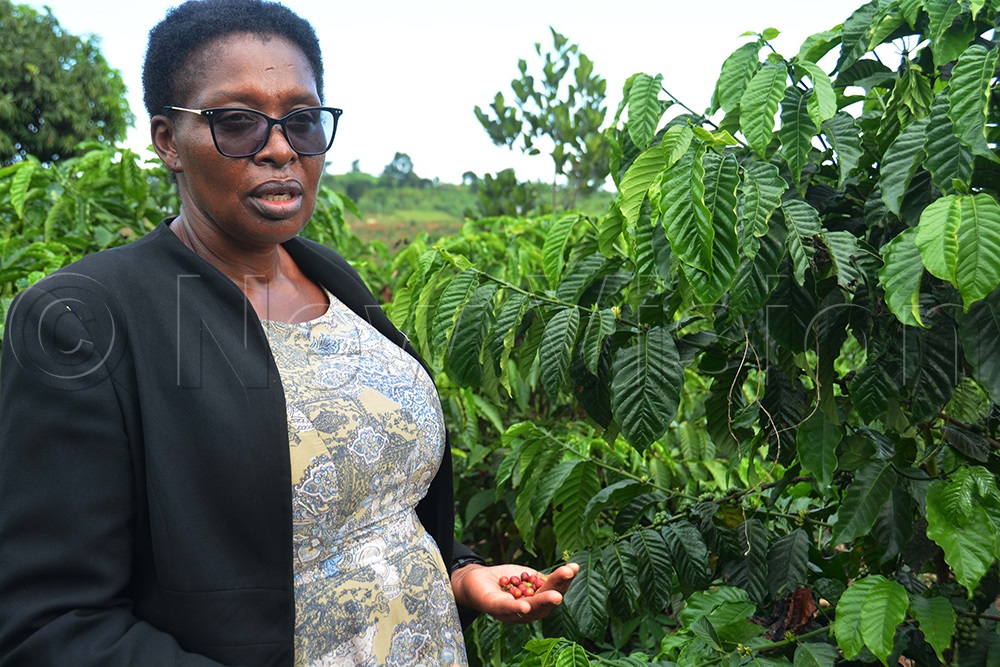
Literacy and Adult Basic Education (LABE) Executive Director Stella Tumwebaze inspects a coffee plantation in Kalungu District. (Photo by Francis Emorut)
Stellah Keihangwe Tumwebaze, the executive director of LABE, commended the parents for their joint efforts to grow coffee to generate income for the learning centre.
Besides helping with remuneration, she said some of the income could be used in infrastructural development at the centre, including classrooms.
She said the coffee leaves and seeds can also be used as learning materials, especially for numeracy.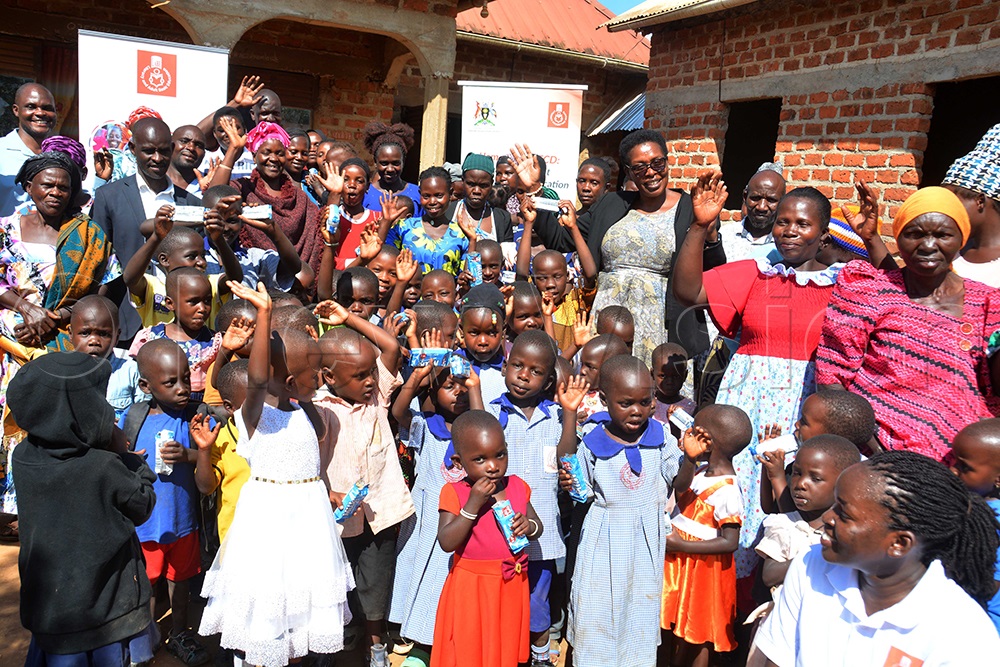
Literacy and Adult Basic Education (LABE) Executive Director Stella Tumwebaze (wearing spectacles) poses for a group photo with learners of Kalama Inclusive Home-Based Learning Centre and their parents in Kyamulimbwa Town Council, Kalungu District. (Photo by Francis Emorut)
Moses Isabirye, the Kalungu district education Officer, echoed similar sentiments.
“The coffee investment project is good to boost the income of the home-based learning centre, especially paying teachers and buying scholastic materials," he said.
Denis Ssebugwawo, who is in charge of special needs in Kalungu district, said parents need to be supported by the agriculture extension workers so that the coffee yields are bountiful.
Dr Paul Emong, the head of the Disability Support Service Centre at Kyambogo University, lauded the parents and the centre’s management for the initiative.
“It’s good for parents to think out of the box. Coffee growing is a good initiative to boost the centre's income."
During the field visit, it was evident that the coffee is bearing fruit.
What parents say
Mariet Nalweso, a parent, said she is optimistic the coffee project will help support payment of teachers and care givers, considering that the fees paid by the parents is relatively low.
Josephine Nabaterega said when Nyombi shared the idea of establishing a coffee plantation, she immediately welcomed it because coffee is a high-income project.
Daniel Kisaka, a youth leader, said parents were motivated to support the coffee project due to the high income associated with the crop, especially after seeing some coffee growers make a lot of money.
Grace Nakijira, a parent and a teacher who quit the government-aided Masaka Primary School to teach at the centre, said when coffee is sold, teachers like her will be paid.