
UWA warns against wildlife cuddling
The warning follows the circulation of photographs and videos on social media of tourists, some of them celebrities, hugging, kissing, carrying or posing in very close proximity with animals.
Kissing a hyena at CTC recently. The Uganda Wildlife Authority (UWA) has, as a result, issued a stern warning against wildlife activities that allow close physical contact with wild animals, saying such practices contravene the conditions of user permits and licenses as well as undermine wildlife conservation. (Credit: Julius Luwemba)
As Uganda positions itself as a premier destination for nature-based tourism, wildlife authorities are tightening oversight of animal centres and sanctuaries to ensure that tourism supports, not undermines, conservation.
The Uganda Wildlife Authority (UWA) has, as a result, issued a stern warning against wildlife activities that allow close physical contact with wild animals, saying such practices contravene the conditions of user permits and licenses as well as undermine wildlife conservation.
The warning follows the circulation of photographs and videos on social media of tourists, some of them celebrities, hugging, kissing, carrying or posing in very close proximity with animals.
Dr. James Musinguzi, the UWA executive director, said such encounters send the wrong conservation message while exposing both people and animals to great risks.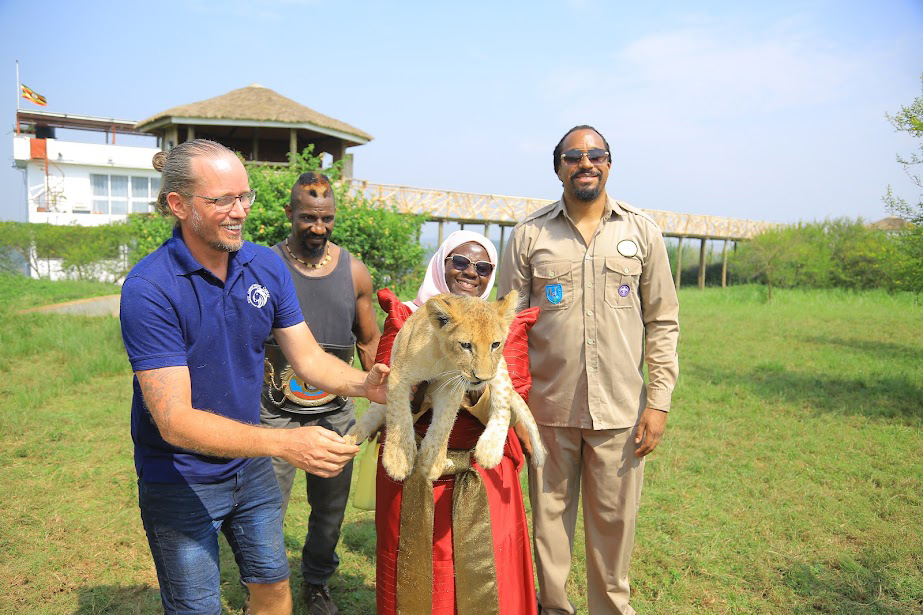
Aisha Kabanda, the former woman representative for Butambala district carrying a lion cub at CTC being assisted by the proprietor of the centre Thomas Price (left) as kick boxer Moses Golola (2nd left) and singer Navio (right) look on. (Courtesy Photo)
"UWA has always taken note of this and sounds a strong warning against such gestures. One of the challenges is that we've not been having very effective monitoring exercises as a result of not having enough staff. I promise that we are going to increase our monitoring and also bring to book those people who practice what is not prescribed in their licenses," Musinguzi warned.
The UWA executive director noted that such displays send a wrong conservation message and could discourage responsible travellers, who value ethical wildlife experiences.
"This has a negative impact on the destination (Uganda). There are several tourists who may cancel their trips to Uganda if they see such practices," Musinguzi remarked.
He added, "We have recruited wildlife-use officers, who are going to ably monitor all such activities."
Musinguzi appealed to the general public to report any sanctuaries or animal centres that promote direct physical interaction, especially hugging and kissing of wildlife. Whereas some Ugandans have taken pride in hugging lions and petting other wildlife species during their visit to one of the sanctuaries, several conservationists have consistently cautioned that such encounters threaten both human safety and animal welfare.
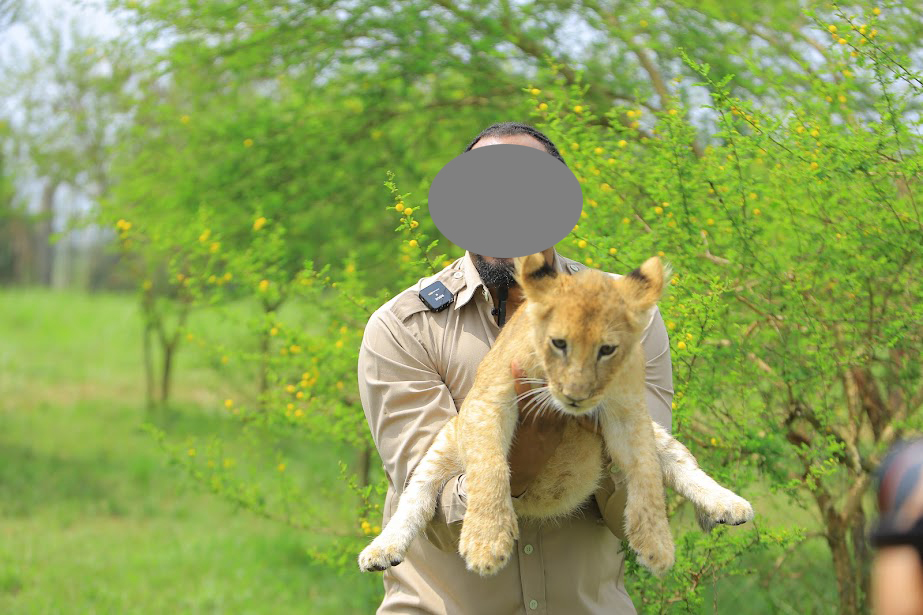
Several tourists, especially celebrities, have previously been seen posing with lions, primates, and other exotic breeds at one of the wildlife centres in Butambala district. Conservationists argue that the appeal of close-up wildlife photographs comes at a hidden cost. (Courtesy Photo)
Conservation beyond camera
Several tourists, especially celebrities, have previously been seen posing with lions, primates, and other exotic breeds at one of the wildlife centres in Butambala district. Conservationists argue that the appeal of close-up wildlife photographs comes at a hidden cost.
"Close physical contact can alter natural animal behaviour, increase stress among captive wildlife and increase the risk of injuries. It also creates opportunities for diseases to spread between animals and humans," noted Dr. Ludwig Siefert, a wildlife researcher with experience spanning over 30 years.
The concern is particularly significant as Uganda remains vigilant against the further spread of Ebola from the Democratic Republic of Congo. Ebola virus is documented to have originated from fruit bats and other non-human primates.
Meanwhile, Ronald Wako, head animal keeper at the Uganda Wildlife Conservation Education Centre, said the animal centre suspended an interactive visitor programme dubbed 'behind the scenes' due to safety reasons for both animals and the visitors. Similarly, Innocent Ampeire, the head animal keeper at Ngamba Island Chimpanzee Sanctuary, said tourists visiting the island are not allowed to get in close proximity with chimpanzees, nor are they allowed to feed the primates without observing strict hygiene protocols.
However, Thomas Price, the proprietor of CTC animal centre in Butambala where tourists frequently pose with wildlife, maintained that all his animals undergo screening, quarantine and vaccination.
"I hope you do realise that diseases don't just come out of this air into animals. All our animals are healthy. If there is a risk, then it would be humans spreading a disease to our healthy animals, not the other way around," he stated.
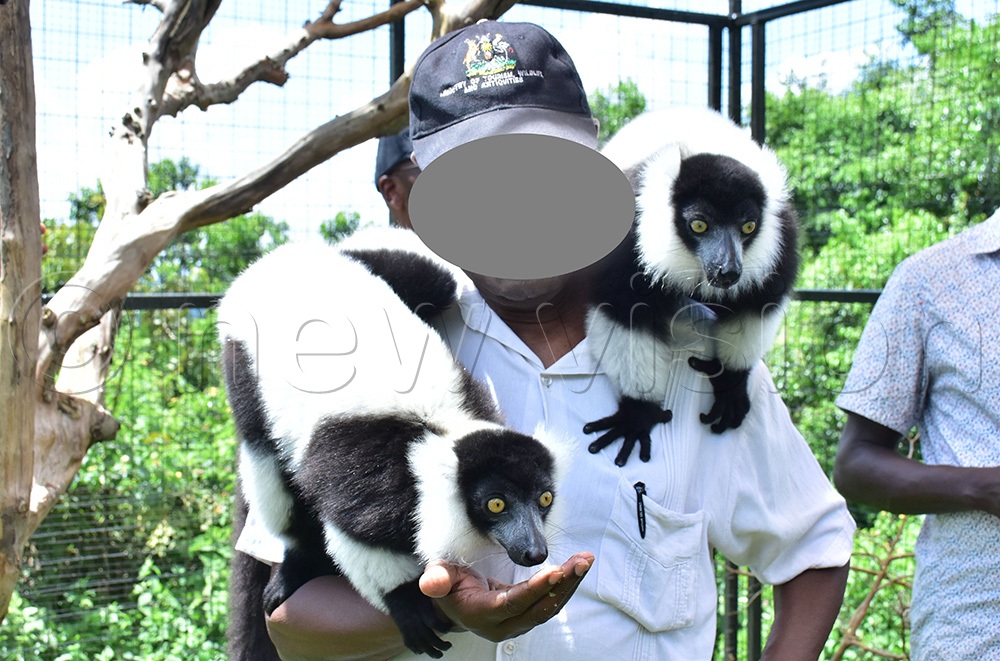
A visitor carrying Lemurs at CTC Butambala. (Credit: Julius Luwemba)
Two-way disease threat
But UWA spokesperson Bashir Hangi emphasised that disease transmission can occur in both directions when humans come into close contact with wildlife, particularly with great apes such as gorillas and chimpanzees because of their close genetic relationship with humans.
According to Hangi, diseases that can spread between humans and wildlife include respiratory infections such as COVID, influenza, tuberculosis, as well as diseases like scabies and certain intestinal infections.
"Conversely, humans can contract diseases including rabies, anthrax, brucellosis and other zoonotic infections through contact with infected wildlife or their body fluids. This is why we emphasise strict wildlife viewing guidelines, including maintaining a reasonable viewing distance, avoiding contact with wild animals, observing good hygiene, and ensuring that anyone who is unwell does not visit wildlife, especially great apes," Hangi explained.
Hangi's concerns were echoed by Dr. Gladys Kalema-Zikusoka, a Ugandan first wildlife veterinary doctor, who said the genetic proximity significantly increases the possibility of pathogens (viruses, bacteria, fungi and parasites) being transmitted between species. "For example, all the wild cats, through bites and scratches, transmit diseases like rabies," Kalema remarked.
She further noted that wild animals are unpredictable by nature and that human proximity can trigger aggressiveness. Zikusoka pointed out influenza, tuberculosis, and para-influenza among the deadly respiratory diseases that can easily spread from wildlife to humans.
"In the age of social media, the most memorable wildlife encounter may not be the closest one, but the one that leaves nature truly wild. Keeping a safe distance remains a hallmark of sustainable tourism," the wildlife vet advised.
The Uganda Wildlife Act 2019 reinforces conservation principles by promoting the sustainable management and protection of wildlife, as well as regulating wildlife use in Uganda.
The Act empowers UWA to license and monitor wildlife-use activities and requires license holders to comply with prescribed conditions.
Section 29 of the Act prohibits activities that may harm wildlife, as well as providing penalties for contravening license conditions, underscoring the importance of responsible wildlife tourism that safeguards both animals and people.