
Wildlife conflict cases decline, but fatalities remain a concern
The report, which covers July 2025 to June 2026, indicates that the reduction was particularly pronounced around Kidepo Valley, Lake Mburo and Murchison Falls national parks, as well as Karuma and East Madi wildlife reserves.
Dr James Musinguzi, Uganda Wildlife Authority (UWA) Executive Director, speaks during the annual stakeholders’ engagement at Protea Hotel in Kampala on Friday. (Credit: Julius Luwemba)
_________________ Participants attend UWA’s annual stakeholders’ engagement on the authority’s status and performance in the previous financial year at Protea Hotel in Kampala. (Photo by Julius Luwemba).
Reported cases of human-wildlife conflict in Uganda declined by 34.6% during the 2025/26 financial year, although incidents involving wildlife continued to claim lives among communities living near protected areas.
According to the Uganda Wildlife Authority (UWA) corporate report for 2025/26, reported human-wildlife incidents fell from 6,557 in the previous financial year to 4,290, representing a reduction of 2,267 cases.
The UWA corporate report was unveiled during a stakeholder engagement held on Friday at Protel Hotel in Kampala. It indicated that, despite the improvement, UWA provided medical, post-mortem and burial assistance in relation to 31 fatalities and 64 injuries, highlighting the continuing dangers faced by communities living alongside wildlife.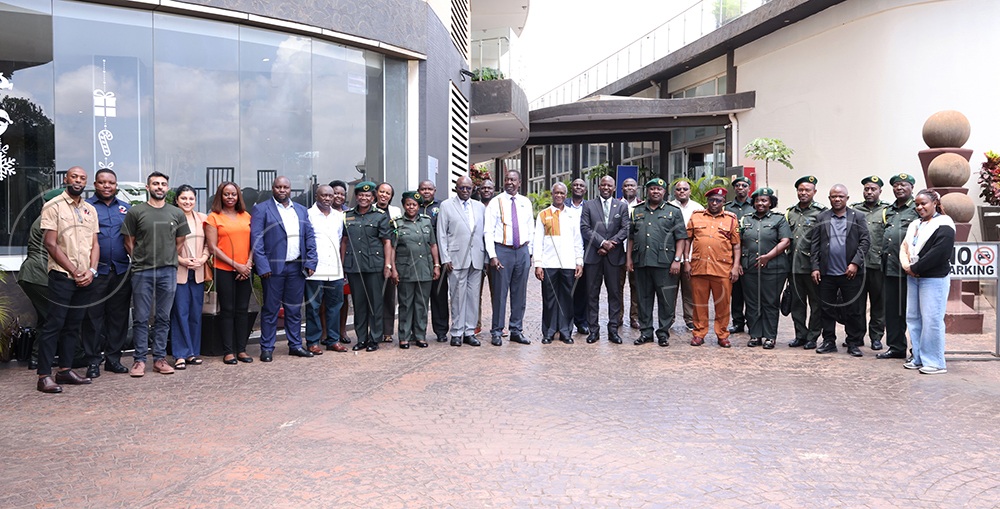
The report, which covers July 2025 to June 2026, indicates that the reduction was particularly pronounced around Kidepo Valley, Lake Mburo and Murchison Falls national parks, as well as Karuma and East Madi wildlife reserves.
Commenting on the findings, UWA executive director Dr James Musinguzi said the incidents underscored the need for sustained investment in mitigation and community engagement, as well as a shift towards coexistence rather than conflict.
He outlined several interventions being undertaken to mitigate human-wildlife conflict. According to Musinguzi, a total of 184.6 kilometres of electric fencing had been constructed and 302.26 kilometres maintained, alongside the construction of 25.28 kilometres of elephant trenches and the maintenance of another 47.182 kilometres.
Additional measures, as captured in the report, included maintaining 6,070 metres of buffalo wall and four kilometres of Mauritius thorn hedge, as well as planting 4.5 kilometres of hedge along the Nkuringo buffer.
The report also indicated that compensation totalling sh289.95m had been paid in respect of 115 eligible claims, while a further sh195.45m had been approved for payment.
Godfrey Kiwanda, the UWA honorary officer and former tourism state minister, advised that the docket and office responsible for human-wildlife conflict should be renamed human-wildlife relations, as a step towards changing attitudes and improving relations between communities and wildlife.
Lilly Ajarova, also an honorary wildlife officer and senior presidential adviser on tourism, commended the strategic direction being taken by UWA towards improving its effectiveness in sustainable conservation management.
Prof James Kalema, the chairperson of the UWA Board of Trustees, said the disbursement of sh5.51b through the revenue-sharing programme, alongside livelihood support, reinforced the authority's conviction that sustainable conservation must improve community wellbeing and socio-economic transformation.
"Despite these achievements, the authority continues to face significant challenges including human-wildlife conflict, pressure on wildlife habitats, inadequate resources amid expanding conservation responsibilities and the need for sustainable conservation financing," Kalema remarked.
The 2025/26 wildlife corporate report also highlighted ecosystem management, wildlife resource protection, community conservation, tourism and business development, as well as governance and capacity development.
The stakeholder engagement was attended by several players from the tourism and conservation sectors, both in government and the private sector, as well as representatives from the police, prisons and the Office of the Director of Public Prosecutions.