
Minister Nakawuki tracks Ajai white rhinos, rallies locals to champion tourism
“This is opening up Madi Okollo and West Nile to the world. You are lucky to have rhinos because many places do not have, please let tourism here begin with you as locals. Enjoy it; opportunities will be abundant as the place gets busier. The President has pledged to tarmac this road, meaning more money is coming, hence improved standard of living,” the minister said while addressing journalists.
During her maiden familiarisation tour of the reserve last week, Nakawuki said the government has an ambitious plan to restore Ajai into a fully fledged wildlife tourism destination.
On a guided tour of Ajai Wildlife Reserve in Madi Okollo district, West Nile subregion, a rare sound cut through the trees. It was not a bird, but a game ranger signalling to colleagues ahead.
A few seconds later, a similar sound echoed back from the thicket.
That was how tourism state minister Suzan Nakawuki Nsambu, together with a team from the Uganda Wildlife Authority (UWA) and other stakeholders, moved on foot through the reserve, tracking its newest inhabitants, the white rhinos that were relocated there in January this year.
The game ranger walked the team through every detail of the tracking process.
“These are fresh footprints on the path; the fresh dung means the animals are close by,” he explained.
The mission was simple: to find the white rhinos and confirm that they were adapting well to their new home.
After walking for just over half a kilometre, the team paused. Rangers instructed them to stop at a safe distance to avoid disturbing the animals. Beneath the shade of towering mvule trees lay four massive white rhinos.
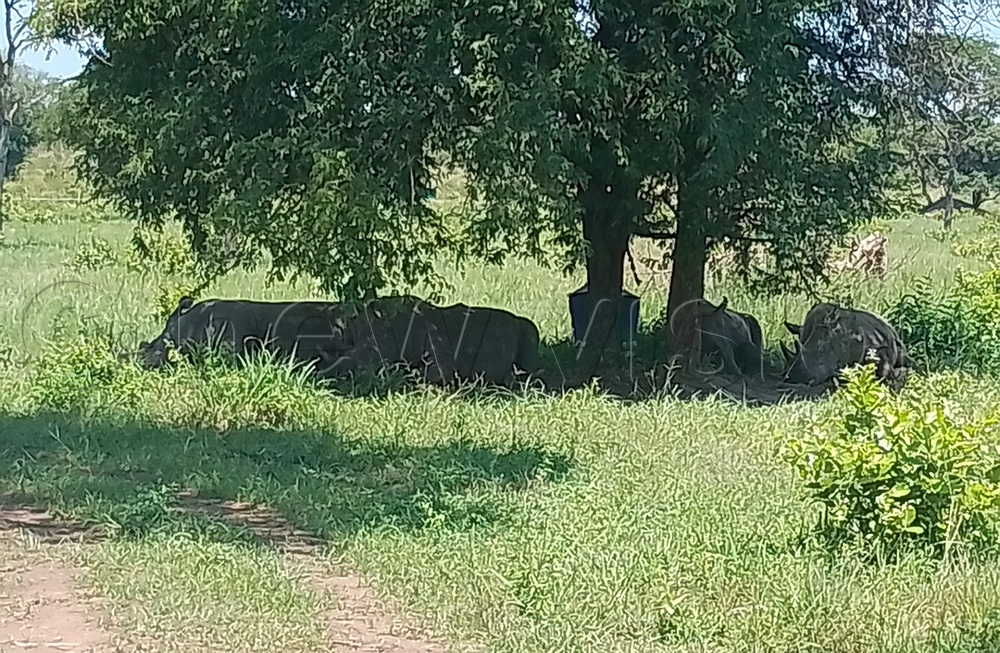
Rhinos pictured from a distance in Ajai
Not far away, a small herd of zebras moved in perfect formation, their black and white stripes flashing as their tails flicked away flies.
Nearly seven months after they were reintroduced to the reserve, more than 40 years after becoming locally extinct, the minister confirmed that not only were the endangered white rhinos thriving, but so too were the zebras, antelopes and buffaloes that had been introduced before the rhinos.
During her maiden familiarisation tour of the reserve last week, Nakawuki said the government has an ambitious plan to restore Ajai into a fully fledged wildlife tourism destination.
“This is opening up Madi Okollo and West Nile to the world. You are lucky to have rhinos because many places do not have, please let tourism here begin with you as locals. Enjoy it; opportunities will be abundant as the place gets busier. The President has pledged to tarmac this road, meaning more money is coming, hence improved standard of living,” the minister said while addressing journalists.
Wilson Katamigwa, the chief warden in charge of Ajai Wildlife Reserve, said the reserve has registered an increase in revenue over the past six months following the arrival of the white rhinos.
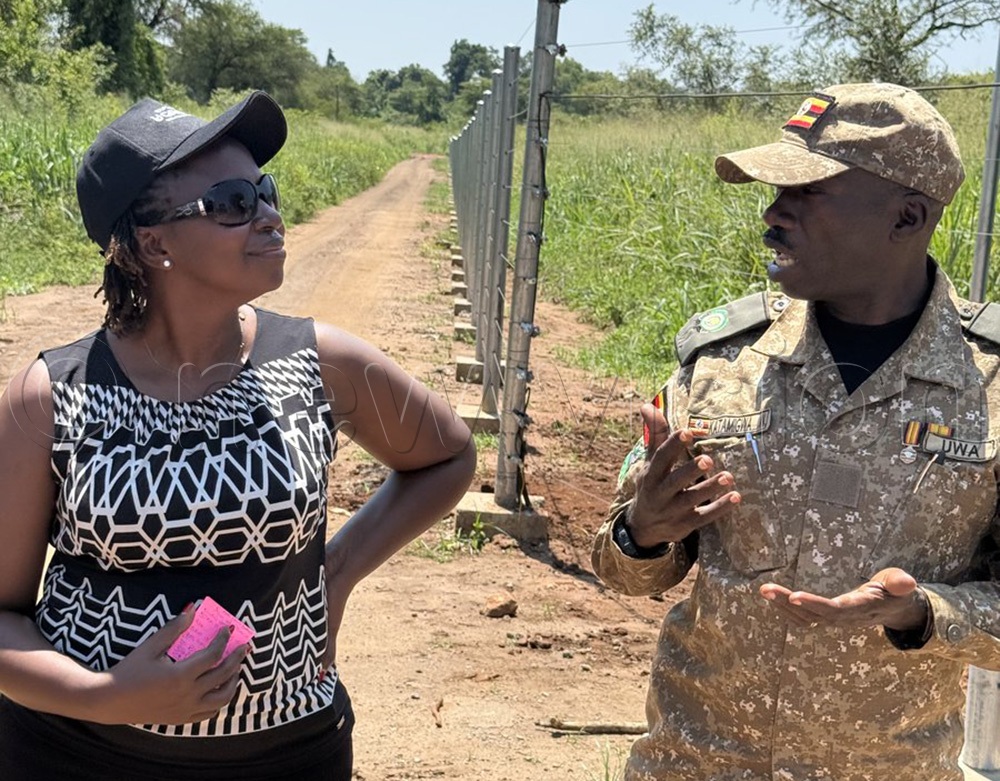
During her maiden familiarisation tour of the reserve last week, Nakawuki said the government has an ambitious plan to restore Ajai into a fully fledged wildlife tourism destination.
He expects revenue to rise further following the introduction of new entrance fees of sh15,000 for Ugandans and $10 for foreign non-residents.
Fred Kiiza, the chief warden of Murchison Falls Conservation Area, said preventing poaching and human-wildlife conflict remains central to the development of Ajai Wildlife Reserve.
“That’s why the project for electric fencing with cameras connected to the internet is at its peak, aimed at protecting the very much sought-after rhinos, whose horns are lucrative in the illicit trade in wildlife products globally,” he said.
Ajai Wildlife Reserve covers 166 square kilometres along the Albert Nile in north-western Uganda. Named after the local chief Ajai, it began as a four-square-kilometre sanctuary in 1937 before being gazetted in 1965 to protect northern white rhinos, which later became locally extinct because of poaching in the 1970s and 1980s.
To walk through the reserve today and see the rhinos back in their natural habitat, thriving once again, marks a significant milestone for Uganda and for the West Nile sub-region.
For a reserve that once lost its rhinos, the scene represented a remarkable conservation success.
With 460 Uganda kobs, four rhinos out of the expected 20 already in the reserve, 20 buffaloes that have already produced calves, 44 zebras and giraffes now established in the reserve, the plan is to continue rebuilding the wildlife population step by step.