
Govt adds long-horned Ankole cattle to tourism package
........The Ankole cattle experience responds perfectly well to this global shift. It transforms heritage into an experience, one that allows visitors to engage with pastoral life, culture, cuisine, music, landscapes and people in a respectful way.”
Explaining why they had opted to include Ankole cattle in the tourism package, UTB chief executive officer Julian Kagwa said the critical mass to market the Ankole cattle was evident and it was what was going to propel the package. He said there was also a need for product diversification.
Stakeholders in the tourism sector and agricultural have welcomed the decision by the Uganda Tourism Board (UTB) to add the Ankole cattle onto the packages that can be sold to tourists visiting the country alongside the unique wildlife encounter.
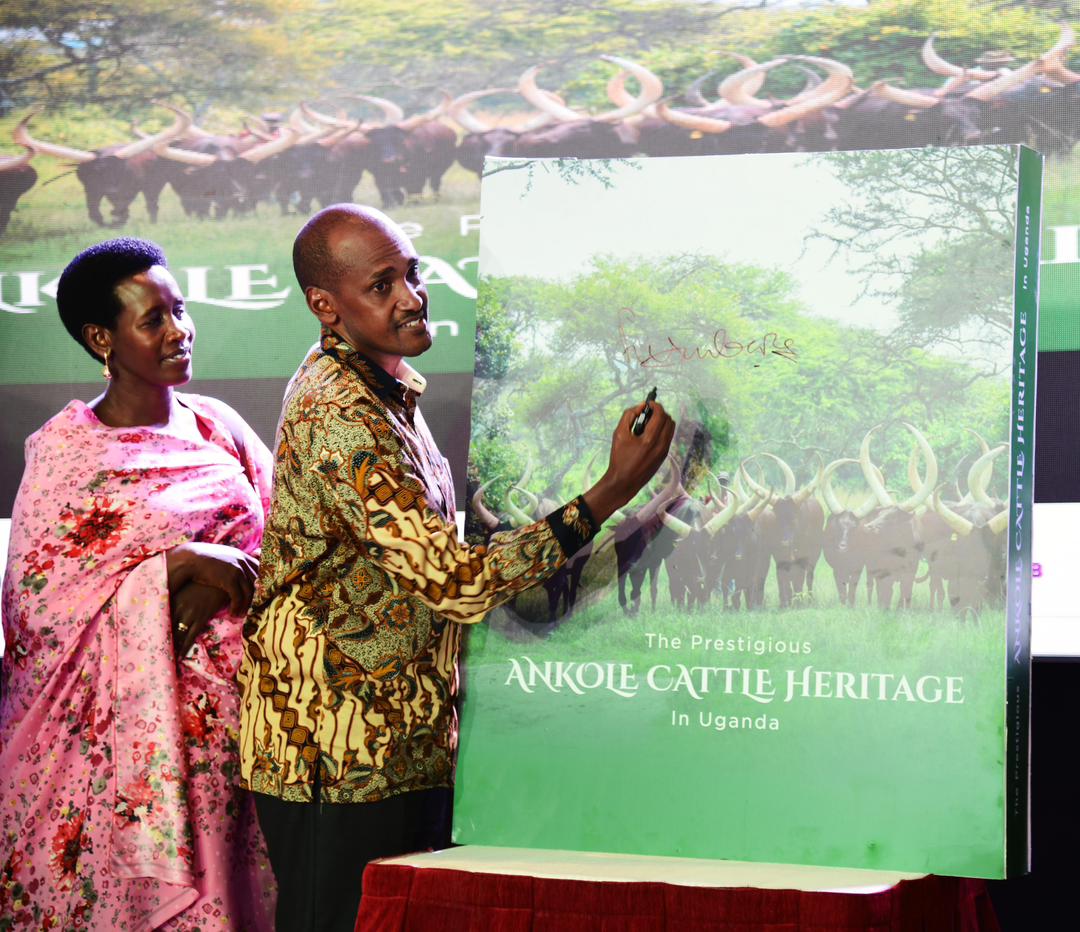
Speaking at the first Ankole Cattle Heritage and business dinner during the launch of a new coffee book, “The Prestigious Ankole Cattle Heritage in Uganda,” on the breed's history, rare strains and economic potential, with a foreword by President Yoweri Museveni at the Sheraton Kampala Hotel, agriculture minister Frank Tumwebaze praised the Ankole longhorn as a blend of culture, science and business for agro-industrialisation and tourism.
“I want to thank UTB for recognising the Ankole cow as part of the new domestic products we have developed and can sell. We can sell the experience of the cow. Now that the guides know this is a product they can sell to the world, we need to harmonise a strategy and all the safari planners must be encouraged to include home and farm visits and UTB can help us with that,” Tumwebaze said.
He added that there was a need to interest the investors in the value chain in the uniqueness of Ankole cattle, including the milk, meat, horns and hooves.
Product diversification
Explaining why they had opted to include Ankole cattle in the tourism package, UTB chief executive officer Julian Kagwa said the critical mass to market the Ankole cattle was evident and it was what was going to propel the package. He said there was also a need for product diversification.
“When I got this job as UTB CEO, the first thing that stood out to me was that we were not diversifying our portfolio. That is the basic rule of marketing. You can’t sell one thing. You have to keep reinventing yourself and introducing new products. How else would you keep customers pinned and excited? You can’t do that with one product.
Africa cannot rely only on wildlife. So, product diversification underscores everything we are going to do now and in the next 10 years to achieve vision 2040 to lift this country to middle-income status, and Ankole cattle gives us an opportunity for that,” Kaggwa said.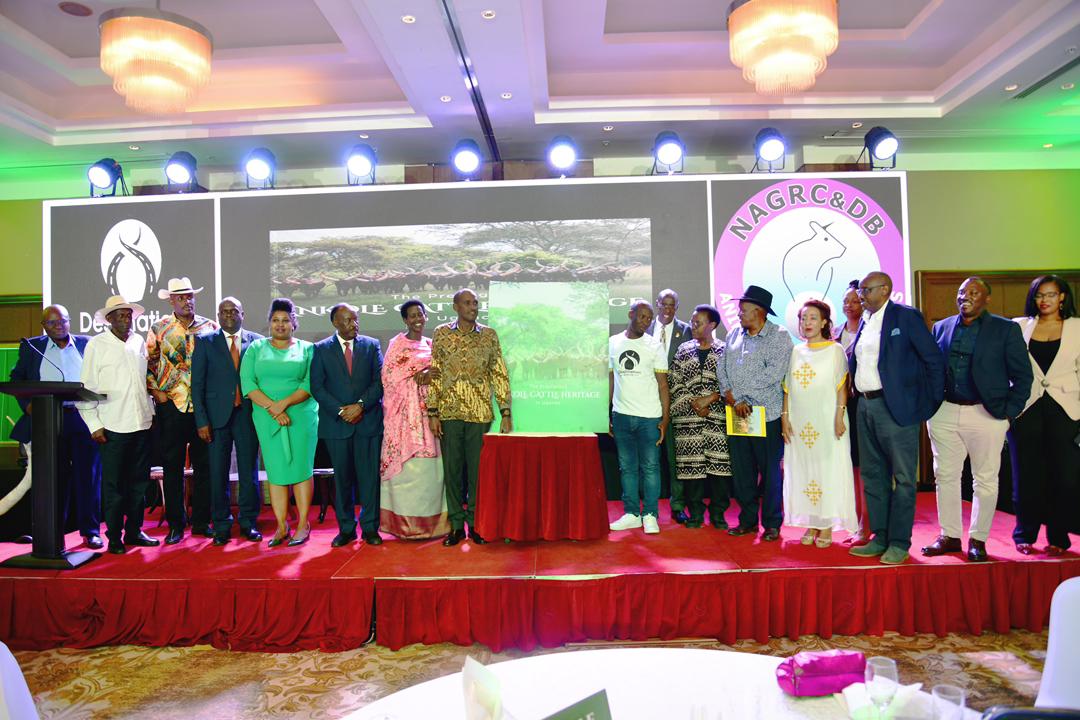
The search for authentic experience
Uganda Tourism Association (UTA) President Yogi Biriggwa said, “Tourism today is evolving as travellers across the world are no longer looking only for destinations; they are looking for authentic experiences, meaningful stories and genuine connections.
The Ankole cattle experience responds perfectly well to this global shift. It transforms heritage into an experience, one that allows visitors to engage with pastoral life, culture, cuisine, music, landscapes and people in a respectful way.”
Several other speakers highlighted Ankole cattle's versatile yields from milk and lean beef to hides and biogas while pushing for national branding alongside gorillas and conservation efforts at Nshaara Ranch.
Brand Uganda
Great Lakes Safaris CEO Amos Wekesa said, "our biggest problem as a country is that God had over gifted us and we take things for granted". He revealed how he attempted to promote the Ankole cattle experience.
“If we were hungry, we would maybe have pushed the agenda more. I wish this had happened 15 years ago,” Wekesa said.
He revealed that his experience at the time was that tourists enjoyed milking the cows, seeing how the churn butter from milk, participated in grazing the cattle.
“You people in this room have let down this country. All of you must know that no country prospers without looking at itself as a brand. Each of us in this room is interested in being a brand. But how many of us sit and think we need a brand called Uganda, so that when I am in a shop in the United States of America, everyone knows there is a brand called Uganda. Who among us wakes up and thinks whether the Americans, British are thinking about us in a good way? This is something all of us must start thinking about,” Wekesa said.
Private Sector Foundation Uganda (PSFU) executive director Stephen Asiimwe said other countries like South Africa were profiteering from the cow and yet its origin was Uganda.
“South African President bred the cattle and took it to a culture that appreciates value. What is due in a value preposition market is that they subject something to a competition, like you see in the stock exchange. President Cyril Ramaphosa, subjected a few of his cattle to auction and the big boys were flown in. In his first auction around 2012, he sold a cow at $250,000 (about shillings 900 million). I know many of you have much more cows and are better breeders but how much do you sale your cows,” Asiimwe said.
Asiimwe said, Ramaphosa set the stage for auctioning Ankole cows and also published a book.
“Ten years later in 2024, he auctioned an Ankole cow at $1m (about shillings 3.7 billion). Therefore, we are sitting on a product that has a very high value proposition. Can we put our heads together and create something that is going to transform this economy?” Asiimwe said.
About the book
The book celebrates the heritage, economic value and tourism potential of the iconic Ankole longhorn cattle. The book was written as a result of a partnership between the National Animal Genetic Resources Centre and Data Bank (NAGRC&DB) and Destination Ankole.
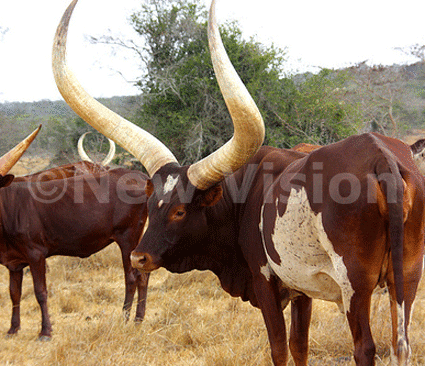
Edmand Aryampika, the founder and team leader of Destination Ankole, said the publication, which took seven years, documents the deep cultural roots of Ankole cattle, which for centuries have symbolised wealth, prestige, and identity among pastoral communities in Uganda’s cattle corridor. Known for their distinctive long horns and remarkable resilience, the Ankole Cattle remain central to traditional livelihoods while increasingly attracting national and international interest.
According to NAGRC, the book captures the origins of Ankole cattle, their rare races, unique physical traits, and enduring cultural significance. It also highlights the breed’s emerging role in tourism, agribusiness, and genetic conservation at a time when purebred Ankole cattle face growing threats from uncontrolled crossbreeding and habitat pressure.
Beyond heritage, the publication underscores the production strengths of the Ankole Longhorn. The breed is naturally adapted to Uganda’s tropical climate, demonstrating heat tolerance, resistance to common diseases, and an ability to survive on low-quality pasture.
These traits make it particularly suitable for smallholder farmers operating in resource-limited environments, while its high fertility supports rapid herd growth.
The book further highlights the expanding economic opportunities associated with the breed. Global demand for Ankole genetics has increased in recent years, with interest reported from countries such as the United States, South Africa, and Kenya. Uganda has continued to receive requests for Ankole semen and embryos, presenting opportunities for regulated genetic trade and breeder collaboration.
Tourism features prominently in the publication. Cultural villages and ranches in the Ankole region have become key attractions, offering visitors an opportunity to experience the cattle within traditional and natural landscapes. Nshaara Ranch, located near Lake Mburo National Park, has emerged as a flagship site where Ankole cattle graze alongside wildlife such as zebras, impalas, and waterbucks, creating a unique livestock-wildlife tourism experience.
The book notes ongoing plans by NAGRC&DB to strengthen revenue generation through guided tours and licensed sport hunting.
In addition, the publication documents the growing market for Ankole-derived food products. The breed produces rich milk suitable for ghee and fermented dairy products, while its beef is lean, flavorful, and low in cholesterol, aligning with changing consumer preferences for healthier animal products.
The book also positions the Ankole Longhorn as a valuable intellectual property asset. It highlights ongoing efforts to explore geographical indications, Indigenous knowledge protection, and access-and-benefit-sharing frameworks as pathways for strengthening branding, supporting community livelihoods, and ensuring sustainable conservation of the breed.
Government conservation efforts were also documented in the publication.
NAGRC’s efforts
Since 2003, NAGRC&DB has led national initiatives to conserve, develop, and multiply purebred Ankole cattle at Nshaara Ranch in Kiruhura District, Uganda’s National Ankole Longhorn Cattle Conservatory Centre.
The foundation stock was sourced from leading breeders across the cattle corridor, including President Yoweri Kaguta Museveni. Today, the centre manages over 4,000 head of cattle, supported by a national gene bank at the Entebbe Bull Stud and collaborative research with local and international partners.
Drawing on lessons from Europe’s livestock genetic conservation models, the book advocates for stronger community engagement, collaborative partnerships, and market-based incentives to safeguard indigenous breeds. Proposed strategies include establishing breed conservation societies, expanding gene banking through cryopreservation, building farmer capacity, and developing niche markets for heritage livestock products.
Following the launch, NAGRC&DB outlined the next steps focused on stakeholder mobilisation, conservation financing, genetic material trading, market development, and tourism-based revenue generation anchored on Ankole heritage.
The publication has been described as a timely contribution to national conversations on biodiversity conservation, cultural preservation, and sustainable agriculture.
By documenting the story of the Ankole Longhorn cattle, the book provides a roadmap for leveraging indigenous livestock resources to strengthen rural livelihoods, expand tourism, and preserve Uganda’s heritage for future generations.