
Uganda Wildlife Authority rescues shoebill from Serere homestead
Preliminary investigations indicate Oluka allegedly captured the bird from the lakeshore where he found the lonely chick. The whereabouts of its parent flock is unknown.
The rescued Shoebill, locally called Ekurududu in Teso, that had been kept illegally for about five months by James Peter Oluka of Mairomukaga Cell, Kololo Ward, Kasilo Town Council. (Photos Patrick Odongo)
________________
The Uganda Wildlife Conservation Education Centre (UWEC) has issued a public warning against keeping wild birds and animals at private homes without a license, emphasising that offenders face arrest and prosecution.
The alert follows the rescue of a Shoebill, locally called Ekurududu , in Teso, that had been kept illegally for about five months by James Peter Oluka of Mairomukaga Cell, Kololo Ward, Kasilo Town Council in Serere district.
Preliminary investigations indicate Oluka allegedly captured the bird from the lakeshore where he found the lonely chick. The whereabouts of its parent flock is unknown.
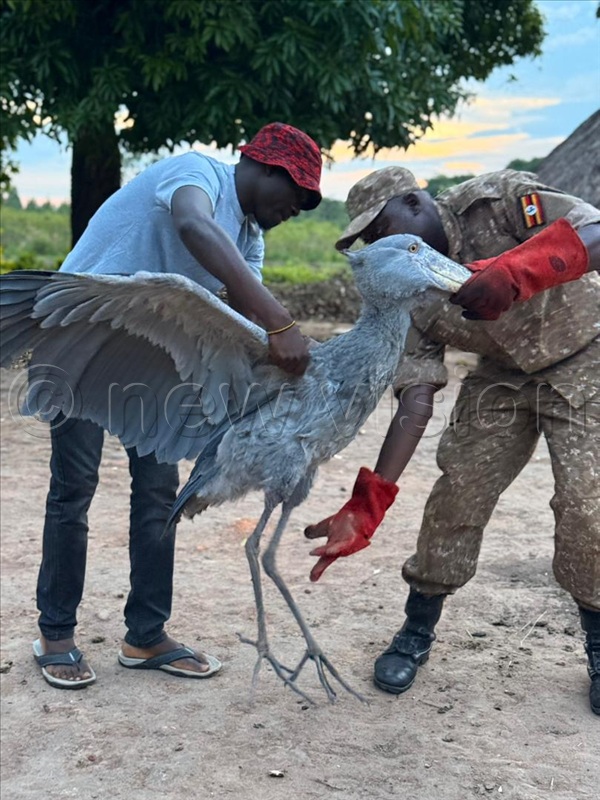
“Keeping wildlife without a license is illegal and denies animals their natural freedom,” said George John Omoya, leader of the rescue team. He also cautioned residents against domesticating protected birds, including crested cranes.
Omoya was accompanied by Joshua Apamaku Aiita and Erasmus Tukei Oreret, who confirmed that the rescued Shoebill would be relocated to a safer, licensed environment.
Oluka and his wife, Angella Akareut, explained that the bird, named Oluka White, primarily feeds on fish and frogs, sometimes costing them around sh5,000 daily. They appealed for consideration to be compensated for caring for the bird.
Authorities assured the family that Oluka White would retain its name at the zoo. In addition, Oluka will be given the chance to organise a free zoo tour for about 20 residents.
The LC1 Chairperson, Robert Obel, said he had previously warned the family that wildlife authorities would intervene if they were found keeping the bird.
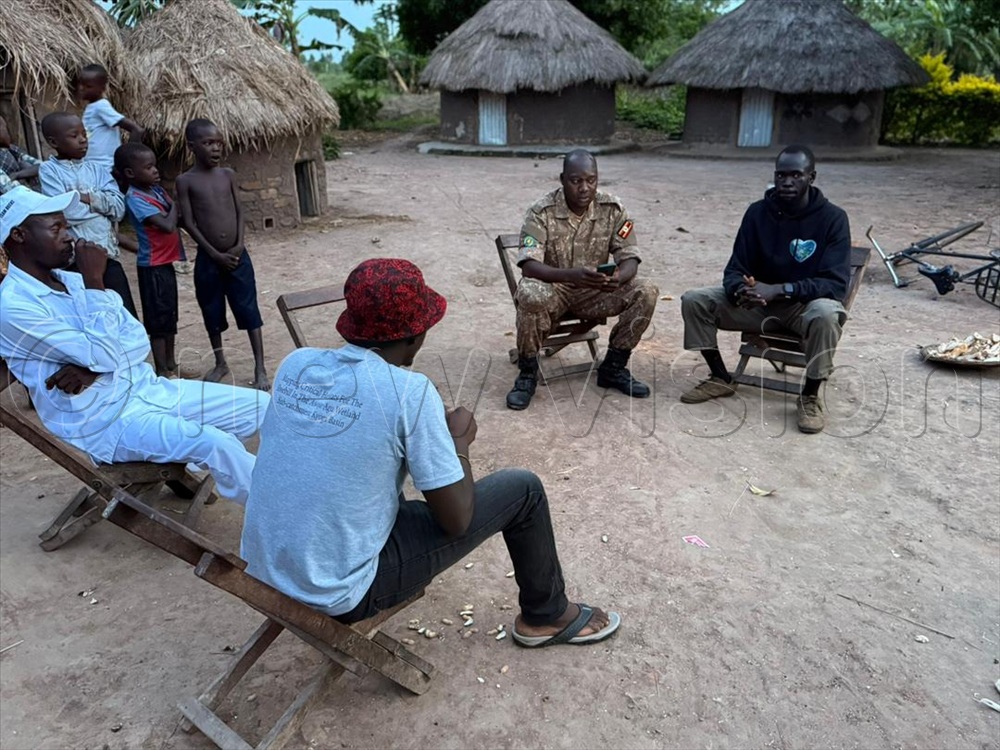
Neighbours, including Juventine Opinya and Martin Ekole, praised the Oluka family for keeping the bird for over five months. Many urged authorities to reward their care and commitment to what they termed as preserving the stork.
In Uganda, the shoebill storks are among the vulnerable and protected species. The massive, shoe-shaped bills (up to 24 cm long) of shoebill storks are inhabits of freshwater swamps, marshes, and papyrus-fringed lakes.
Uganda is one of the best places in Africa to see the elusive, prehistoric-looking Shoebill stork (Balaeniceps rex), with a population of roughly 1,000 in its wetlands.
Top locations for tourism viewing of the storks include: Mabamba Swamp (Lake Victoria): The most accessible, located near Entebbe, The Nile River delta in the Murchison Falls National Park, Lugogo Swamp wetlands in Ziwa Rhino Sanctuary and Lake Bisina & Lake Opeta in Eastern Uganda.