
Gov't drafts new regulations to govern sports facilities
With more projects on the way, the National Council of Sports, the Attorney General’s office, and sports associations/federations have teamed up to create rules for running and maintaining these facilities.
Gov't drafts new regulations to govern sports facilities
Uganda is making progress in sports infrastructure. Hoima City Stadium was commissioned last year, and the Teryet High Altitude Training Centre opened in 2024.
With more projects on the way, the National Council of Sports, the Attorney General’s office, and sports associations/federations have teamed up to create rules for running and maintaining these facilities.
The privately owned facilities will also not be spared in the new regulations being formulated in exercise of the powers conferred upon the minister responsible for sports under sections 29(1)(d)(i) and 79 of the National Sports Act, Cap. 151.
These regulations will be cited as the National Sports (Sports Facilities) Regulations, 2026. They will apply to all facilities that host athletic, recreational, or competitive events, publicly owned or privately licensed.
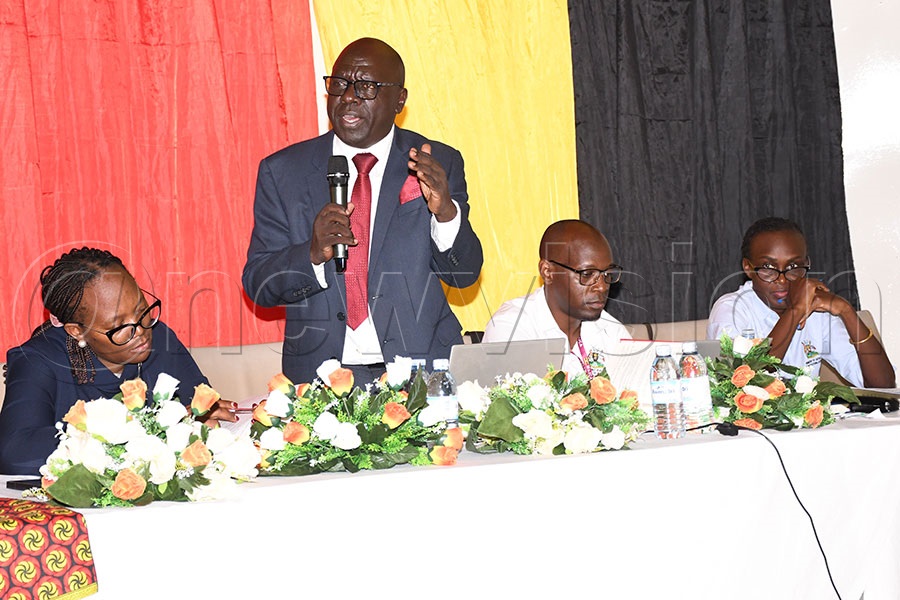
Lawyer Brighton Barugahare (2nd left) talks to association/federation representatives flanked by State Attorneys Lazaka Tibakuno, Harriet Ityang (right) and Allen Bukyana (left) at NCS Lugogo. Photo by MIchael Nsubuga
On Friday, a team from the Attorney General’s office led by lawyer Brighton Barugahare and State Attorneys Lazaka Tibakuno, Harriet Ityang, Allen Bukyana, and Proscovia Kasemire met the association/federation heads at NCS headquarters, Lugogo, for a final review, consultation, and ratification of the regulations before they are turned into law later on this year.
According to the Attorney General’s team the purpose of these Regulations is to: provide for the management by establishing clear roles, responsibilities and accountability mechanisms in the day-to-day operation of sports facilities; provide for maintenance of sports facilities to ensure that they are preserved in good condition that meet minimum national and international standards; regulate the use of sports facilities to promote prudent and equitable use of sports infrastructure for national teams, national leagues, national sports organizations, educational institutions and community sports development and provide for operational mandates, safety standards, event protocols, and stakeholder responsibilities; and enhance safety, security and emergency preparedness within all sports.
Barugahare told the representatives that sports regulation is essential for predictability and the overall good of the industry, even if not universally popular. It's presented as "the right thing to do."
He said the regulations are based on a law enacted by parliament and assented to by the president.
He noted that administrative arrangements cannot override this law and that any desire to change the law requires working collaboratively.
“Some of the ideas will bring discontent. Some of the ideas we bring are very good, and I think they should be appreciated. Some of the ideas are not very popular, but they are necessary because regulation is not about pleasing; it's about moving the sports industry where we want it, but where it is predictable. We want predictability in the sports industry, and we are asking for your input now because this is not a consensus-building exercise but an understanding of what is good for sports,” Barugahare said.
He urged the stakeholders to simplify technical matters for clarity within the regulatory framework, rather than using technicality as a defense. He reminded them that the NCS is empowered as the regulator, overseeing all aspects of sports. NCS General Secretary Patrick Ogwel highlighted the importance of these statutory instruments for the development of sports, noting that it will stimulate how they operate.
“These statutory instruments are very key in directing government on compliance, and the sooner they are made, the better,” Ogwel said.
A number of proposals were considered to be included in the final document that will have to be consented to by the Minister of Education and Sports before it becomes law.
Some of the proposals include categorisation of sports and recreation facilities, ensuring that sports facilities meet the minimum national and international standards required for hosting different levels of sporting events, among other requirements.