
Research ethics seen as essential to advancing healthcare — experts
“We are the first people in the world to launch a clinical trial within four days of an Ebola outbreak. That record has not been broken. This could only happen with the help of our regulators, who immerse themselves not only in regulation but also in the science,” Kirenga said.
Makerere University Bioethics Conference delegates during Makerere Bioethics Conference 2026 at Hotel Africana on November 10, 2026. (Credit: Mary Kansiime)
As artificial intelligence reshapes scientific research and countries confront emerging public health threats, experts at Makerere University are calling for stronger attention to bioethics, arguing that scientific progress must be guided by principles that protect human life and public trust.
Without ethical research, scientists cannot fully understand diseases, develop effective treatments or design interventions to address pressing health challenges, the experts said.
“You cannot do research without ethics. If we don't do biomedical research, we cannot understand the mechanisms of diseases, develop tools to treat diseases or develop interventions to address them,” said Prof. Bruce Kirenga, principal of Makerere University College of Health Sciences.
Speaking at the Makerere University Bioethics Conference (MakBC) 2026, held at Hotel Africana in Kampala from November 10 to 11, Kirenga praised Uganda's research regulatory institutions for helping create an environment in which scientists can respond quickly to public health emergencies.
He singled out the National Council for Science and Technology, the National Drug Authority and other regulatory bodies for their role in facilitating research, particularly during disease outbreaks
Kirenga cited Makerere University's achievement of launching a clinical trial within four days of an Ebola outbreak, describing it as a global milestone that remains unmatched.
“We are the first people in the world to launch a clinical trial within four days of an Ebola outbreak. That record has not been broken. This could only happen with the help of our regulators, who immerse themselves not only in regulation but also in the science,” he said.
For Kirenga, the achievement illustrates how effective collaboration between researchers and regulators can accelerate scientific responses without compromising oversight.
He described the conference as an important forum for strengthening research, which he said remains a central pillar of a strong health system.
Prof. Joseph Ochieng, a Makerere University bioethicist who leads the university's bioethics training program, said the discipline extends beyond medicine, drawing on different fields of knowledge to guide decisions in biological sciences and healthcare.
He said bioethics helps ensure that research findings, products and medical interventions meet minimum ethical standards before they are introduced for public use.
“Any research products or interventions to be rolled out have to meet some minimum standards, and bioethics looks at those standards, specifically the ethical standards, both in research and practice,” Ochieng said.
Research ethics, he added, is a central component of bioethics because it provides researchers with guidance on what should be studied, how studies should be conducted and when they are appropriate.
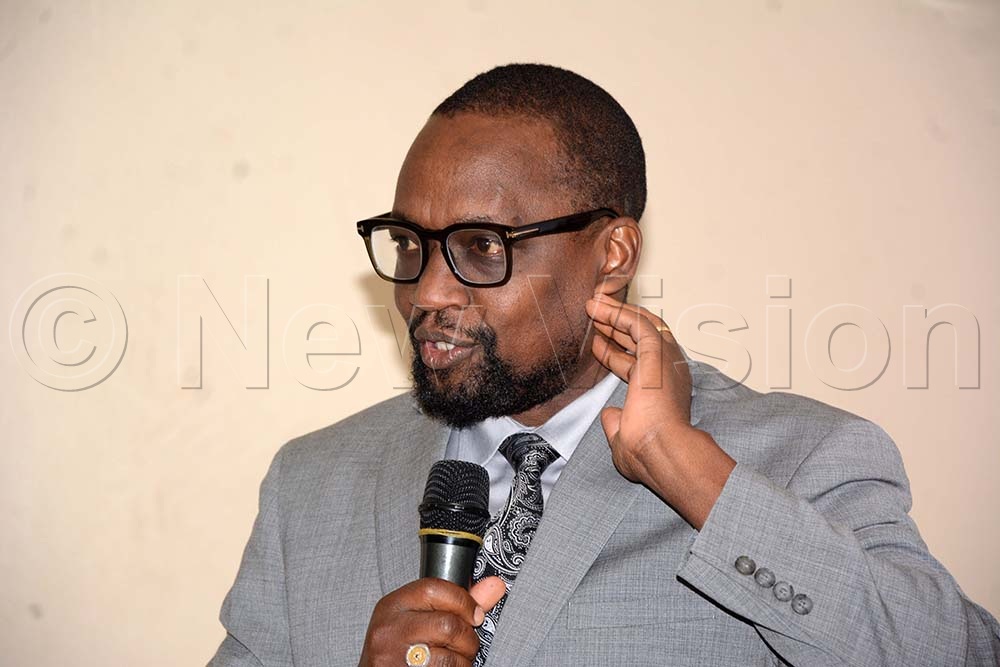
Bruce Kirenga, Principal of Makerere University College of Health Sciences, discussing bioethics during Makerere Bioethics Conference 2026 at Hotel Africana on November 10, 2026. (Credit: Mary Kansiime)
The growing use of artificial intelligence in science is adding another dimension to these ethical considerations.
Prof. Nelson Sewankambo, an emeritus professor of medicine at Makerere University, urged countries, particularly Uganda, to invest in developing artificial intelligence technologies suited to local needs while ensuring that the technology is used responsibly.
He said AI offers considerable opportunities but warned that its benefits could be undermined if safeguards are not put in place.
Sewankambo compared artificial intelligence to medicines, which can improve health when used correctly but cause serious harm when misused. He pointed to drug overdoses and the inappropriate use of antibiotics, which contributes to antimicrobial resistance, as examples of how beneficial tools can become dangerous without proper oversight.
"The conference was extremely relevant to the health services that are delivered, but also to education of future health professionals like doctors, nurses, midwives, dentists, laboratory people, all those who work in health. In addition, it is very relevant to research,’’ he said.
The need for safeguards is also drawing the attention of Uganda's research regulators, who are considering new rules to govern the use of artificial intelligence in scientific studies.
Dr. James Kisaale, executive secretary of the Uganda National Council for Science and Technology (UNCST), said the council was working toward developing regulations to guide researchers as the use of AI expands.
He said the rapid pace of scientific and technological development had made it necessary to establish clear standards to ensure that researchers use emerging technologies responsibly and do not expose the public to harm
“As a national regulator for research in the country, we must be able to come up with clear regulations that will guide our researchers on the best way of using AI in research,” Kisaale said.
The proposed regulations, he said, will be developed in consultation with stakeholders, particularly members of the research community, to establish acceptable practices and identify uses that should be restricted.
“We are going to agree with stakeholders, especially those within the research community, on what will be acceptable in the use of AI for research and what will not be acceptable. That is why we must develop the necessary regulations.”
Kisaale also highlighted the scale of research activity at Makerere University, revealing that UNCST had received more than 20,000 research protocols from the institution for clearance over the past five years.
The submissions, he said, come from researchers working across different disciplines, including the social sciences, underscoring the breadth of research that falls under the council's oversight.
As scientific capabilities expand, the discussions at the conference pointed to a common challenge: ensuring that innovation advances without compromising the rights, safety and dignity of the people it is intended to benefit.