
Kanyarusoke creates agribusiness solutIons
Prof. Kanyarusoke says the payback period for the solar manufacturing system is less than two years compared to grid electricity, especially in areas like Isanga, which enjoy six months of strong dry seasons annually.
Prof. Kanyarusoke (right) demonstrates how he uses REFWE machinery in Kyegegwa district. (Credit: Umar Nsubuga)
KYENGEGWA - From locally-produced fruit dryers to bottled water, an academic from Kyegegwa district is showing why Ugandans should look home for solutions, writes Umar Nsubuga
On a quiet stretch of road about 7km off the Kyegegwa-Fort Portal highway in Isanga village, Bulingo parish, the rhythmic hum of machines breaks the rural silence. Steel sheets are being shaped into silos.
Solar dryers glisten under the afternoon sun. Inside a compact processing unit, purified water flows through triple filtration, triple sterilisation and finally through an ozonator before it is sealed for packaging.
This is not an industrial park in the city. It is the brainchild of Kant Kanyarusoke, an associate professor at the Fort Portal-based Mountains of the Moon University and founder of Renewable Energy for Food and Water Engineering (REFWE) Ltd.
For Prof. Kanyarusoke, manufacturing is not reserved for urban centres. It begins in villages too. It belongs where raw materials are produced. And above all, it belongs in the hands of Ugandans determined to convert sunlight, science and steel into prosperity.
“We cannot keep exporting raw materials and importing finished products, manufacturing must move closer to the farmer. That is where transformation begins,” he says.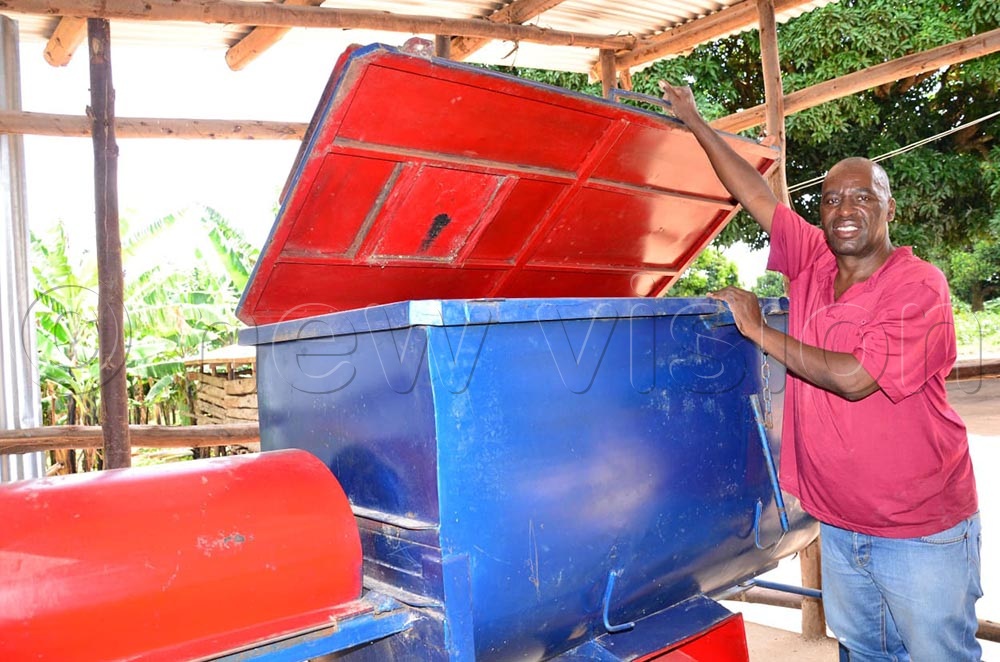
Prof. Kanyarusoke with one of the machines made at the REFWE facility in Kyegegwa district. (Credit: Umar Nsubuga)
Renewable energy
Prof. Kanyarusoke’s journey began in 1982 as a graduate mechanical engineer. He later specialised in machine design and production engineering, earning a master’s degree in mechanical engineering.
After teaching mechanical engineering at Makerere University for two years, he moved into the manufacturing industries in 1987. For nearly two decades, he managed food, beverage and chemical manufacturing factories in Uganda and beyond.
The experience sharpened his understanding of production systems, quality control, and industrial efficiency.
In 2006, he returned to academia, teaching machine design at the University of Botswana, before moving to Cape Peninsula University of Technology in South Africa. It was there that his fascination with renewable energy deepened.
“I began to ask myself why Africa, with so much sunshine, was still struggling with energy deficits,” he says.
Kanyarusoke pursued doctoral studies in solar energy engineering, producing innovations that included a patented sun-tracking device and a two-slope solar collection assembly designed for rural areas.
He also made breakthroughs in crop drying, water purification, heating and cooling systems, all powered by the sun.
His innovations would later earn continental recognition when his “1 for 5” cold store with decked solar crop dryer won the Africa Engineering Innovation Award at the 11th UNESCO Africa Engineering Week in Munyonyo, Kampala.
Kanyarusoke breakthroughs value addition
The “1 for 5” breakthrough
At the core of his award-winning design is a simple but revolutionary idea. The machine extracts heat from cold fruits and vegetables stored inside a cooling chamber. Instead of wasting that heat, it transfers it to warmer products being dried.
At the same time, it harnesses additional energy from the atmosphere, a specially designed Kanyarusoke solar collector, and waste heat from conventional solar panels.
“In simple terms, you pay for one unit of electricity, but the system performs the work of five units. The other four are free,” he explains.
The implication is profound. Rural agro-processors, who often struggle with high energy costs, can now operate cold storage and drying systems at a fraction of conventional expenses.
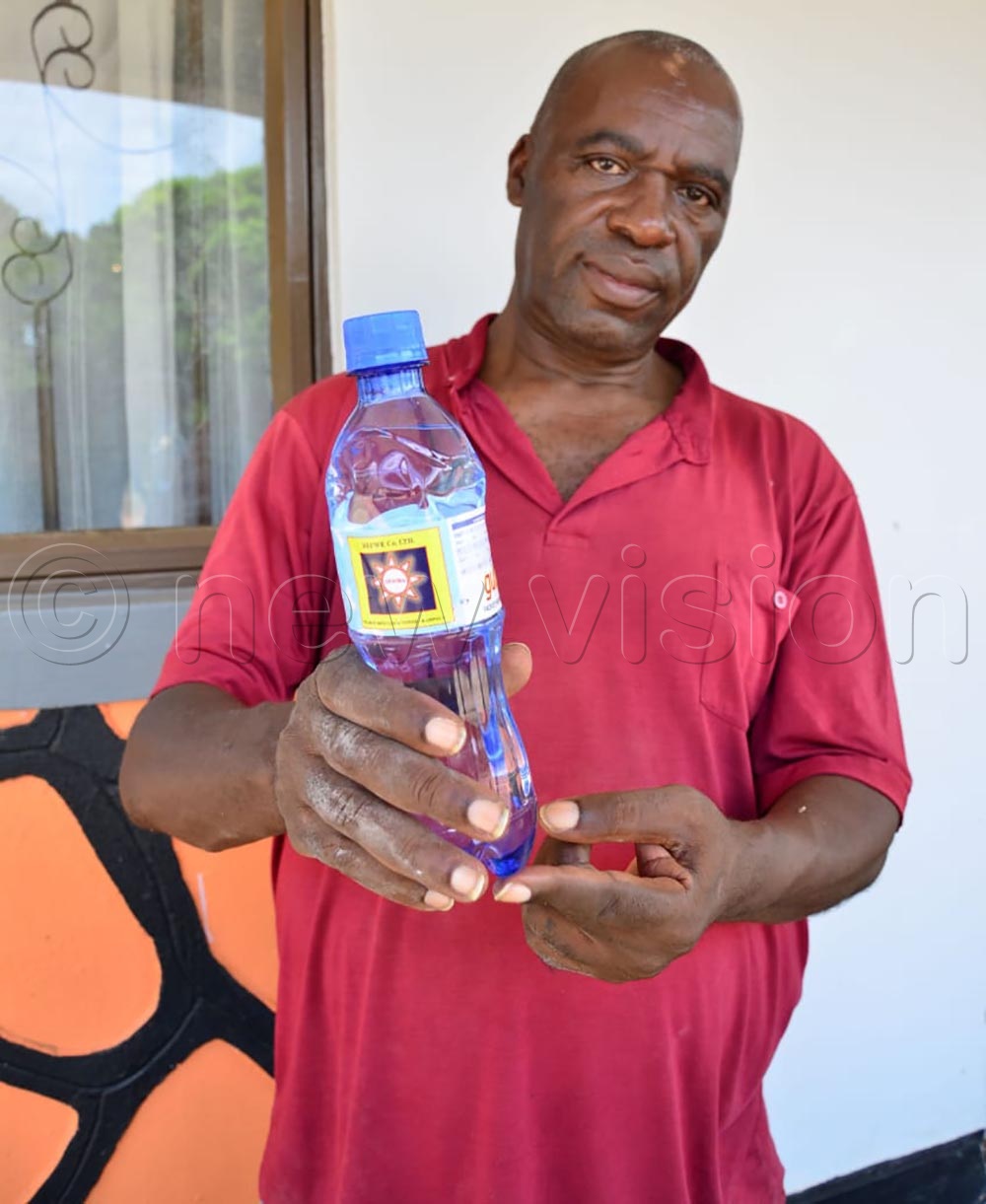
Prof. Kanyarusoke with a bottle of REFWE Gulps Solar Water. (Credit: Umar Nsubuga)
Extending shelf life sustainably
REFWE Ltd manufactures greenhouse solar dryers that utilise the greenhouse effect. Sunlight penetrates transparent covers, heating the air and trays inside.
The trapped heat evaporates moisture from crops such as cassava, mushrooms, and jackfruit. Because the heat is retained efficiently, drying occurs faster and more hygienically than traditional open-air methods.
“This technology increases shelf life from days to months, it improves food safety and enhances market value,” he explains. Farmers who once rushed to sell fresh produce at low prices can now dry and store products, strengthening their bargaining power.
Solar-powered water micro-factory
Inside REFWE’s processing unit stands another testament to engineering precision: a micro-factory for drinking water production.
The system uses triple filtration and triple sterilisation before passing water through an ozonator that eliminates any remaining micro-organisms.
The final product is branded REFWE Gulps Solar Water and is awaiting certification from the Uganda National Bureau of Standards.
“All machinery is solar-powered; this is proof that safe water manufacturing can be done sustainably,” he emphasises.
Manufacturing beyond energy
REFWE’s workshop produces and assembles multiple agro-processing machines, including maize mills, feed-pelleting machines, milk de-creamers, butter churners, and briquetting units. Most equipment is engineered in-house.
“We are not just buying machines, we are designing and building them,” he says.
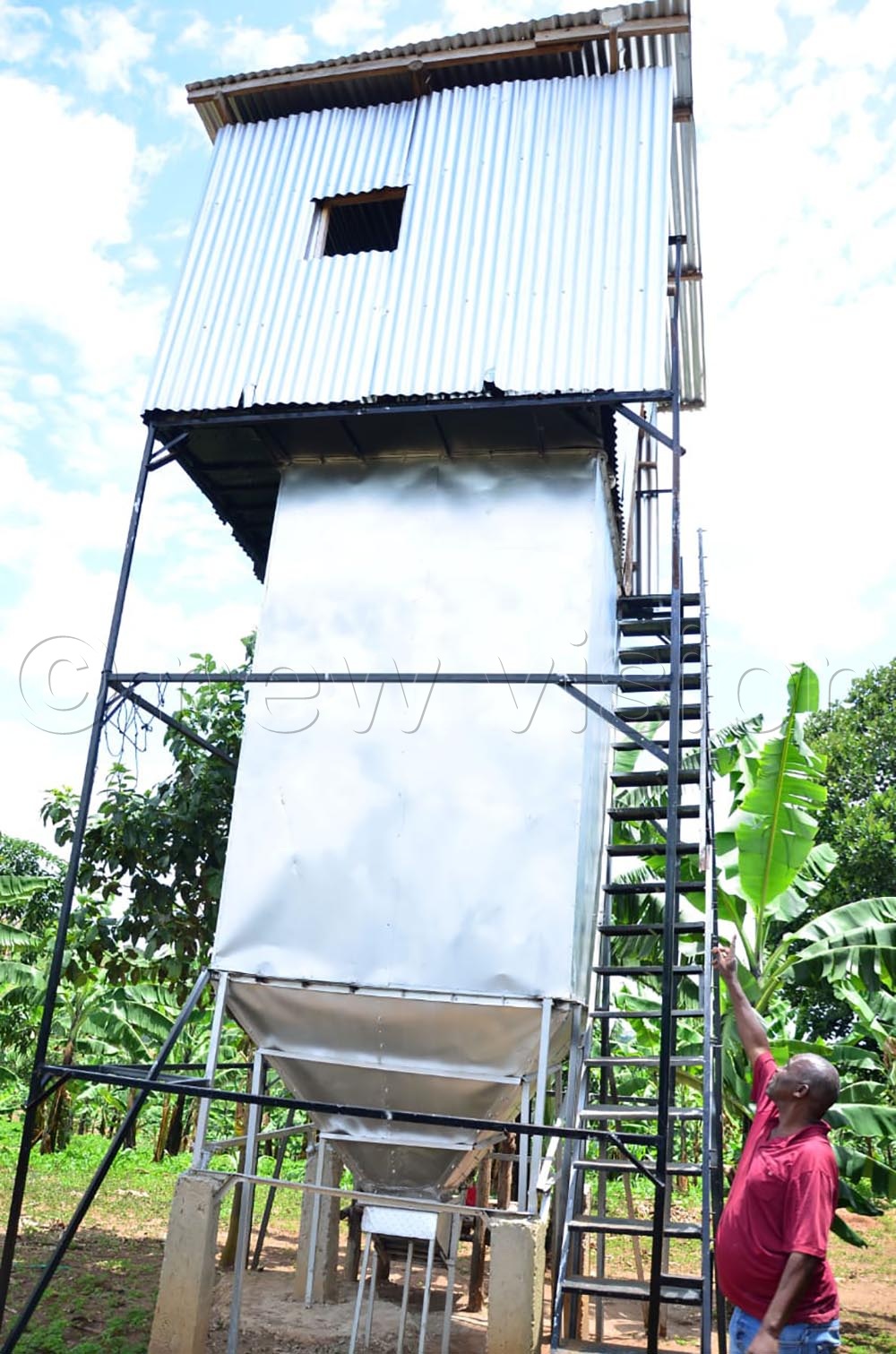
Silos ensure that stored grain remains good. (Credit: Umar Nsubuga)
Meeting challenges with innovation
Operating off-grid presents hurdles. Some heavy machinery still requires diesel power. Solar infrastructure demanded a high initial investment. Erratic weather patterns affect agricultural outputs that feed into processing lines. Labour shortages in skilled machinery operations also persist.
“But challenges stimulate innovation,” Kanyarusoke says.
Plans are underway to introduce biodiesel production using plant oil and agricultural waste to fuel diesel engines on-site. Lydia Kusiima, a resident, says REFWE has become a knowledge centre for local farmers.
“They are free investors who share knowledge; we learn modern methods without fear,” she says. Kanyarusoke envisions REFWE evolving into an agri-tech training hub with dormitories, laboratories, and classrooms.
He aims to digitise his manufacturing models for replication across East Africa. “Why should Africa import processed food and machinery when we can build them?” he wonders.
Kanyarusoke stands as proof that when knowledge meets purpose, and when sunlight meets steel, rural Africa can become an engine of innovation rather than a supplier of raw materials.
Village-based agro-industrialisation
Prof. Kant Kanyarusoke is outspoken about urban market congestion and waste mismanagement.
“Our open food markets are overwhelmed. Agro waste should not be transported to towns. It should be processed in villages into biofuel, organic fertiliser, or animal feeds”, he observes.
Kanyarusoke is spearheading village-based agro-industrialisation in Kyegegwa, ensuring that peels, husks, and crop residues become inputs for briquettes or livestock feed rather than garbage.
As an associate professor at Mountains of the Moon University, Kanyarusoke bridges theory and practice. Students visit REFWE to observe real-life applications of mechanical design, renewable systems integration and agro processing technologies.
Farmers attend workshops on solar drying, silo management and water purification.
Solar-powered manufacturing
After years abroad, Prof. Kant Kanyarusoke returned home with a clear mission to industrialise rural Uganda using renewable energy.
He founded Renewable Energy for Food and Water Engineering (REFWE) Ltd, establishing a 70-acre integrated agro-industrial hub in Isanga village, Kyegegwa district. The enterprise combines agribusiness with engineering, but manufacturing sits at its heart.
“We are now entering real manufacturing at zero running energy cost,” he says.
Using hybrid inverters, the company bypasses full battery storage by directly converting sunlight into power for its 4kW units. Production schedules are aligned with peak sunshine hours, eliminating recurrent electricity expenses.
Prof. Kanyarusoke says the payback period for the solar manufacturing system is less than two years compared to grid electricity, especially in areas like Isanga, which enjoy six months of strong dry seasons annually.
Among REFWE’s flagship products are modern grain silos. Unlike traditional granaries, these silos are made of double-jacketed steel designed to maintain uniform cool temperatures and minimise heat-induced damage.
The units at the Isanga facility have capacities of eight to nine tonnes and can safely store maize for over 12 months.
“If farmers own proper silos, they control their grain, maintain quality and sell when prices are favourable,” Prof. Kanyarusoke says