
EC launches post-election evaluation to improve future polls
The Electoral Commission says the survey will provide insights to improve future election management, strengthen democratic governance, and support the delivery of credible electoral processes in line with its constitutional mandate.
A cross-section of participants engage in a group discussion during a post-election validation survey in Kampala on July 13, 2026. The survey aims to improve election management processes and encourage greater participation of eligible voters in future electoral exercises. (Photo by Wilfred Sanya)
___________________
The Electoral Commission (EC) has launched an independent post-election survey to evaluate the 2025/2026 General Elections.
Jennifer Kyobutungi, the EC regional elections officer for the Kampala region, said at the launch of the survey at Imperial Royale Hotel in Kampala on July 14, 2026, that "the aim is to assess citizens' experiences and perceptions of the 2025/2026 General Elections".
“In a bid to improve the management of future elections, the EC has launched a nationwide post-election evaluation exercise to draw lessons from the 2026 General Elections, including the presidential, parliamentary and local government polls, to improve on the EC’s work,” Kyobutungi announced.
She explained that the EC values people's willingness to strengthen democratic governance and promote a credible electoral process in the country. The survey will gather insights to strengthen future election management and help the commission fulfil its constitutional mandate.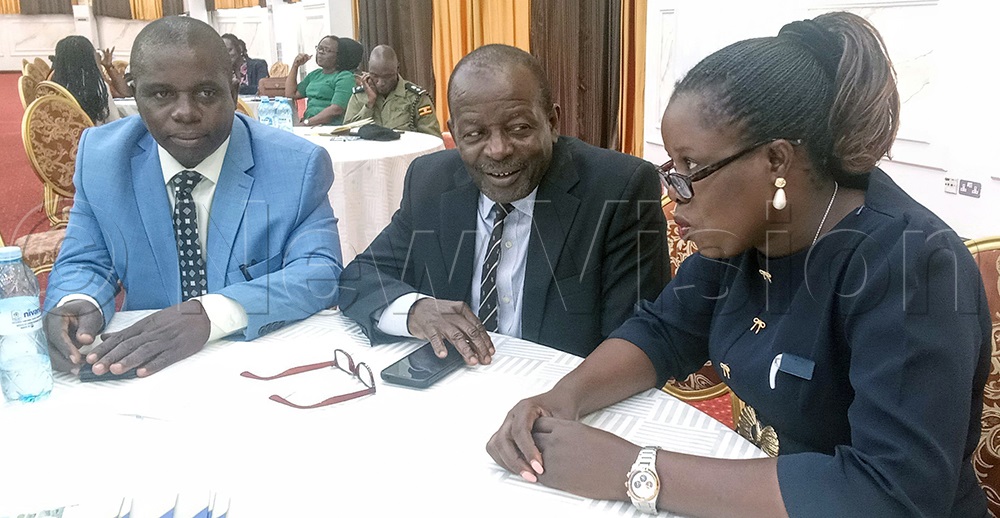
Charles Lwanga, Head of Election Management at the Electoral Commission (left), Dr Simba Kayunga, Commissioner in charge of Kampala Central Region (centre), and Jennifer Kyomuhangi, Kampala Regional Elections Officer, during a post-election validation survey in Kampala on July 13, 2026. (Photo by Wilfred Sanya)
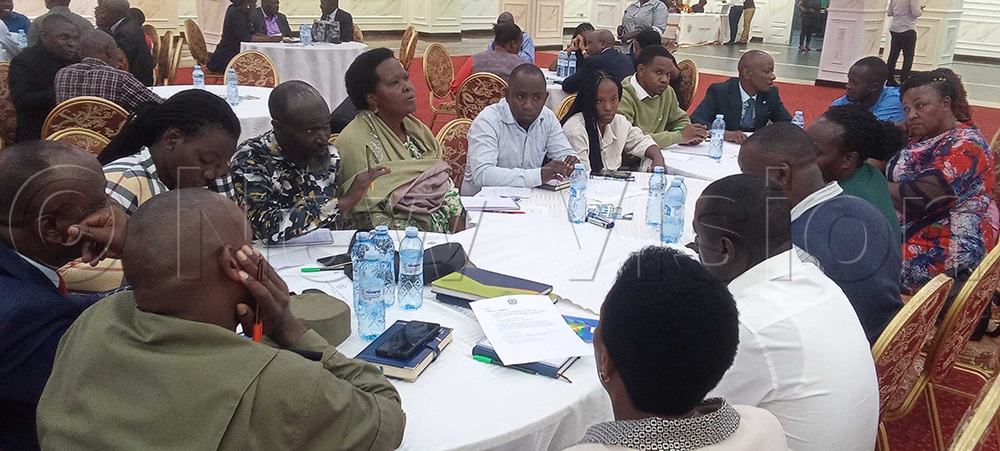
A cross-section of participants take part in a group discussion during a post-election validation survey in Kampala on July 13, 2026. The survey seeks to gather insights to improve election management processes and encourage greater participation among eligible voters in future electoral activities. (Photo by Wilfred Sanya)
The event attracted representatives of political parties, special interest groups, including people with disabilities (PWDs), youth, older persons, workers, the Uganda People's Defence Forces (UPDF), the Uganda Police Force, the Uganda Prisons Service, religious leaders, civil society organisations, EC returning officers and cultural leaders, among others.
“The survey will cover the whole country and will assess the EC’s achievements and challenges and identify practical innovations and sustainable recommendations that will strengthen future electoral management,” she explained.
She reiterated that although the EC organises, conducts and supervises elections, its role does not end with declaring results.
"It also evaluates all stages of the electoral process, identifies lessons learnt, and improves systems and practices to deliver transparent, efficient, inclusive and credible elections in the future," she said.
Dr Sallie Simba Kayunga, the EC commissioner in charge of the Kampala region, said the survey is intended to reflect on the planning, management and conduct of the recently concluded 2025/2026 General Elections.
“The commission has contracted an independent consultancy firm, Adroit Consultants, to undertake a comprehensive survey chaired by Prof. Mesharch Katusiime. In addition, the EC will utilise reports compiled by independent election observers who witnessed the recent polls,” he said.
Kayunga said the survey will be conducted nationwide through stakeholder consultations, discussions, interviews and online surveys involving key electoral stakeholders and the public to encourage broad participation.
He said the questionnaire is accessible to all electoral stakeholders and members of the public.
“We encourage all people to participate and share their experiences during the concluded polls,” he said.
“It provides an opportunity for all stakeholders to openly and objectively assess the electoral process and make practical recommendations that will inform future electoral reforms and planning,” Kayunga said.
He added that the EC has also provided an online questionnaire to enable wider participation by different stakeholders.
Kayunga said the electoral cycle began in 2023 when the EC released its roadmap.
He noted that elections involve the entire process, from preparation through polling day, and that evaluation covers every stage of the cycle.
He added that election petitions also form part of the electoral process. Some petitions are filed before polling day and must be handled in accordance with the electoral laws.
Kayunga praised the joint security forces for providing security during the elections, including protecting electoral stakeholders such as candidates, voters and observers, and safeguarding electoral materials.
He said security personnel protected polling stations, voting centres, ballot boxes, voters' registers, EC offices and transportation routes, while presidential candidates were also provided with security to maintain law and order during the elections.
Robert Centenary, the vice-chairperson for western Uganda of the Forum for Democratic Change (FDC), alleged that security agencies should restrict themselves to their gazetted roles instead of influencing who should be declared the winner of an election.
He said that after voting, EC returning officers should promptly declare winners based on the votes cast instead of delaying declarations until protests arise, sometimes leaving voters injured.
Charles Basajja of the National Economic Empowerment Dialogue (NEED) party appealed to Parliament to strengthen laws to penalise those involved in voter bribery.
He said stronger penalties would reduce the money and time spent handling election petitions in court.