
Don't sign Sovereignty Bill, UPC tells Museveni
In a strongly worded statement delivered through party spokesperson Faizo Muzeyi, UPC President Jimmy Akena urged Museveni "pursuant to Article 91(3)(b) of the Constitution of the Republic of Uganda, to withhold assent to the Bill and return it to Parliament for further scrutiny."
"The 11th Parliament did not give citizens wide consultation and reconsideration. Sovereignty must strengthen Uganda but not isolate its citizens," Akena said, expressing deep concern about the rushed legislative process. (Credit: Wilfred Sanya)
KAMPALA - The Uganda People's Congress (UPC) has urged President Yoweri Museveni to withhold assent to the controversial Protection of Sovereignty Bill, 2026, urging him instead to defer the legislation to the incoming 12th Parliament to allow for adequate public consultation and refinement.
In a strongly worded statement delivered through party spokesperson Faizo Muzeyi, UPC President Jimmy Akena urged Museveni "pursuant to Article 91(3)(b) of the Constitution of the Republic of Uganda, to withhold assent to the Bill and return it to Parliament for further scrutiny."
"The 11th Parliament did not give citizens wide consultation and reconsideration. Sovereignty must strengthen Uganda but not isolate its citizens," Akena said, expressing deep concern about the rushed legislative process.
The party head added that while UPC remains "a steadfast defender of Uganda's independence, constitutional order, and national sovereignty," they believe the current legislation "risks undermining the very objectives it claims to protect."
"Uganda's sovereignty cannot be secured merely through restrictive legislation. True sovereignty is built upon strong national institutions, economic resilience, constitutional legitimacy, public trust, prosperity and dignity of its people," Akena said.
However, Akena's remarks come after President Museveni congratulated the National Resistance Movement (NRM) legislators for passing the Protection of Sovereignty Bill, 2026.
To him, the legislation means: ‘Let us do our things by ourselves just as you do your own things without anybody interfering with you’.
“How shameful and disgusting to see people arguing otherwise! Foreigners interfering in our internal issues is very dangerous,” the President said in a statement released by his press team on April 7, 2026, morning.
Akena said while "Uganda has a legitimate right to protect itself from unlawful external interference," the current Bill contains "broad and ambiguous provisions that may unintentionally criminalise legitimate international engagement, discourage investment and economic cooperation, undermine academic and civil exchange, and create uncertainty within Uganda's financial and legal environment.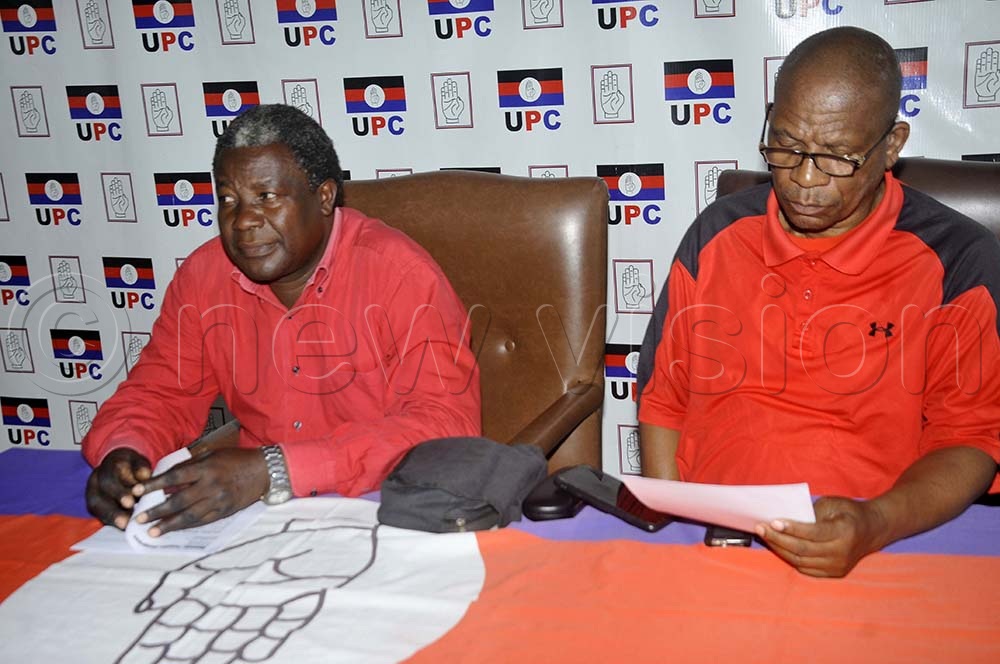
The party head added that while UPC remains "a steadfast defender of Uganda's independence, constitutional order, and national sovereignty," they believe the current legislation "risks undermining the very objectives it claims to protect." (Credit: Wilfred Sanya)
"Laws touching on national sovereignty and national security must be clear," Akena said. "Ambiguity in such legislation risks misuse, selective enforcement, and unnecessary tension within society."
The controversial Protection of Sovereignty Bill, 2026, was passed by Parliament on May 4 after what Speaker Anita Among described as a historic sitting marking the final legislation of the 11th Parliament. The Bill now awaits assent by President Yoweri Museveni to become law.
The Protection of Sovereignty Bill is part of government efforts to shield Uganda’s governance systems from external influence.
The Bill had proposed a cap on foreign funding set at sh400m annually, which financial experts had argued was fundamentally misaligned with the scale of Uganda’s financial system.
However, unlike the original Bill, the passed legislation includes exemptions for diaspora remittances, humanitarian assistance and legitimate commercial transactions, safeguards government says will prevent unintended harm.
While the Government has defended it as a necessary safeguard against foreign interference, critics argue its implications could be far-reaching.
Attorney General Kiryowa Kiwanuka told Parliament that the Bill had been substantially revised, with at least 18 amendments introduced to address concerns raised during public scrutiny.
He said the law now primarily targets non-citizens and Erute South MP Odur individuals acting on behalf of foreign political interests.