
When the race for passengers, how financial pressure, dangerous driving and weak enforcement put lives at risk
How financial pressure, dangerous driving and weak enforcement expose taxi passengers and other road users to danger Uganda recorded 26,044 road crashes in 2025, up from 25,107 in 2024. Fatal crashes stood at 5,383, an average of about 15 deaths a day. Traffic Police spokesperson Michael Kananura says 3,098 of the crashes involved taxis.
Sheikh Musa Kangi, a driver for 20 years operating at Ggaba stage in the Old Taxi Park
At 5:30am, the Old Taxi Park in Kampala is already choking with activity. The air is thick with diesel fumes, sweat and shouting as conductors call out destinations — “Ggaba! Ggaba! Ggaba!” Passengers scramble with bags, children and luggage into 14-seater Toyota taxis. In the rush, a driver pulls out and drives against traffic, searching for a gap in the crowded road.
What happens when the daily race for passengers pushes a driver to ignore the rules of the road?
Inside the vehicle are passengers, some of them children, trusting the driver with their lives. Outside are pedestrians, bodaboda riders, motorists and other road users who are equally exposed when a vehicle suddenly changes direction, overtakes dangerously, stops without warning or drives against traffic.
THE DANGER
Uganda recorded 26,044 road crashes in 2025, up from 25,107 in 2024. Fatal crashes stood at 5,383, an average of about 15 deaths a day.
Traffic Police spokesperson Michael Kananura says 3,098 of the crashes involved taxis. Of these, 365 were fatal and 927 deaths were recorded in crashes involving taxis.
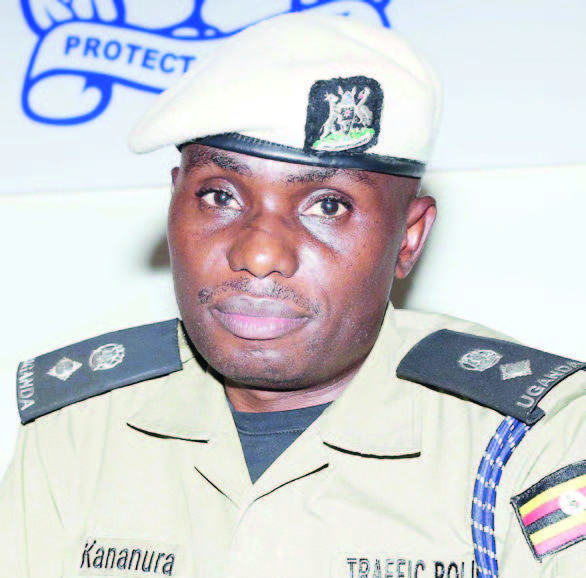
Michael Kananura, traffic Police spokesperson
The Police attribute more than 40% of all crashes to reckless driving.
“The most common violation is speeding. We should not value money more than our lives. Money can wait, a passenger can wait, but a life may not wait,” Kananura says.
He says dangerous driving is particularly risky in 14-seater taxis because they carry many passengers.
“It is unsafe for all vehicles but more risky for 14-seaters because they carry more people. We fight it much more than in private vehicles because even if the other single person is reckless, if he is to die, he dies alone,” Kananura says.
He says many crashes happen not at notorious corners or blackspots, but on open, straight roads where drivers speed and overtake dangerously.
“Most of these crashes occur on straight roads, no corners, nothing. They occur on open roads due to speed and reckless overtaking,” he Kananura adds.
This investigation, based on six days in Old Taxi Park, New Taxi Park, Namayiba Park, Nateete, Busega, Namboole and roadside stages along Masaka, Jinja, Bombo and Ggaba roads, found that reckless driving is not random.
Drivers and taxi leaders describe a system in which financial pressure, competition for passengers, vehicle conditions and weak enforcement can combine to create dangerous behaviour.
LIVES AT RISK
The practices described by drivers, taxi leaders and passengers are often interconnected. Speeding, driving against traffic, dangerous overtaking, sudden stopping to pick or drop passengers, competing for passengers, overloading and changing routes are among the practices described. For some drivers, the day begins with a financial obligation to the vehicle owner.
Aloysious Buyikiza, who has operated on the Namboole-Busega route for 12 years, says a driver can be required to hand over between sh80,000 and sh120,000 a day, regardless of how many passengers have been carried.
“The issue is low income. Once you make a mistake and don’t deliver the boss’s money in a day, it means the following day you have to double,” Buyikiza says.
That pressure, he says, can encourage drivers to take risks.
“We cannot leave a passenger on the road. However much there is no space, we still create space in order to cover up the boss’ money,” he says.
Ronald Masaya, a driver in the New Taxi Park for 19 years, says fuel and multiple charges add to the pressure.
“Fuel prices are high, every stage charges money. One taxi pays in many places. To cover expenses we add extra passengers. If we follow the law, we go home with nothing,” he says.
Abdul Rahib Mpongo, who has operated on the Masaka-Lyantonde route for 16 years, says the arithmetic can be unforgiving.
A return trip requires fuel, while drivers also pay stage fees and other charges.
“At the park you paid, and where you are heading is not your home, you have to return. What are you left with? That is the stress taxi drivers face daily,” he says.
For a taxi carrying 14 passengers at sh15,000 each, one leg can generate sh210,000 in gross fares. But drivers say fuel, taxes, stage fees and other operating costs quickly eat into the amount.
Juma Sseyamu, a route guide at Namayiba, says some drivers take home only sh10,000 to sh20,000 a day.
“Someone might get sh20,000 and end up spending sh50,000 on alcohol and other things. They operate in losses, consuming the boss’ money. They make a lot of accidents in fear of being wiped away from their jobs,” he says.
reach my destination,” she says.
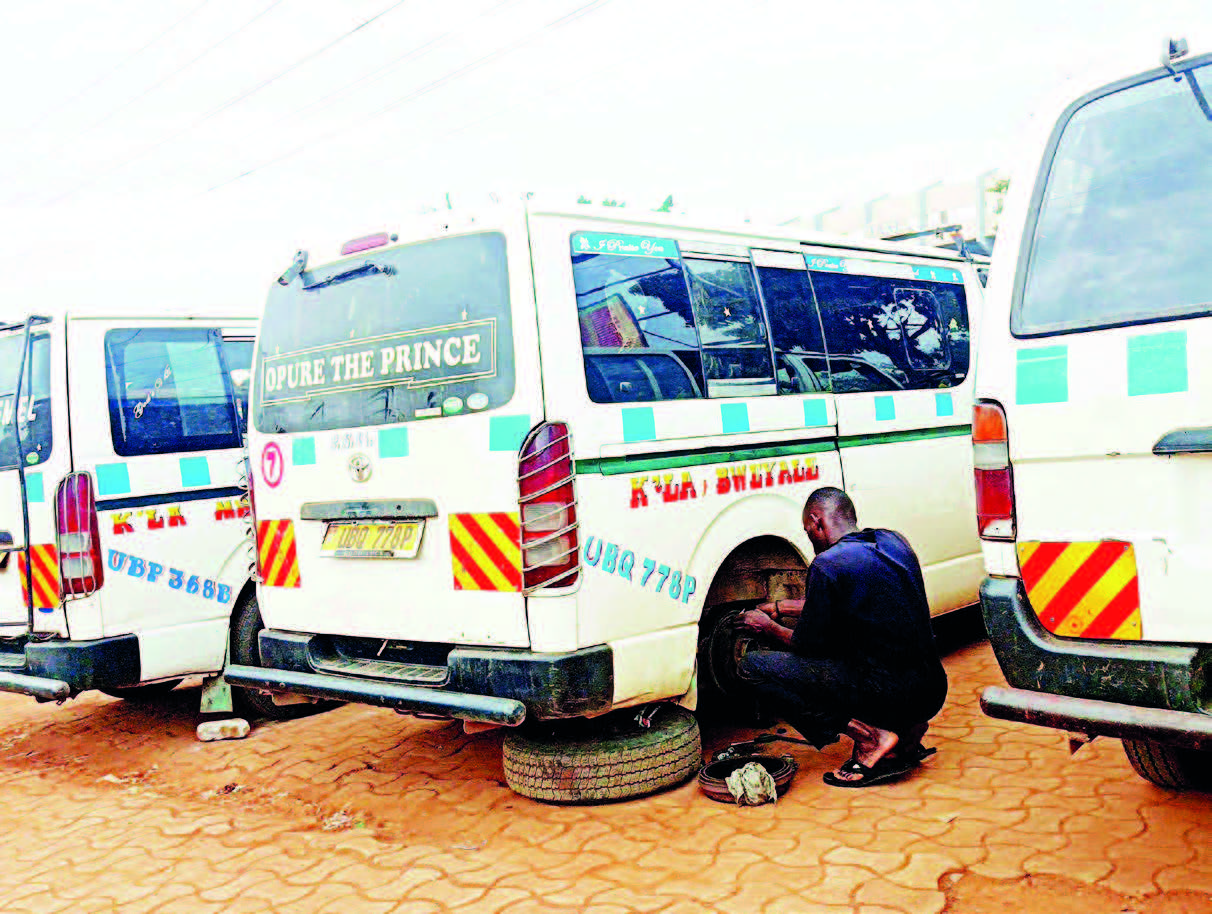
Taxis undergo repairs while waiting for their loading turn at Namboole stage, where loading is done on a first-come, first-served basis
Wilberforce Nabwiso, a trader from Mbale, says route cutting is another problem.
“We are dumped at unfamiliar stages and forced to pay again or change to a different taxi. You can be changed into more than two taxis before you reach Mbale, and the same happens on the way to Kampala,” he says.
Nabwiso adds that the changes can result in quarrels and loss of property, while passengers may also face insults and abuse during rush hour. For traffic Police, the consequences of dangerous driving extend beyond inconvenience.
Kananura warns passengers against boarding vehicles in dangerous mechanical condition and urges them to report reckless driving. He says passengers have sometimes admitted that they knew a crash was likely to happen from the way a driver was behaving.
“Survivors often admit, ‘We had seen we were going to get an accident from the way this man was driving — negotiating corners badly, overtaking carelessly,’” he says.
He also warns passengers against carrying children on the front seat without appropriate protection.
“Whoever sits in front must use the seatbelt. You cannot share a seatbelt with a kid. Children above five must use seatbelts and sit as full passengers. Below five must use child restraints. If a passenger sits in front carrying a child, in case of anything, that child moves out through the window,” he says.
WEAK ENFORCEMENT
Taxi leaders say they also face difficulties enforcing discipline within the industry.
Tibulisious Ssekitoleko, the chairperson of Ggaba Stage in the Old Taxi Park and a leader in the Uganda Taxi Operators Federation (UTOF), says the sector’s internal disciplinary system has weakened since the days of the Uganda Taxi Operators and Drivers Association (UTODA).
“UTODA used to be powerful but now UTOF has no much authority. When some drivers are indisciplined we cannot punish them, they run to different people who are more powerful,” he says.
Sowali Mwange, secretary of Ggaba Stage, says some drivers can bypass stage leaders when disciplined.
“Today, every driver has a godfather. You warn a driver, he calls his boss who is a big person. We are left with nothing to do,” Mwange says.
Benya Mugaya, a defence security officer at Ggaba Stage, alleges that some taxis are linked to powerful individuals.
“The owners of taxis are government officials, ministers, security operatives, city tycoons. They have a voice and their vehicles cannot be impounded. So the driver becomes resistant and behaves badly on the road because he has support from his boss,” Mugaya says.
These are allegations from taxi leaders and drivers and do not establish that particular owners have interfered with enforcement.
Kananura says the Police continue to enforce road safety laws and encourages passengers and other road users to report dangerous driving and corruption.
The Traffic Police toll-free number for reporting such cases is 08001999099.
WHAT CAN BE DONE?
Taxi leaders say they have introduced measures such as daily inspections, route controls, driver identification, savings schemes and disciplinary procedures.
Ssekitoleko says drivers found guilty of misconduct can be suspended.
“Once a bad driver is reported in this office we do punish accordingly. We suspend the driver for one month, after he comes with a letter of apology to show to the committee. If the behaviour is worse, we stop him for a year. We can also remove him from the route chart, because the chart also acts as a driver’s saving or welfare,” he says.
UTOF has also established a savings and credit co-operative society and a daily savings scheme known as “cash round”, through which drivers contribute and members can receive assistance when they face financial difficulties.
The leaders, however, want the Government to gazette more taxi parks, reduce inspection fees and address what they describe as multiple taxes and charges on the sector. They also question restrictions on where ordinary taxis can operate, including on the Entebbe Expressway.
For the Government, however, the larger challenge remains how to make public transport safer while it continues to provide livelihoods for thousands of drivers and conductors and remains an essential means of transport for millions of passengers.
For passengers, the issue is more immediate. Every morning, they enter taxis expecting to reach their destinations safely. They do not control the driver’s financial target, the condition of the vehicle, the road or the enforcement environment. They simply trust the person behind the wheel.
And when that driver speeds, overtakes dangerously, drives against traffic, overloads the vehicle or stops suddenly in the race for another passenger, it is not only the driver’s livelihood that is at stake.
There may be 14 or more lives inside the vehicle.
There are pedestrians crossing the road, bodaboda riders alongside it and motorists approaching from the opposite direction. Kananura’s warning is therefore simple:
“Money can wait, a passenger can wait, but a life may not wait.”
The challenge for Uganda’s taxi industry is to ensure that the pressure to make a living never becomes a reason to put human life at risk.
PARKS, ROADSIDE STAGES, ACCOUNTABILITY Taxi leaders distinguish between vehicles operating from gazetted parks and those picking passengers from roadside stages. Juma Ssentamu, a route guide for the Semuto route, says roadside operations make accountability more difficult. “They stop anywhere, they don’t have stages. Police chase them, they run.
In the park we queue, but those outside have no guides, no guidelines,” he says. Hatimu Bakaki, the speaker of Namboole Kayembe Stage, says parks have systems intended to promote discipline. “We in the park have rules. We don’t charge routes as we want. We have timekeepers and security.
But those operating outside the park have no moral behaviour because they have no regulations,” he says. At Namayiba park in Kampala, Faizo Lule says vehicles are inspected before loading. “We inspect vehicles including tyres, major mechanical conditions and the driver’s ability on a daily basis before we allow them to load passengers,” he says.
The park has also placed telephone numbers in vehicles so passengers can make complaints, while vehicles are assigned numbers and colour codes for easier identification. But Lule acknowledges that the wider industry remains difficult to regulate.