
UN Women calls for protection from technology-based GBV
The call was made by UN Women Country Representative Paulina Chiwangu while briefing the media about the campaign against GBV that kicks off in Uganda on Wednesday (November 25, 2026) at their offices in Naguru.
As Uganda joins the campaign aimed at ending Gender-based violence (GBV), development partners such as UN Women are calling for regulations that will protect women from technology-based GBV. (Courtesy photo)
_________________
As Uganda joins the campaign aimed at ending Gender-based violence (GBV), development partners such as UN Women are calling for regulations that will protect women from technology-based GBV.
The call was made by UN Women Country Representative Paulina Chiwangu while briefing the media about the campaign against GBV that kicks off in Uganda on Wednesday (November 25, 2026) at their offices in Naguru.
UN Women is the United Nations Entity for Gender Equality and the Empowerment of Women with a focus on advancing gender equality and women’s empowerment globally.
Chiwangu said although the expansion of digital spaces has created new opportunities for communication and empowerment, it has also opened new avenues for abuse.
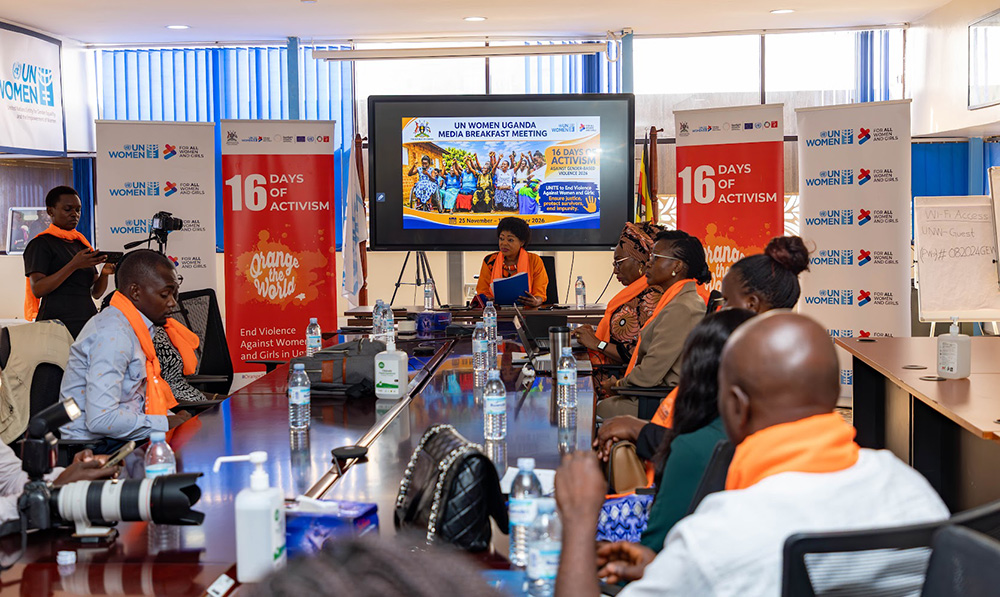
As Uganda joins the campaign aimed at ending Gender-based violence (GBV), development partners such as UN Women are calling for regulations that will protect women from technology-based GBV. (Courtesy photo)
“Online harassment, image-based abuse, cyber stalking, sextortion, impersonation, and coordinated attacks against women are becoming increasingly common through Technology-Facilitated Gender-Based Violence (TFGBV),” she said.
Recent reports and studies indicate that nearly half of Ugandan women have experienced some form of online gender-based violence. According to the 2025 study by WOUGNET, 88% of respondents had experienced or witnessed online abuse, including women politicians, journalists, and students.
“Online violence undermines freedom of expression, limits women's participation in public and political life, affects mental health, and often spills over into physical violence. Digital violence is not virtual harm. It is real harm, with real consequences,” Chiwangu warned.
“We have been working with civil society and government institutions to identify the gaps. The gap in technology-facilitated GBV are laws and policies. We are working with CSOs like FIDA and the Justice, Law and Order Sector to see if we can amend the Computer Misuse Act to cater for this form of violence while we continue to advocate for a strong law and policy to hold perpetrators accountable under technology-facilitated GBV,” she said.
Apart from technology-promoted gender-based violence, she said that globally, one in three women experiences physical or sexual violence during in their life time globally. And every day, approximately 140 women and girls are killed by a partner or a family member, underscoring the persistent threat that many women face simply because they are women.
In Uganda, the Demographic and Health Survey of 2022 shows that 51% of women have experienced physical violence, significantly higher than the African average. And the recent releases from Uganda Police’s annual crime report of 2025 recorded 25,000 967 cases of gender-based violence, including domestic violence and sexual offences.
“So, through its partnership with the government of Uganda, civil society, development partners, and other stakeholders, UN Women continues to support efforts to strengthen prevention, improve access to justice, and enhance survivor-centred services, and advance gender-responsive policies and accountable stability mechanisms,” she added.
She also appealed to the media to popularise information on forms of gender-based violence for victims to find justice.