
UHRC warns Teso clans against caning errant members
The warning comes amid reports that some clan leaders in the sub-region are using cultural bylaws to punish errant members through corporal punishment.
Josephine Akello, the Soroti Regional UHRC Officer, speaking during the community baraza at the Karamojong landing site, Pingire in Serere District on Friday, November 20, 2026. (Photos by Delux Emmy Alomu)
________________
The Uganda Human Rights Commission (UHRC) has warned clan leaders against disciplining errant members through caning, a practice reportedly common in the Teso sub-region.
The warning comes amid reports that some clan leaders in the sub-region are using cultural bylaws to punish errant members through corporal punishment.
The commission says the Anti-Torture Act prohibits acts of torture and that corporal punishment has also been outlawed. It warned that anyone who canes errant members commits a crime and violates their human rights. Those reported to the police over such acts can be arrested and prosecuted.
Officials from the commission's Soroti regional office acknowledged that they had previously received a complaint of this nature. However, they said residents often failed to report such incidents to the authorities due to a lack of knowledge or information, although they had seen many such cases discussed on social media.
“So I kindly request the clan leaders from Teso to refrain from clan beating and use other means to discipline the errant members in the society,” Josephine Akello, the regional human rights officer at Soroti UHRC regional office, said.
Akello also cautioned fishing communities in Teso against involving children in fishing activities, saying this violates Article 34, which requires citizens to protect children from all forms of abuse, including child labour.
According to her, anyone who takes a child fishing subjects them to child labour and can be arrested and prosecuted.
“You know that you are not supposed to make children conduct fishing activities when they are supposed to be in school, even when they are out of school because it’s very risky for their safety and communities should refrain from such acts,” she said.
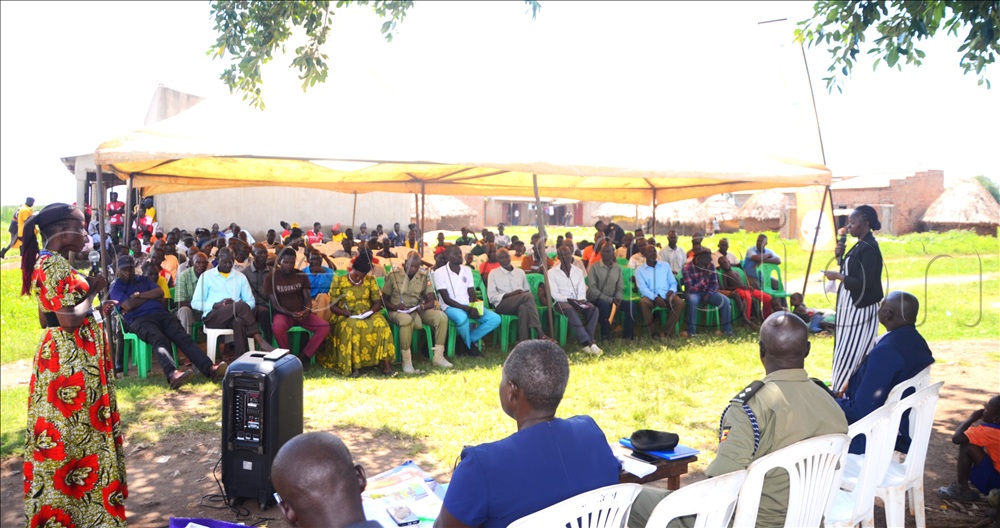
The issues were raised during a community engagement, or baraza, organised by the UHRC Soroti regional office to discuss human rights. Karamojong landing site was selected by the district as the venue for the engagement following reports of several human rights abuses and violations.
The discussion followed concerns raised by Fabiano Omagino, a clan leader in Serere district, about some clans punishing errant members through caning and beating.
Robert Onyait, the senior assistant chief administrative officer of Pingire subcounty, said several clans had bylaws providing for the beating of errant members, which he said were inconsistent with the Ugandan Constitution.
He advised clans to seek legal advice when drafting bylaws or have them reviewed before implementation. He said bylaws that directly provide for the beating of errant members were unacceptable. Onyait advised clans to adopt more acceptable measures, such as imposing small fines, instead of beating members.
Onyait also acknowledged that using children for fishing was common at landing sites because many of their parents owned boats. As the children grew up, they were involved in fishing to help their parents and eventually became accustomed to the activity.
He advised parents against taking their children fishing, urging them instead to allow them to attend school. He said not every child from a fisherman's family would become a fisherman and that education could open up other opportunities.
Joyce Christine Aluro, the Serere district LC5 chairperson, said more school dropouts were being reported at landing sites. She added that, besides being involved in fishing, some children engaged in offences such as sexual abuse and marijuana smoking. She said authorities were working to sensitise them against such activities.
Joseph Onyango, the chairperson of Chamodoko landing site in Pingire subcounty, said some fishermen bought illegal undersized fishing nets measuring half, two and three inches in large quantities, cut them into pieces and used children to spread them in Lake Kyoga. He said the children were paid between sh3,000 and sh4,000.
Onyango said that when such fishermen failed to find co-fishermen, they resorted to using children without their parents' knowledge.
Rose Aguti, a resident, said clans were justified in beating errant members caught stealing because people worked hard to earn a living, only for others to steal from them.
John Stephen Ejeku, a resident of the landing site, said parents who allowed their children to fish instead of attending school had contributed to criminal activities, including smoking opium, grey hair and fighting, among other activities.
Martina Akiteng, a women's leader at the landing site, said the community baraza was timely because landing sites were complicated places that attracted people who had left their ancestral villages and ignored the advice of their clan leaders.
Musa Alemu, a 74-year-old elder, said the commission had helped them understand children's rights, adding that many had not previously considered children's right to education and had allowed their children to engage in fishing.
Harriet Amoding, the Serere acting district community development officer, said that, besides parents, LC1 chairpersons had a responsibility as the first authorities to ensure that children's rights were not violated.
During the engagement, participants also raised concerns about alleged human rights violations by marine and UPDF officers. Akello said the officers were expected to protect fishermen and curb the use of illegal fishing gear. However, where fishermen violated regulations, officers should arrest and prosecute them rather than beat or torture them.
People whose rights have been violated were urged to report to the commission through its toll-free line, 0800144206, its website or app, or the latest digital case management system portal for lodging complaints.
The UHRC Soroti regional office said it would also take the human rights education campaign to the Bugisu and Sebei sub-regions.