
Ugandan scientists back Museveni tax-free pay proposal, CSOs call unfair
The proposal, which the President intends to present to Cabinet, would effectively increase scientists’ take-home pay by about 30 per cent.
President Yoweri Museveni (centre) with Minister of Agriculture, Animal Industry and Fisheries (MAAIF) officials on a guided tour of the newly commissioned NARO Anti-Tick Vaccine production plant in Nakyesasa, Wakiso District. This was on April 30, 2026. (Photo by Miriam Namutebi)
__________________
The scientific community says President Yoweri Museveni’s proposal to exempt scientists from Pay As You Earn (PAYE) tax is a welcome boost that could ease financial pressure and allow researchers to focus more on innovation.
The proposal, which the President intends to present to Cabinet, would effectively increase scientists’ take-home pay by about 30 per cent.
Speaking at the launch of the locally developed anti-tick vaccine, NAROVAC, in Wakiso on April 30, 2026, Museveni said scientists—like the military—should be treated as a special cadre critical to stabilising the economy.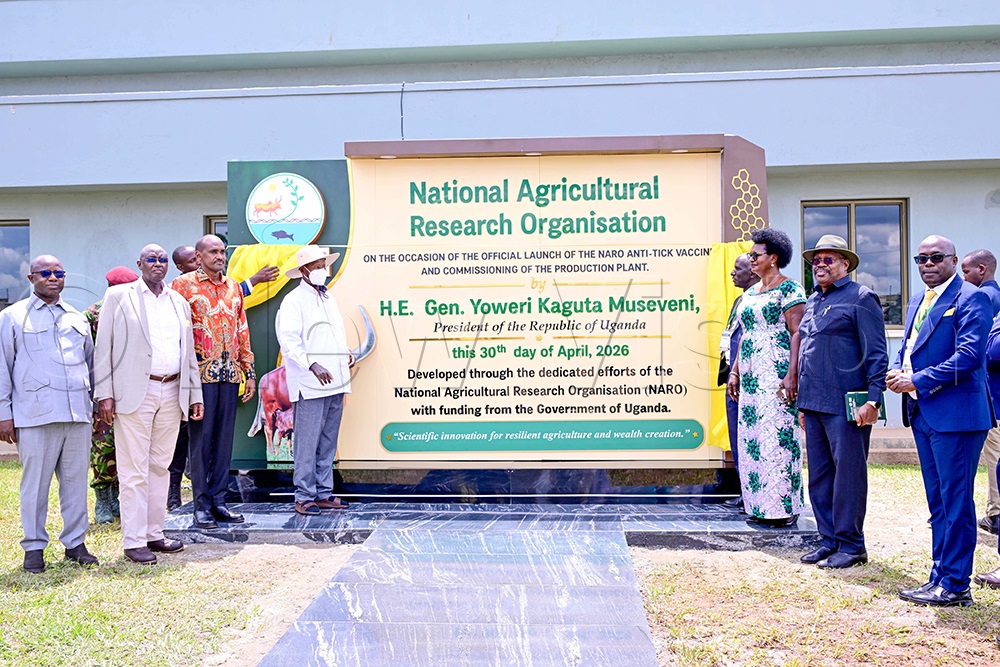
President Yoweri Museveni (4th left) in a group photo with L-R; the Minister of State for Agriculture, Fred Bwino Kyakulaga, the State Minister for Animal Industry, Bright Rwamirama, the Minister of Agriculture, Animal Industry and Fisheries (MAAIF), Frank Tumwebaze, the Director General of NARO, Dr Yonah Baguma, State Minister for Fisheries, Hellen Adoa, MAAIF’s Permanent Secretary, Major General David Kasura Kyomukama and other officials. This was during the launch of the NARO Anti-Tick Vaccine and the commissioning of the new Anti-Tick Vaccine production plant at the NARO National Livestock Resources Research Institute (NaLIRRI) in Nakyesasa, Wakiso District on April 30, 2026. (Photo by Miriam Namutebi)
Citing the National Agricultural Research Organisation (NARO), he noted that the country has a relatively small number of scientists, estimating about 700 staff across 16 entities.
“This is not a big number. What if we say, because you are doing a special job, the little you have got we don’t tax it? We should do the same for doctors until they stabilise,” he said.
He acknowledged that although scientists are among the better-paid public servants, taxation significantly reduces their net earnings.
“I have been working to stabilise our science community. Despite opposition, I insisted on increasing their pay,” he said. “But even after that, the 30 percent tax takes back a lot. We need to do more.”
Museveni said he plans to formally table the proposal before Cabinet, suggesting that scientists and doctors could benefit from tax-free pay similar to soldiers and police officers.
Scientists welcome relief
Dr Ivan Mambule of the Joint Clinical Research Centre (JCRC) said removing PAYE would ease the financial strain that often forces scientists into side jobs.
“If I am not going to pay PAYE, I would definitely be happy. It reduces the burden. Instead of worrying about survival or taking on extra work, a scientist can focus on ideas, proposals and solutions.”
However, Mambule stressed that salary adjustments alone are not enough to transform Uganda’s scientific output.
“Salary is a background factor—it prevents dissatisfaction, but it doesn’t necessarily motivate,” he said.
He argued that what matters most is the working environment, including modern laboratories, research infrastructure and well-structured universities.
“If government invests more in facilities where scientists can work and express themselves, that would make a lot of sense,” he said.
Mambule also called for reforms in universities to strengthen research capacity and align institutions with national innovation priorities.
Unmet promises
Dr Herbert Luswata, consultant obstetrician and former president of the Uganda Medical Association, also backed the proposal, noting that similar tax exemptions already exist for some public servants such as judges, the UPDF and Police.
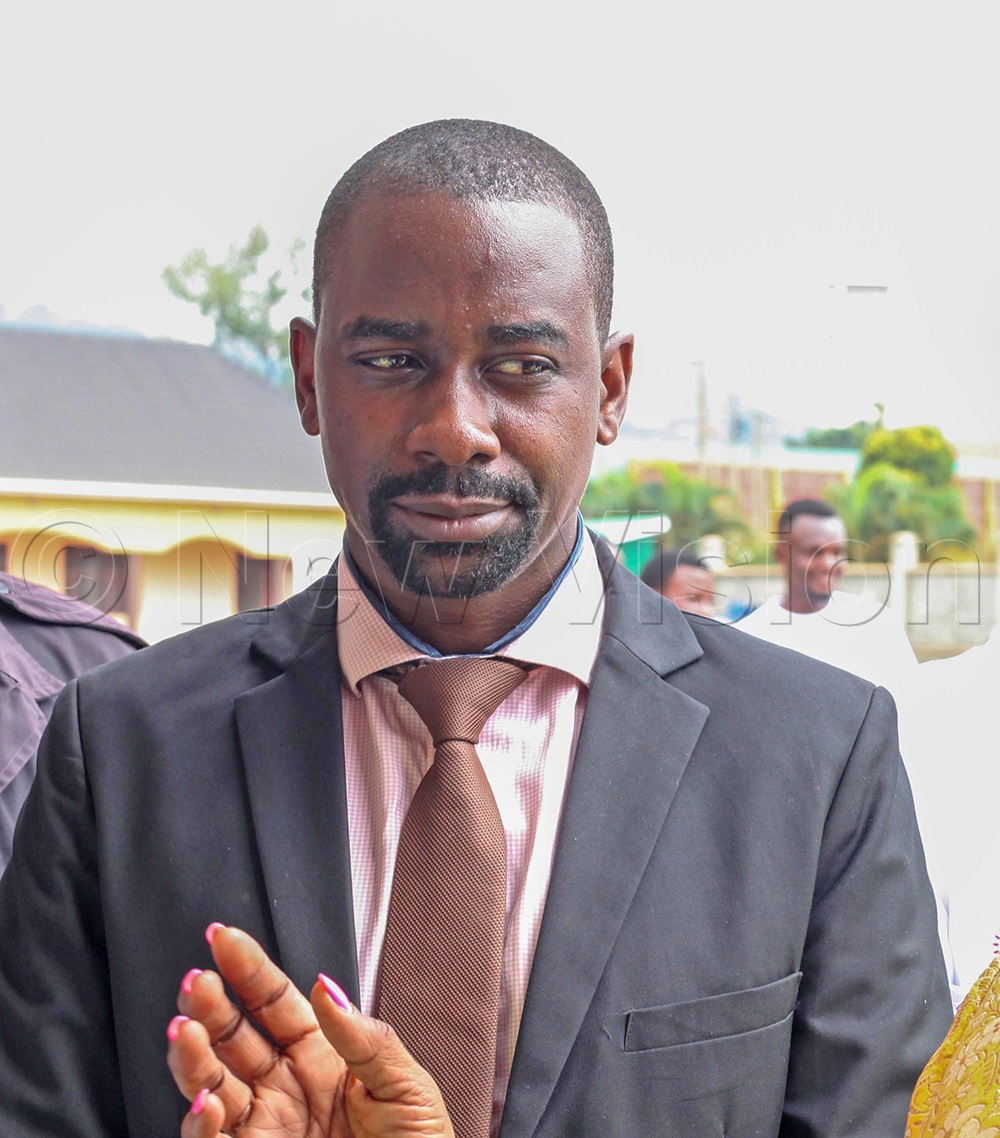
Dr Herbert Luswata, the president of the Uganda Medical Association (UMA).
He said discussions on tax relief for doctors have been ongoing for years, including engagements with the President in 2021.
“When we made that proposal, we were comparing the take-home pay of Ugandan doctors with colleagues in Kenya, and we are far below,” Luswata said.
Although doctors received salary enhancements, he noted that earlier commitments on tax relief have not been fulfilled.
These included reducing PAYE to 10 per cent and exempting doctors from taxes on imported vehicles to ease mobility.
“These incentives are given to scientists in other countries,” he said.
Luswata urged the Government to implement the current proposal fully.
“We welcome the gesture, but we hope it does not remain on paper. Let the directives be implemented by the relevant entities, including the Ministry of Finance,” he said.
He added that doctors continue to lose a significant portion of their income to taxation, with some paying up to sh1.6m monthly in PAYE.
“At one point, the President said the lowest-paid doctor should take home sh5m, but that is not happening,” he said.
Luswata also highlighted disparities with regional peers, noting that Ugandan doctors still earn far less than their counterparts in Kenya.
“In Kenya, a doctor earns almost sh8m, but in Uganda, a starting doctor earns about 45 per cent of that,” he said.
He warned that financial pressure has even forced some health workers to rely on fundraising for medical treatment abroad.
What CSOs say
However, civil society actors have warned against the proposal, arguing it could undermine fairness in the tax system.
Civil Society Budget Advocacy Group (CSBAG) executive director Julius Mukunda says exempting scientists from taxes would create inequality across professions.
“Exempting people from paying taxes while they live and operate in the same economy creates what we call tax distortion,” he said.
“It is unfair to others.”
Mukunda argued that the main constraint facing scientists is not taxation, but weak research infrastructure and limited funding.
“We appreciate scientists, but there are better ways of facilitating them than exempting them from taxes,” he said.
He called for a structured national research and innovation funding system to directly support scientific work.
“If I were the President, I would put in place a strong research and innovation grant system so that scientists can access funding and conduct their work effectively,” he said.
Mukunda also cautioned that tax exemptions could reduce government revenue needed for laboratories, research facilities and production plants.
He rejected comparisons between scientists and the military, saying the army operates under unique conditions that justify special treatment.
“The army is different. Those are people on 24-hour call, often on the frontline,” he said.
He concluded that long-term progress depends on strengthening institutions rather than offering tax breaks.
“For the rest, we can facilitate them better by providing the facilities that help them do their job,” he said.