
‘No cause for alarm’: Museveni meets Ebola task force
“This evening, I met the task force on epidemics in Nakasero. We discussed the Ebola situation in the region, and we will communicate the way forward. There is no cause for alarm,” the President said on his official X account.
‘No cause for alarm’: Museveni meets Ebola task force
________________
President Yoweri Museveni on Saturday, May 16, 2026, met Uganda’s national epidemics task force at Nakasero State Lodge following confirmation of an imported Ebola Bundibugyo Virus Disease case linked to the worsening outbreak in eastern Democratic Republic of Congo.
In a brief statement released after the meeting, Museveni sought to calm public fears as health authorities intensified nationwide surveillance and response measures.
“This evening, I met the task force on epidemics in Nakasero. We discussed the Ebola situation in the region, and we will communicate the way forward. There is no cause for alarm,” the President said on his official X account.
The meeting came hours after the Ministry of Health confirmed that a 59-year-old Congolese man who had been admitted to Kibuli Muslim Hospital in Kampala tested positive for Ebola Bundibugyo after his death.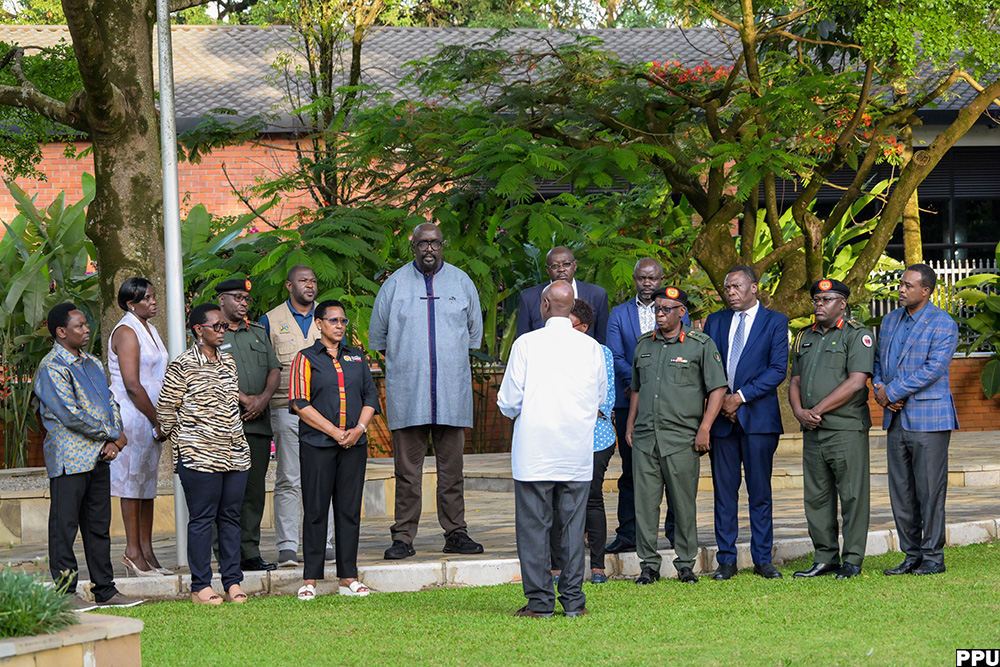
According to the Ministry, the patient was admitted on May 11, 2026, with symptoms including fever, respiratory distress, nausea and abdominal pain before deteriorating in the Intensive Care Unit, where he later developed bleeding symptoms and died on May 14, 2026.
Health authorities said samples earlier obtained from the patient were later tested at the Central Emergency Surveillance and Response Support Laboratory in Wandegeya after Uganda received alerts from Congolese health officials about a suspected Ebola outbreak across the border.
The tests confirmed Ebola Bundibugyo Virus Disease, making it Uganda’s first confirmed Ebola case linked to the latest outbreak in DR Congo.
Health ministry permanent secretary Dr Diana Atwine said the case was imported and that Uganda had not yet registered local transmission.
The confirmation follows reports from the Africa Centres for Disease Control and Prevention indicating that at least 80 people have died in the latest Ebola outbreak in Ituri Province in eastern DR Congo, while more than 300 suspected cases have been recorded.
Uganda has since activated emergency response mechanisms, deploying rapid response teams, surveillance officers and screening personnel at border points and major transit routes, especially in western Uganda. Authorities have also isolated one high-risk contact linked to the deceased and are tracing other people believed to have interacted with him.
Minister of Health Dr Jane Ruth Aceng said Uganda’s disease surveillance systems remain strong following lessons learnt from previous Ebola outbreaks.
“We have built up a very strong system of identification, detection and response to these outbreaks. That makes it possible for us to respond in real time,” Dr Aceng said.
She explained that community health extension workers and Village Health Teams across the country have been trained to detect and report unusual illnesses through an electronic surveillance system linked directly to regional emergency operation centres.
On Sunday (May 17), the World Health Organisation said the outbreak constituted a "public health emergency of international concern", the second-highest level of alert under international health regulations.
Africa CDC has warned that the outbreak poses a regional threat because of heavy cross-border movement between DR Congo, Uganda and South Sudan, particularly in mining communities and border towns.
The agency also expressed concern over insecurity in affected areas, infection prevention challenges and gaps in contact tracing that could complicate efforts to contain the outbreak.
The Ministry of Health has urged the public to remain calm but vigilant, avoid direct contact with people showing Ebola symptoms and maintain strict hand hygiene.
Ebola is a severe viral disease spread through direct contact with infected body fluids and contaminated materials. Symptoms include sudden fever, fatigue, vomiting, diarrhoea and unexplained bleeding, which usually appear in advanced stages of the illness.