
News
Uganda, Vitol sign Pearl Sweet marketing agreement
A release from the Presidential Press Unit states that the pact will see Vitol market Uganda's Pearl Sweet crude oil internationally and help secure the best available buyers and competitive prices.
Uganda, Vitol sign Pearl Sweet marketing agreement
By: Admin ., Journalist @New Vision
_________________
Uganda has signed a 10-year crude oil marketing agreement with international energy trader Vitol, marking a major milestone in the country's preparations to commence commercial oil production and enter the global petroleum market.
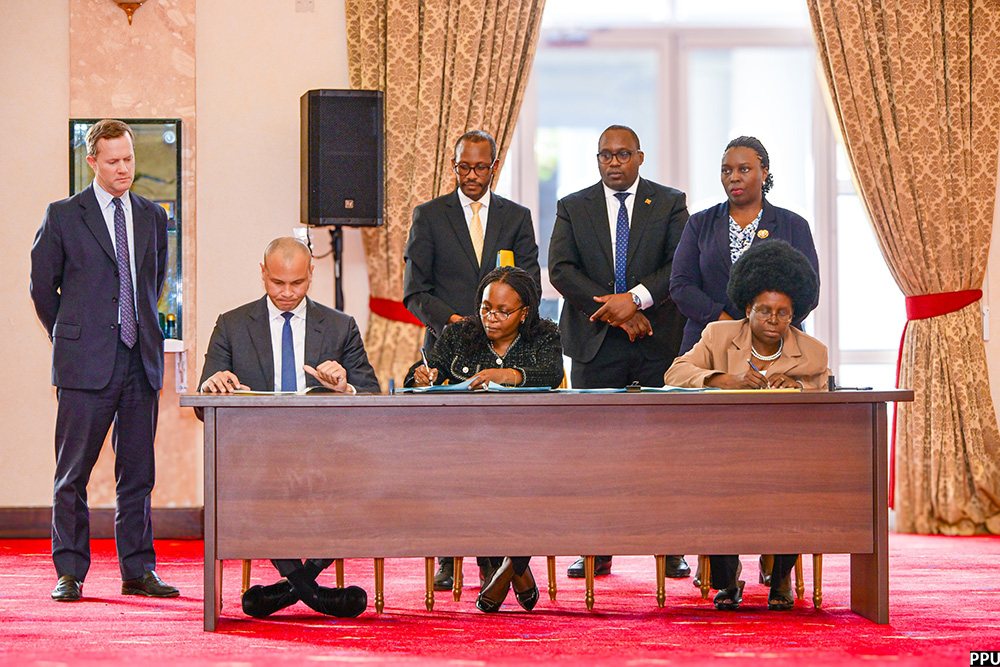
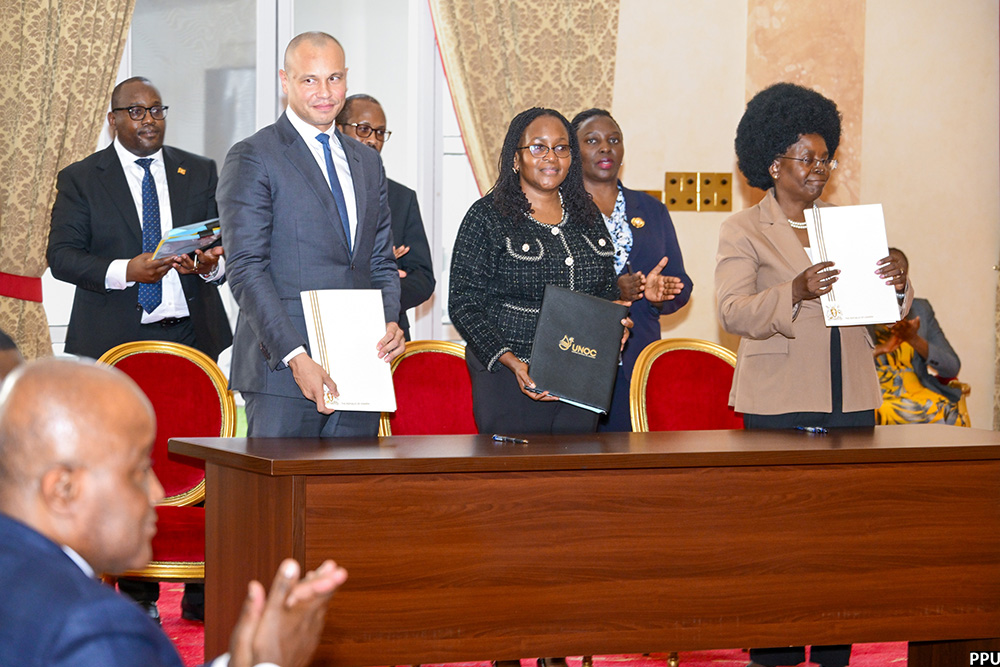
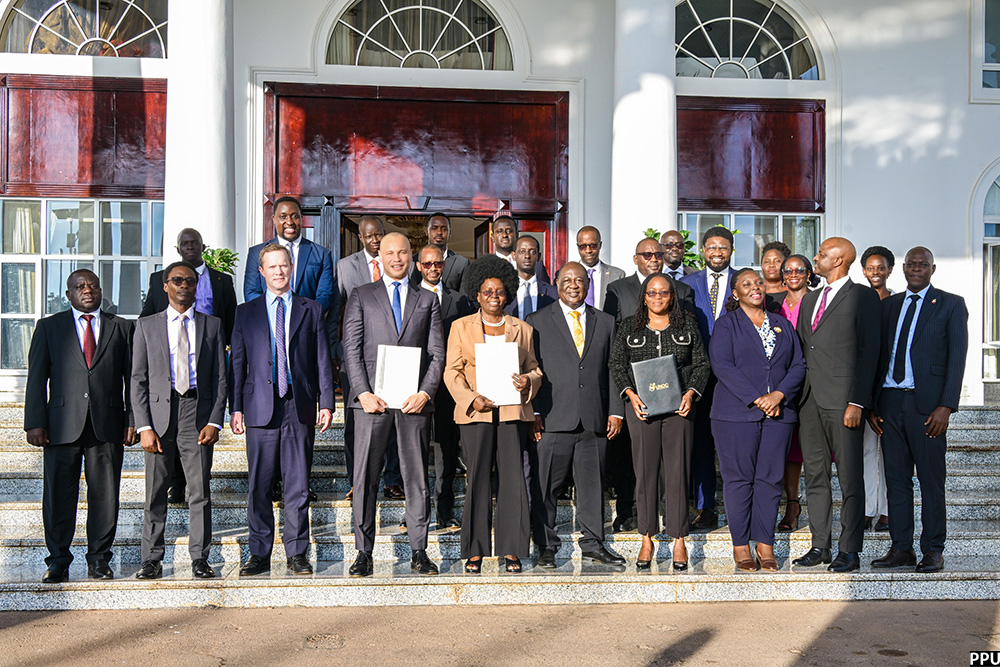
The agreement, signed at State House, Entebbe, on Friday, November 20, involves the Uganda National Oil Company (UNOC) and the Ministry of Energy and Mineral Development.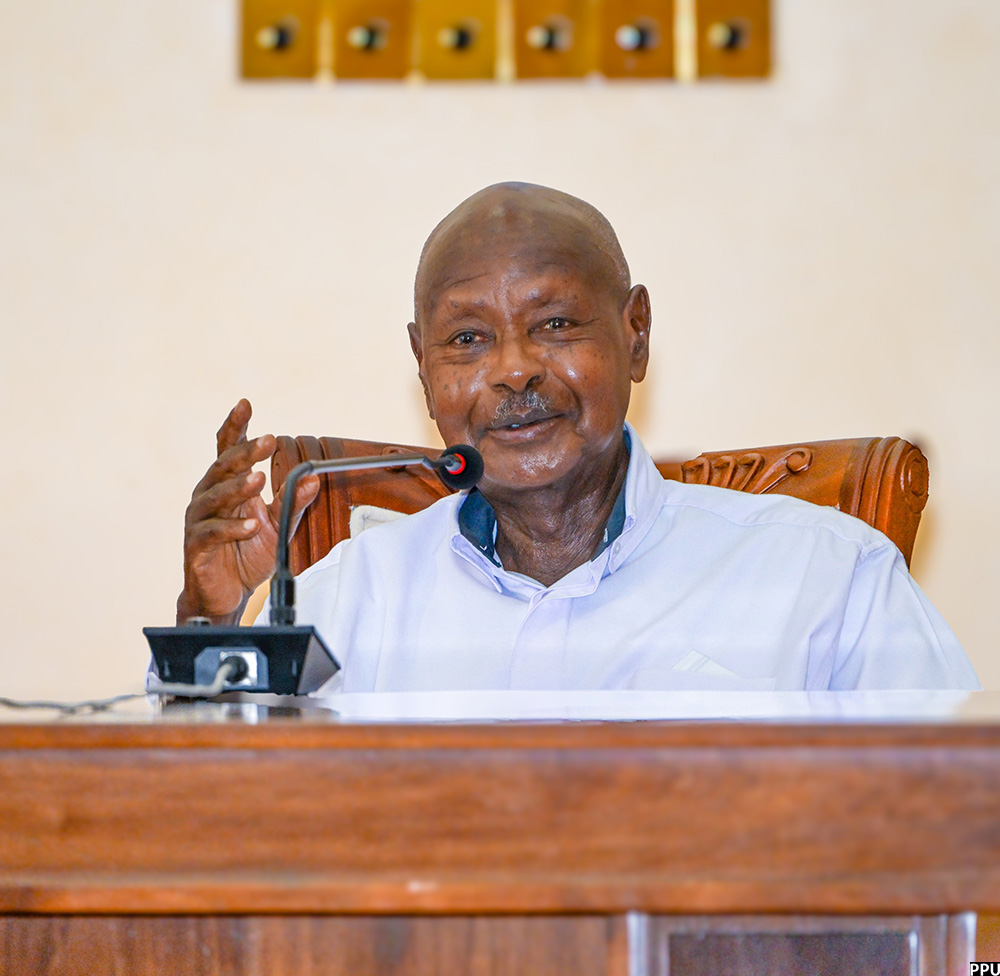
A release from the Presidential Press Unit states that the pact will see Vitol market Uganda's Pearl Sweet crude oil internationally and help secure the best available buyers and competitive prices.
President Yoweri Museveni, who witnessed the signing, described the agreement as a new phase in Uganda's strategic relationship with Vitol, which initially began through the supply of refined petroleum products.
Addressing a group of stakeholders at the event, Museveni explained that his initial engagement with the company followed concerns about Uganda's dependence on middlemen in procuring petroleum products, a practice he said had increased the country's import costs.
At the event, he recalled learning that Uganda was purchasing approximately one billion litres of petroleum products annually through intermediaries operating in Kenya.
“When I got that information some years ago, I told the then Minister of Energy, Irene Muloni, to sort it out. Later, I heard about this group, Vitol. I said a whole country should not be buying from middlemen. It is a big shame. I have always told you to buy directly from the factories,” President Museveni said.
He explained that Vitol, which operates refineries and has the capacity to procure and supply petroleum products in bulk, presented an opportunity for Uganda to secure better prices.
According to PPU, President Museveni cited the savings achieved through the arrangement, noting that diesel, which previously cost Uganda $118 per metric tonne, was supplied by Vitol at $83. The price of petrol also dropped from $97.50 to $61.50, while jet fuel reduced from $114.25 to $79.25.
He said, with the new agreement, Vitol is expected to market the country's petroleum and secure the highest possible returns, while UNOC retains oversight of the transactions.
“Under this agreement, they will hawk our petroleum products and sell to the highest bidder. Whoever they sell to must be known to UNOC. UNOC must be satisfied with who has bought the oil and why,” he said.
The Minister of Energy and Mineral Development, Dr. Monica Musenero, described the signing as a critical step in preparing Uganda to participate in the international crude oil market.
She said that the country needed to establish the necessary commercial arrangements and market readiness before production could translate into international sales.
“Many Ugandans have been waiting for first oil, but we cannot take the oil to the market until we are prepared for the market. Today's agreement is very fundamental, and it is the last step now leading us to the next announcement we shall be making about first oil,” Dr. Musenero said.
She explained that Vitol would initially work alongside UNOC, providing technical guidance, training and access to international buyers as the national oil company develops its crude oil marketing capacity.
Under the initial arrangement, Uganda's crude oil will be sold on a Free On Board (FOB) basis at Tanga in Tanzania, where the East African Crude Oil Pipeline (EACOP) terminates.
Dr. Musenero said the Government would later assess whether to extend the arrangement to include transportation of the crude oil to final destinations, depending on UNOC's experience and capacity.
“Working with UNOC, the Vitol team will train and teach us how to enter the market and introducing us to the market. Vitol will continue guiding us until we have the capacity to do this ourselves. Thereafter, when UNOC has mastered this game, we will decide how to get the crude oil to the final destinations,” she said.
Vitol's Regional Head, Mr. Michael Balint, commended President Museveni for his guidance throughout the negotiations and praised the teams from UNOC and the Ministry of Energy and Mineral Development for their commitment.

“Thank you, Your Excellency, for the guidance you have provided throughout this process. It has been a long journey, and this signing marks the next chapter in our relationship with Uganda. You have a strong team at UNOC and the Ministry of Energy, and I commend them for their efforts,” Mr. Balint said.
He described the agreement as an important development in Uganda's oil journey, saying Vitol was pleased to support the country as it prepares to enter the international market.
Mr. Balint added that the partnership would also focus on strengthening UNOC's institutional capacity by exposing its personnel to international crude oil trading operations.
“We believe this is the next step in our relationship with Uganda. It is a natural growth, and we are happy to be part of that growth,” he said.
He thanked President Museveni for the decisions taken to advance the partnership and reaffirmed Vitol's commitment to supporting Uganda through the next stages of its petroleum development.
Dignitaries who attended the signing ceremony included: the Attorney General, Dr. Sam Mayanja; the Permanent Secretary and Secretary to the Treasury at the Ministry of Finance, Planning and Economic Development, Mr. Ramathan Ggoobi; and the Permanent Secretary of the Ministry of Energy and Mineral Development, Eng. Irene Batebe, among other officials.
Background on Pearl Sweet
Uganda's crude oil, officially named Pearl Sweet by President Museveni in September 2026, is produced from the Tilenga and Kingfisher oilfield developments in the Albertine Graben.
The name combines Uganda's identity as the Pearl of Africa with the term “sweet”, which refers to the crude oil's relatively low sulphur content of approximately 0.12%, a characteristic that makes it attractive to refiners.
Pearl Sweet is classified as a medium-to-heavy, waxy crude oil. Its high wax content means it requires heating during transportation to maintain its flow.
The crude oil will be transported through the 1,443-kilometre East African Crude Oil Pipeline, running from Kabaale in Hoima District to the export terminal at Tanga in Tanzania, where it will be loaded onto vessels for international markets.
About Vitol
Vitol, a private energy and commodities trading company founded in 1966, has headquarters in Rotterdam, Netherlands and Geneva, Switzerland.
According to its website, Vitol is the world's largest independent energy and commodity trader of crude oil and petroleum products across global markets.
Founded in Rotterdam in 1966 and led by CEO Russell Hardy, the privately owned firm operates out of over 40 offices worldwide.
For Infrastructure & Assets, Vitol has over US$13 billion in long-term energy assets, including 1.2 mbpd of refining capacity, ~24 million cubic meters of storage, 93kboepd of upstream production, and roughly 10,000 service stations globally.
The company's core oil and energy operations listed as:
Physical Trading & Logistics: Buying crude oil and refined products from producers and supplies refiners, wholesalers, airlines, and industrial buyers, chartering over 6,000 sea voyages annually.
Refining & Downstream: Operating refineries and downstream networks around the world, including Vivo Energy across Africa.
Upstream & Adjacent Commodities: The company holds upstream oil and gas interests in several countries alongside trading in LNG, natural gas, power, metals, biofuels, and carbon credits.
Background on Pearl Sweet
Uganda's crude oil, officially named Pearl Sweet by President Museveni in September 2026, is produced from the Tilenga and Kingfisher oilfield developments in the Albertine Graben.
The name combines Uganda's identity as the Pearl of Africa with the term “sweet”, which refers to the crude oil's relatively low sulphur content of approximately 0.12%, a characteristic that makes it attractive to refiners.
Pearl Sweet is classified as a medium-to-heavy, waxy crude oil. Its high wax content means it requires heating during transportation to maintain its flow.
The crude oil will be transported through the 1,443-kilometre East African Crude Oil Pipeline, running from Kabaale in Hoima District to the export terminal at Tanga in Tanzania, where it will be loaded onto vessels for international markets.
About Vitol
Vitol, a private energy and commodities trading company founded in 1966, has headquarters in Rotterdam, Netherlands and Geneva, Switzerland.
According to its website, Vitol is the world's largest independent energy and commodity trader of crude oil and petroleum products across global markets.
Founded in Rotterdam in 1966 and led by CEO Russell Hardy, the privately owned firm operates out of over 40 offices worldwide.
For Infrastructure & Assets, Vitol has over US$13 billion in long-term energy assets, including 1.2 mbpd of refining capacity, ~24 million cubic meters of storage, 93kboepd of upstream production, and roughly 10,000 service stations globally.
The company's core oil and energy operations listed as:
Physical Trading & Logistics: Buying crude oil and refined products from producers and supplies refiners, wholesalers, airlines, and industrial buyers, chartering over 6,000 sea voyages annually.
Refining & Downstream: Operating refineries and downstream networks around the world, including Vivo Energy across Africa.
Upstream & Adjacent Commodities: The company holds upstream oil and gas interests in several countries alongside trading in LNG, natural gas, power, metals, biofuels, and carbon credits.