
Uganda sets up taskforce to boost lion conservation efforts
The plan places renewed emphasis on implementing a decade-long strategy targeting a 30% increase in viable populations and reducing poaching of carnivores and their prey by 50% by the year 2034.
The newly constituted taskforce that will steer the implementation of the Large Carnivore Action Plan aimed at restoring the population of big cats in Uganda. (Photo by Julius Luwemba)
________________
Uganda, through the Ministry of Tourism, Wildlife and Antiquities, has stepped up efforts to reverse the declining fortunes of its large carnivore populations, with the launch of a national lion/large carnivore conservation taskforce.
The plan places renewed emphasis on implementing a decade-long strategy targeting a 30% increase in viable populations and reducing poaching of carnivores and their prey by 50% by the year 2034.
The taskforce, launched by the tourism minister Tom Butime, brings together experts from the government, conservation organisations, universities, research institutions and the tourism industry.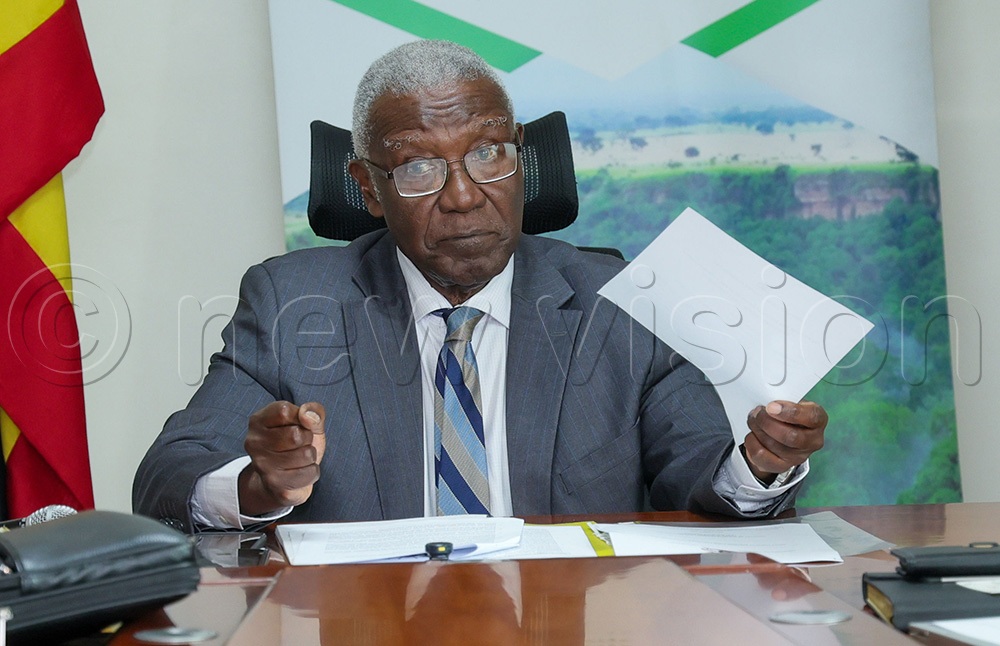
Tourism Minister Tom Butime during the inauguration of the new large carnivore taskforce. (Photo by Julius Luwemba)
Their task is to advise on the measures to strengthen the protection and recovery of lions and other large carnivores.
Establishment of the team comes against the backdrop of worrying population trends, particularly in Queen Elizabeth and Kidepo Valley national parks, where lions face mounting pressure from habitat loss, poaching, poisoning and conflicts with neighbouring communities.
The taskforce will provide an important institutional boost to Uganda's Strategic Action Plan for large carnivore conservation (2024-2034), a science-based framework designed to address the underlying causes of carnivore population decline and secure their long-term survival.
At the launch, Butime expressed hope that the taskforce will assist UWA to address threats and secure long-term recovery of the carnivore species.
Minister Butime stressed the need for protecting lions and other large carnivores, saying they are iconic species that attract tourists and immensely contribute to revenue generation, employment and livelihoods of Ugandans.
He said he will assist UWA to address threats and secure long-term recovery of the carnivore species.
The team will provide strategic planning, technical and advisory support to the tourism ministry and UWA, in the implementation of key actions as outlined in the strategic action plan.
Dr Carol Asiimwe, the assistant commissioner for research and monitoring under the Uganda Wildlife Authority (UWA), noted that a survey conducted in 2022 estimated approximately 39 lions in Queen Elizabeth National Park and 12 in Kidepo Valley National Park, compared to an estimated 240 in Murchison Falls National Park.
"However, the latest 2026 survey indicates an increase to 65 lions in Queen Elizabeth National Park. A similar survey is still being carried out in Murchison and Kidepo," Asiimwe stated.
Meanwhile, Uganda's conservation challenge extends beyond lions. The national action plan also covers leopards, spotted hyenas, cheetahs and African Wild dogs, recognising their importance in maintaining ecological balance and supporting wildlife-based tourism. The 2023 survey of Leopards estimated 328 individuals, whereas the Wild dogs and Cheetahs remain few.
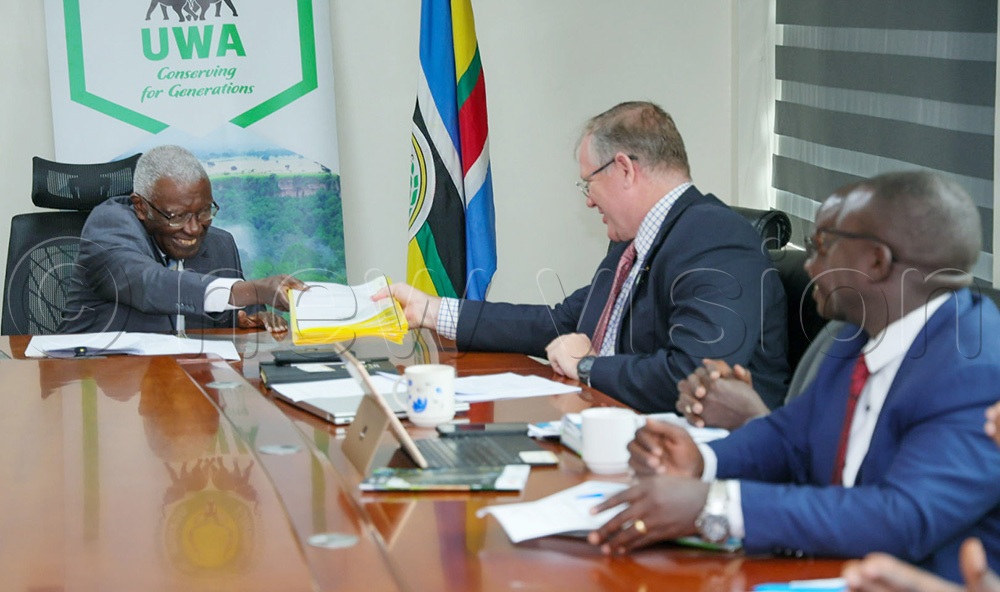
Tourism Minister Tom Butime (left) handing over a file containing terms of reference to the newly constituted taskforce led by Michael Keigwin, for the implementation of the large carnivore action plan. (Photo by Julius Luwemba)
UWA has set up interventions which are tailored per landscape, such as rapid response whenever there are reported cases of human-wildlife conflict.
Other measures include livestock management, community coexistence and transboundary work. Collaborative plans have been initiated with other conservation bodies; notably, the Ishasha sector of Queen Elizabeth National Park will be focused on to increase the population of tree-climbing lions. In the Kidepo Valley towards South Sudan, the population of prey and predators remains low due to poaching and insurgents from the neighbouring countries.
Chairman: Michael Keigwin, MBE, founder trustee and director of the Uganda Conservation Foundation
Other members
Dr. Alex Brazkowski
Prof. Charles Masembe
Dr. Simon Nampindo
Charles Tumwesigye
Dr. Ludwig Siefert
Leone Chadia
Benon Sebina Katumba
Prof. Moses Muhumuza.
According to the terms of reference, members of the taskforce shall serve for a term of three (3) years, renewable once and shall meet at least twice every year to assess and review the implementation of activity plans towards achieving goals of the Large Carnivore Action Plan.