
Tayebwa calls for stronger Rotary investment in health, environment
Tayebwa made the call on Thursday, November 26, during a meeting with Rotary International President Olayinka Babalola and his delegation at Parliament, where he highlighted areas in which the organisation could deepen its contribution to Uganda's development.
Deputy Speaker of Parliament Thomas Tayebwa and Rotary International President Olayinka Babalola pose for a photo as they share souvenirs. (Courtesy photo)
________________
Deputy Speaker of Parliament Thomas Tayebwa has urged Rotary International to expand its investments in Uganda's health and environmental sectors, saying stronger interventions are needed to address the country's growing cancer burden and the effects of climate change.
Tayebwa made the call on Thursday, November 26, during a meeting with Rotary International President Olayinka Babalola and his delegation at Parliament, where he highlighted areas in which the organisation could deepen its contribution to Uganda's development.
Tayebwa, who is also a Rotarian, commended Rotary for its longstanding contribution to healthcare, education, environmental conservation, peacebuilding and community empowerment in Uganda.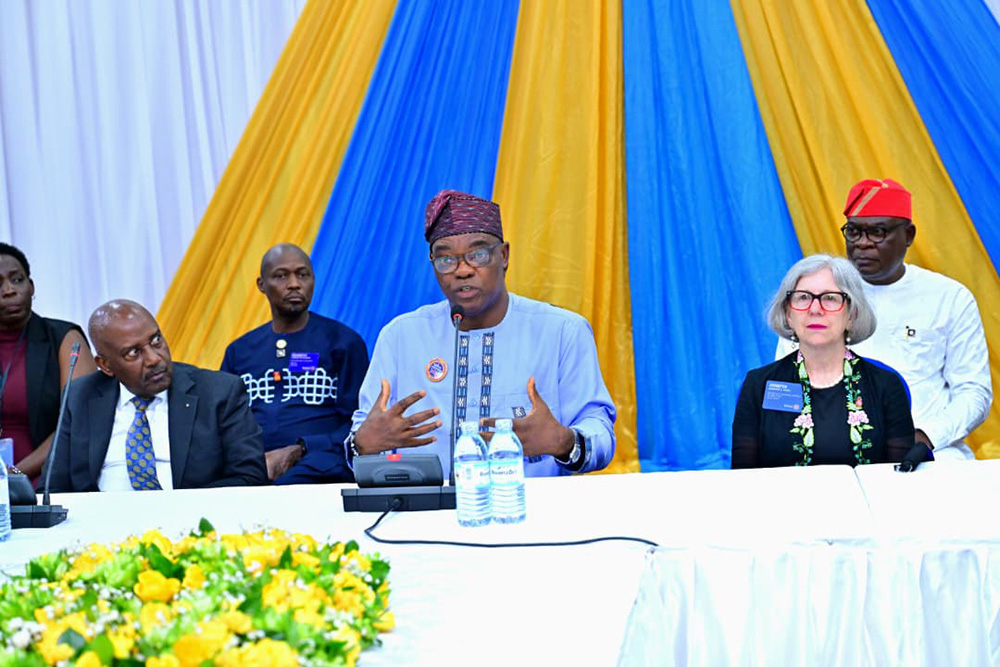
Rotary International President Olayinka Babalola commended Uganda on the health sector developments, like the defeat of polio. (Courtesy photo)
He particularly highlighted Parliament's partnership with Rotary through the annual Rotary Cancer Run, saying Parliament had cumulatively contributed more than Shs10 billion towards the initiative over the years, including Shs3 billion this year.
“The cancer burden is growing rapidly in Uganda and many other African countries. This is an initiative that I believe can expand,” Tayebwa said.
On climate change, Tayebwa said Rotary could increase its interventions in reforestation, renewable energy, sustainable agriculture, freshwater conservation and waste management.
He said the organisation was well positioned to mobilise communities, particularly young people, to participate in environmental conservation and build resilience against climate-related challenges.
“Climate change is an existential crisis that demands greater commitment and concerted efforts from all of us,” he said.
Tayebwa's appeal comes as Uganda continues to seek partnerships to strengthen its healthcare system and address environmental challenges, with non-governmental organisations and development partners playing a role in supporting government interventions.
Babalola commended Uganda for its leadership in immunisation, particularly the country's achievement in eliminating indigenous wild poliovirus.
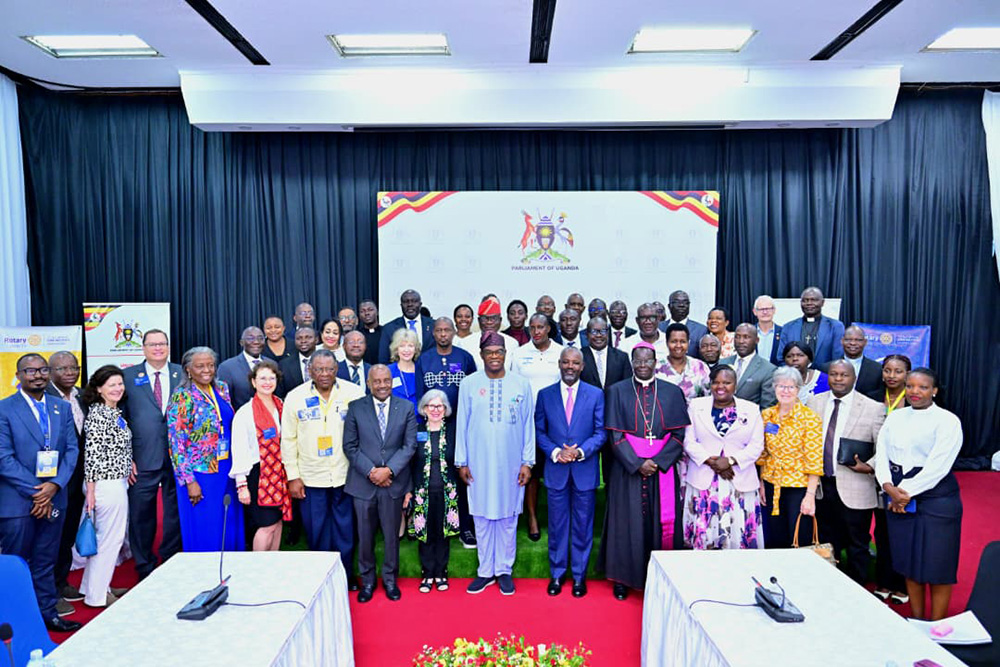
Rotary International President Olayinka Babalola and his delegation pose for a group photo with the Deputy Speaker during their visit to Parliament. (Courtesy photo)
He recalled meeting a young Ugandan woman who described her generation as fully immunised, saying the encounter helped him appreciate the country's commitment to vaccination.
“I can now understand why we got polio-free in Uganda very quickly. I want to thank the Government of Uganda for that leadership and to thank the Parliament of Uganda for doing the legislative requirements that made that possible,” Babalola said.
He also recognised Uganda's contribution to peacebuilding in the East African region, noting that Rotary had supported these efforts through the establishment of its first and only Peace Centre on the African continent at Makerere University.
Babalola and his delegation are in Uganda for the seventh All-Africa Rotary Institute, taking place at Speke Resort Munyonyo.
The meeting is part of engagements ahead of discussions on challenges affecting the continent, including poverty, unemployment, disease, climate change, conflicts and inequality.
The institute will also address Rotary's membership growth and retention, leadership development, strengthening Rotaract, improving the organisation's public image and expanding the impact of the Rotary Foundation.