
Gen. Saleh urges African military leaders to view wealth creation as pillar of peace
Gen. Salim Saleh has urged African military leaders to make wealth creation and poverty eradication central to their security strategies, arguing that lasting peace depends not only on winning wars but also on transforming lives and livelihoods.
President Yoweri Museveni poses for a group photo with African military leaders after the four-day African Chief of Defence Forces Conference hosted by Uganda’s Chief of Defence Forces, Gen. Muhoozi Kainerugaba, at Speke Resort Munyonyo in Kampala, came to a conclusion on Thursday, Oct. 8, 2026. (Credit: Mpalanyi Ssentongo)
__________________ The chief coordinator of Operation Wealth Creation, Gen. Caleb Akandwanaho, better known as Salim Saleh speaking at the African Chief of Defence Forces Conference at Speke Resort Munyonyo in Kampala on Thursday, October 8, 2026. (Credit: Mpalanyi Ssentongo) Uganda’s Chief of Defence Forces, Gen. Muhoozi Kainerugaba, at Speke Resort Munyonyo in Kampala on Thursday, Oct. 8, 2026. (Credit: Mpalanyi Ssentongo)
The chief coordinator of Operation Wealth Creation, Gen. Caleb Akandwanaho, better known as Salim Saleh, has urged African military leaders to look beyond conventional warfare and embrace wealth creation, economic transformation and the eradication of poverty as essential components of national and regional security.
Saleh made the remarks while delivering a lecture on Operation Wealth Creation (OWC) at this week's African Chief of Defence Forces Conference hosted by Uganda’s Chief of Defence Forces, Gen. Muhoozi Kainerugaba, at Speke Resort Munyonyo in Kampala.
The four-day conference on Military Operations Other Than War (MOOTW) attracted military delegations from more than 18 African countries led by their leaders.
Saleh, speaking virtually and assisted by senior economist Dr Fred Muhumuza and the deputy chief coordinator, OWC, Brig. Gen. Godfrey Muwanguzi, anchored his lecture on the concept of Musevenomics while describing President Yoweri Museveni as an authority on operations other than war.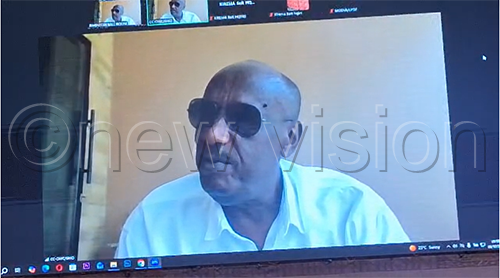
He argued that while the President is widely known for his military and political history, his economic ideas deserved greater attention.
“For some of us who are veterans in this struggle, it has taken us a long time to come to the conclusion that His Excellency Gen. Yoweri Museveni is a master of operations other than war."
Saleh encouraged the military leaders attending the conference to study Museveni’s economic essays, which he said had been compiled under the concept of Musevenomics.
He expressed concern that the ideas contained in the essays had not received sufficient attention, despite their relevance to the conference’s theme.
“When I went through the concept, I didn't see words like prosperity, progress, transformation. The note is miserable.”
He said OWC’s experience demonstrated that military and security institutions could contribute to solving economic problems that might otherwise create conditions for instability.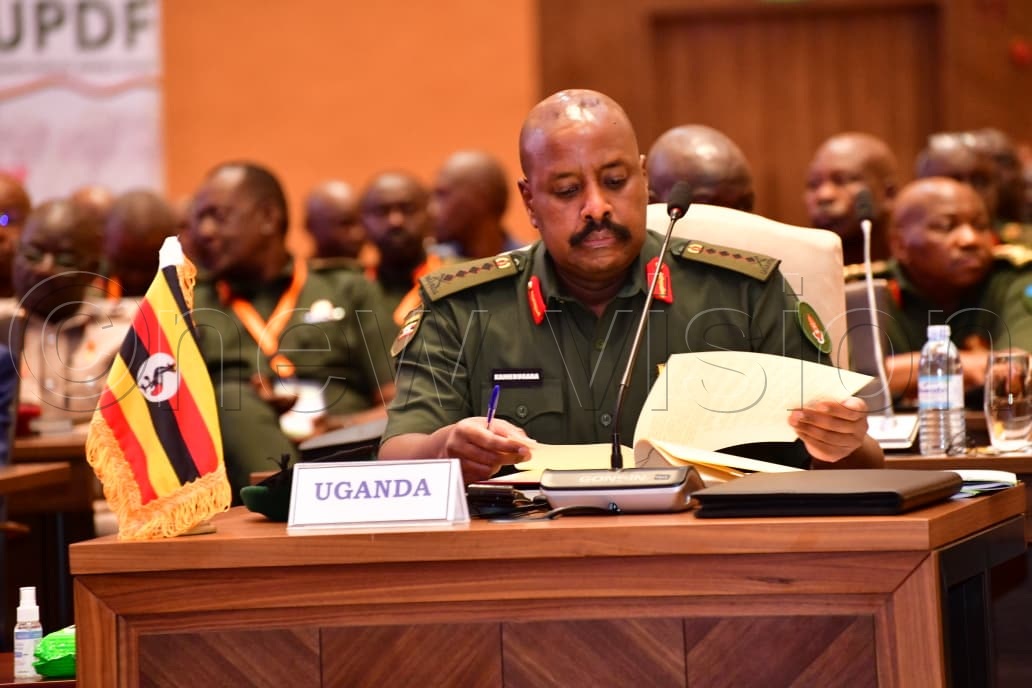
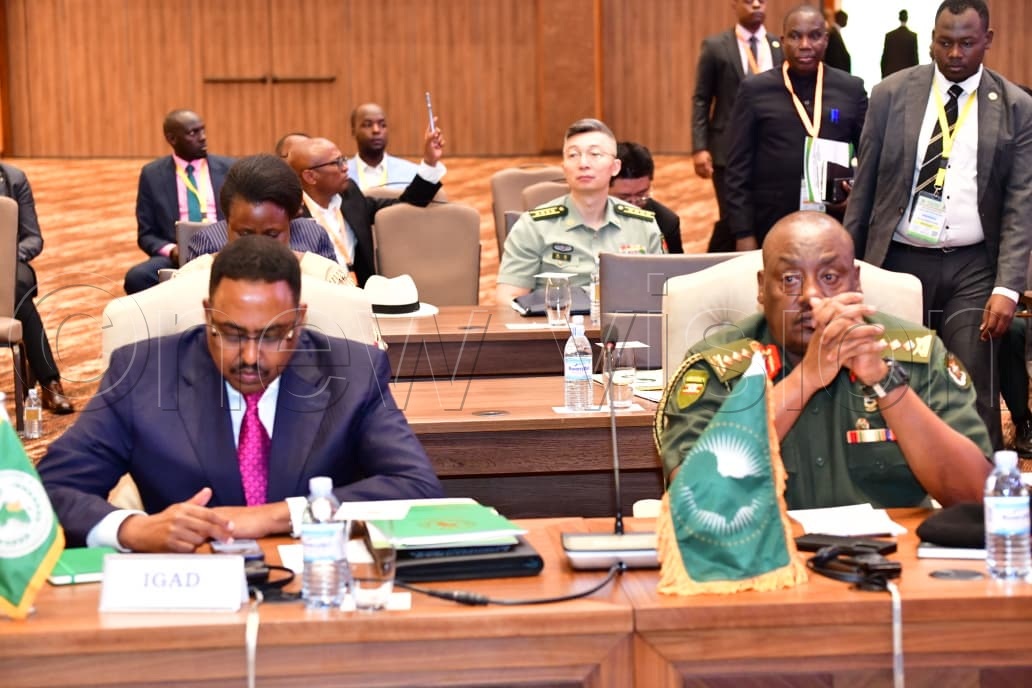
African military chiefs at the conference. (Credit: Mpalanyi Ssentongo)
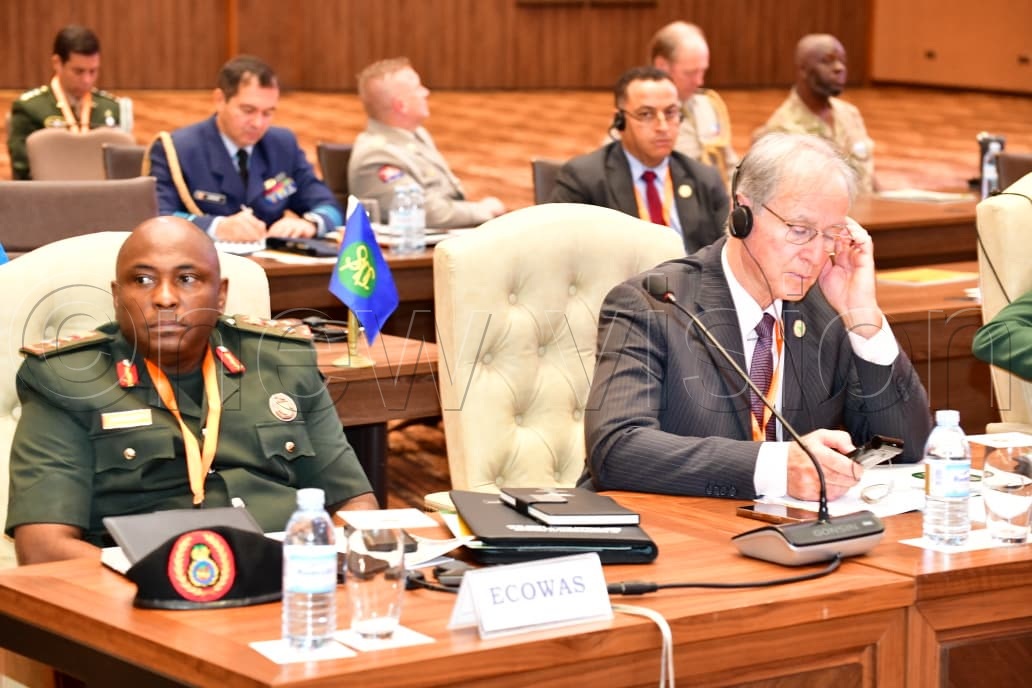
African military chiefs at the conference. (Credit: Mpalanyi Ssentongo)
Saleh recalled that OWC had been assigned a difficult mission by Museveni about 13 years earlier: to reach Ugandans who were outside the money economy. He said that in 2014, about 68% of Ugandans were outside the money economy, while the remaining 32% were participating in it.
Saleh, however, celebrated that the proportion outside the money economy had subsequently been reduced to about 32% by 2022.
“It was not an easy operation,” he said, noting that OWC had encountered both significant challenges and opportunities.
The NRA bush war general argued that the experience showed why operations other than war should not be understood merely as military activities undertaken in the absence of armed conflict. But instead, they should encompass efforts to create the economic and social conditions necessary for lasting peace.
He said the President had maintained the same fundamental message for decades, demonstrating what military strategists call “selection and maintenance of aim.
The presentation linked Uganda’s security strategy to the African Union’s Agenda 2063, arguing that peace and security provide the platform for development while wealth creation is ultimately the objective.
According to OWC, poverty, subsistence livelihoods and unemployment could create conditions that undermine security, making economic transformation an important component of preventing conflict.
The OWC presentation traced Uganda’s history of political violence and armed conflict and argued that military victories alone could not deliver lasting stability.
Saleh argued that Museveni’s approach is the one that uses military capability to create conditions for political, economic and social solutions.
Dr Fred Muhumuza cited several peace agreements and demobilisation initiatives involving former armed groups, arguing that the transition from armed confrontation to peaceful production was an important feature of Uganda’s experience.
Among the examples Muhumuza cited was the mobilisation of parish-level savings and credit organisations, as well as interventions aimed at improving agricultural production and connecting rural households to commercial economic activities.
He highlighted coffee as an example of Uganda’s economic transformation, revealing that Uganda’s coffee earnings had increased substantially over the years, providing significant income to farming communities.
Muhumuza cited OWC-supported initiatives involving youth skilling, aquaculture and industrial development, including activities at Kapeka Industrial Park.
He stressed that once guns fall silent, governments and security institutions must help create the conditions under which citizens can earn livelihoods, invest, produce and participate in the formal economy.
The presentation also acknowledged that Uganda still faces significant challenges, including poverty, uneven development, land disputes, youth unemployment, economic shocks and the need to equip young people with skills suited to emerging technologies such as artificial intelligence.
Saleh returned to the discussion, telling African defence leaders that the experience of veterans and the ideas contained in Museveni’s writings could contribute to the continent’s search for solutions beyond warfare.
He invited delegates to visit what he referred to as the “formal word of triumph,” where the history and experience of the struggle were being preserved and shared in the Luwero Triangle.
He also suggested that, with the agreement of the CDF, delegates could receive Museveni’s essays on military strategy and tactics so that they could further examine the ideas behind Uganda’s approach.
Saleh, who joked about his brief tenure as Uganda’s army commander, setting an unusual record documented in the Guinness Book of Records, said that following his removal from the army command, he had spent the subsequent years involved in activities that he regarded as operations other than war.
He also reflected on his long history in Uganda’s revolutionary struggle, recalling that he had joined the struggle about five decades earlier and had crossed into Mozambique in 1976.
Fifty years later, he said, he was pleased to be participating in a discussion focused not on warfare but on how to build peace and prosperity.
“The Chief of Defence Forces and your colleagues who have joined this discussion today, pay attention to the essence that is embedded in the old man with the hat, in his essays."
He argued that Africa’s security and prosperity ultimately depended on greater regional integration. “We need a united Africa. We need an active East Africa."