
Tayebwa backs comprehensive law to strengthen social protection
Tayebwa said Uganda needed legislation that would go beyond existing policies and programmes to operationalise constitutional provisions on social protection and provide a clear framework for their implementation.
Tayebwa chats with development partners and diplomats ahead of their engagement. (Courtesy)
_________________ Deputy Speaker of Parliament Thomas Tayebwa chats with development partners and diplomats ahead of their engagement, November 26, 2026, during which he backed the proposal at a meeting with members of the Parliamentary Forum on Social Protection. (Courtesy)
Uganda is considering a comprehensive social protection law that would provide a legal framework for financing, coordinating and implementing programmes targeting vulnerable citizens, amid concerns over poverty, limited coverage of social assistance and the growing needs of disadvantaged communities.
The proposed legislation is intended to strengthen existing government interventions by establishing clear responsibilities and sustainable funding mechanisms to support older persons, children with disabilities, poor households and other vulnerable groups.
Deputy Speaker of Parliament Thomas Tayebwa backed the proposal on November 26th during a meeting with members of the Parliamentary Forum on Social Protection and development partners, including the Ambassador of Ireland to Uganda, Katrín Einarsdóttir, the United Nations Children's Fund (UNICEF) and the World Food Programme (WFP).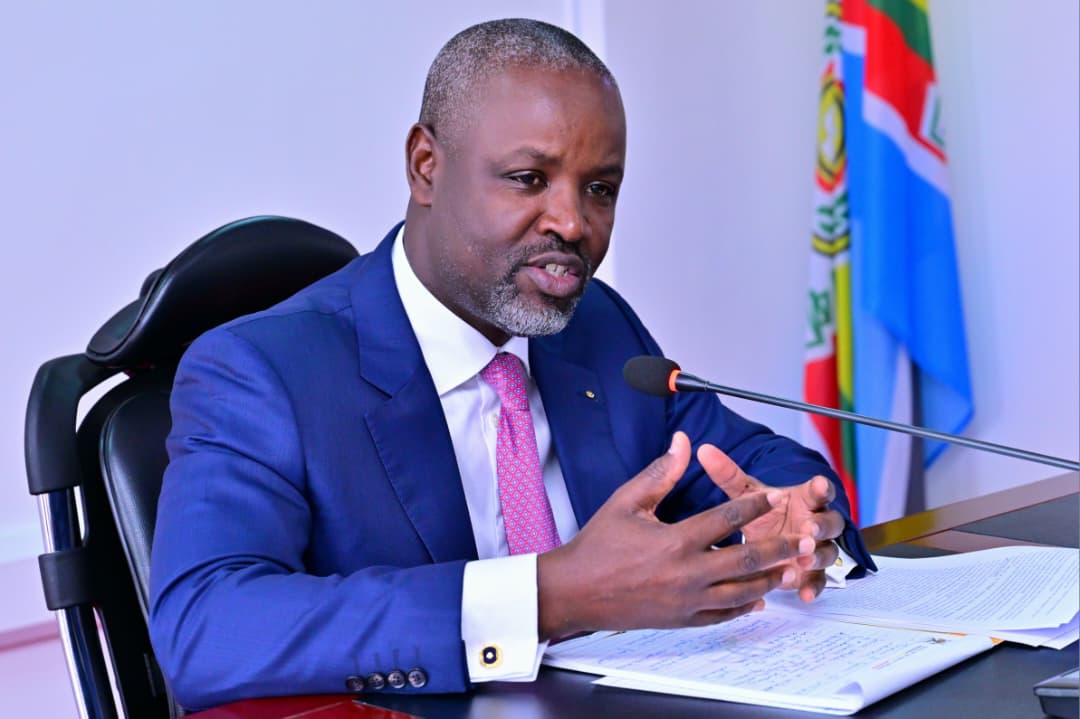
Tayebwa said Uganda needed legislation that would go beyond existing policies and programmes to operationalise constitutional provisions on social protection and provide a clear framework for their implementation.
“We would need a law that would operationalise the provisions of the Constitution and go much deeper,” he said.
The proposed law comes against the background of significant social and economic vulnerabilities affecting millions of Ugandans.
According to a 2026 analysis by the United Nations Conference on Trade and Development (UNCTAD), about seven million Ugandans live below the national poverty line, while 53.1 per cent of the population experience multidimensional poverty, meaning they face overlapping disadvantages in areas such as education, healthcare and living conditions.
The analysis also found that poverty remains higher in rural areas, at 19.4 per cent, compared with 10.3 per cent in urban areas.
Despite the scale of these challenges, Uganda's social assistance coverage remains limited. Data from the United Nations Sustainable Development Goals country profile shows that only 3.1% of the population was covered by at least one social protection benefit in 2022.
The situation is particularly concerning among older persons, people with disabilities and children from disadvantaged households, who often face additional barriers to accessing basic services and economic opportunities.
Uganda has approximately 2.3 million people aged 60 years and above, representing about five per cent of the population, according to the 2024 National Population and Housing Census.
These figures highlight the growing need for social assistance, income security, accessible healthcare and protection for people who may be unable to fully support themselves.
Tayebwa said social protection should not be treated as charity but as a fundamental right that upholds the dignity and contribution of citizens.
“Social protection is not charity. Social protection is a fundamental right that ensures that the dignity, the resilience and the contribution of every Ugandan is considered and is felt,” he said.
He, however, urged the Parliamentary Forum to work closely with the Executive to advance the proposed legislation, noting that Parliament faces constitutional limitations under Article 93 regarding the introduction of private members' bills with financial implications for the Consolidated Fund.
Support for older persons
One of the key proposals discussed at the meeting was the expansion of the Senior Citizens Grant under the Social Assistance Grants for Empowerment (SAGE) programme.
Development partners called for the speedy implementation of reforms to lower the eligibility age from 80 to 65 years and increase the monthly grant from sh25,000 to sh35,000.
The proposed changes would expand the number of older persons receiving regular financial assistance, particularly those who are unable to work or depend on family members for their basic needs.
Government has previously announced plans to lower the eligibility age to 65, but implementation has faced funding challenges.
In September 2026, Parliament was informed that the proposed expansion faced a funding gap of sh252 billion. Government had disbursed sh971.98 billion to a cumulative 515,405 older persons since the programme began.
WFP Country Representative Wanja Kaaria-Ndoho highlighted the importance of social assistance during emergencies, citing interventions targeting older persons affected by drought in Karamoja.
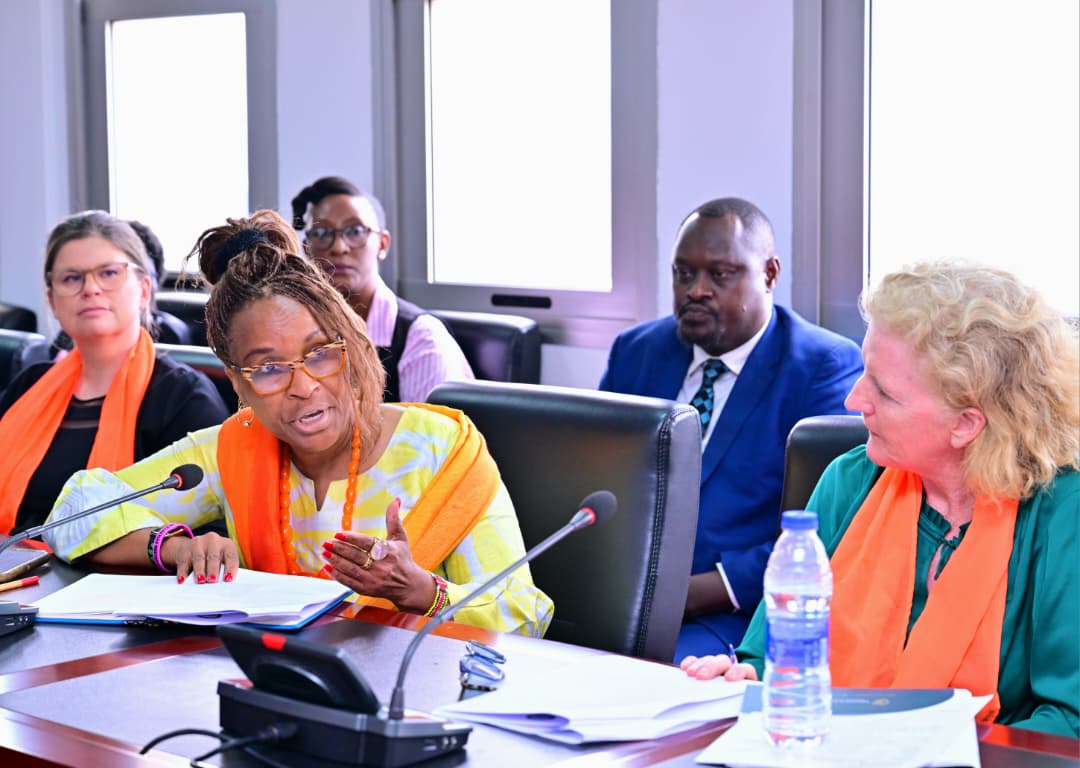
WFP Country Representative Wanja Kaaria-Ndoho (speaking) highlights the importance of social assistance during emergencies, citing interventions targeting older persons affected by drought in Karamoja, during a meeting with the Parliamentary Forum on Social Protection and development partners, November 26, 2026. (Courtesy)
She said approximately 10,000 older persons received support in June, while a second round was planned to benefit about 17,000 additional elderly persons across the region's nine districts.
Children with disabilities and school feeding
The meeting also examined the National Child Disability Assistance Programme, which received an allocation of sh15 billion following advocacy by Parliament and development partners.
However, Patrick Kiconco Katabaazi, chairperson of the Parliamentary Forum on Social Protection, said the allocation could only cover fewer than 30 districts, calling for increased funding to extend the programme nationwide.
Tayebwa called for stronger monitoring and documentation of the programme's impact to provide evidence for additional government funding.
Development partners also proposed a National School Feeding Programme, particularly for vulnerable communities where household poverty and hunger affect children's access to education.
WFP said approximately 250,000 children had benefited from take-home food rations through interventions implemented during the drought in Karamoja, helping them remain in school.
Tawanda Chinembiri, representing UNICEF, said providing food at school was critical to encouraging attendance in communities where families struggle to provide meals.
“If you don't feed the school children in Karamoja, if you don't provide them food at school, then they will not come to school,” he said.
Tayebwa cautioned against adopting a blanket approach to school feeding, but supported targeted interventions in communities such as Karamoja, where some households cannot afford to provide children with food.
“You can only pack if you have what to pack,” he observed.
Ireland's Ambassador Einarsdóttir said social protection should be considered an investment in human capital, poverty reduction, resilience and economic inclusion rather than a cost to society.
She called for a unified legal framework that would strengthen the implementation of existing interventions and ensure vulnerable citizens are reached.