
Rotary seeks to open leadership doors for young people with disabilities
Organised through Rotary's Inclusive Rotary Youth Leadership Awards (RYLA), the initiative seeks to prepare young people to assume leadership responsibilities while encouraging a culture of volunteerism, service and inclusion.
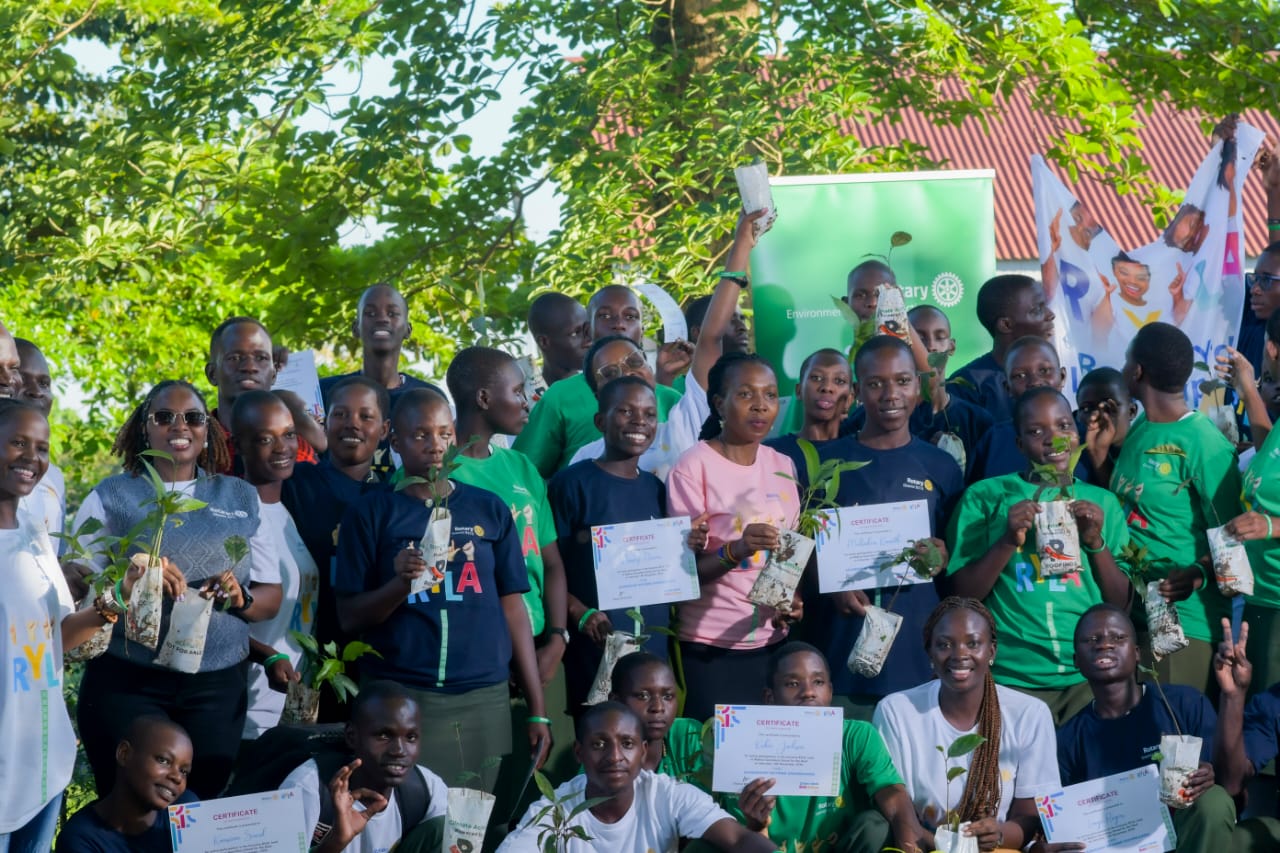
More than 300 certificates were awarded to participants. (Courtesy photos)
________________
For many young people with disabilities, the barriers to leadership begin long before they are given an opportunity to lead. Limited access to resources, inadequate family support and persistent social misconceptions can leave their abilities overlooked and their ambitions constrained.
Rotary District 9213 is seeking to change that, investing in leadership training designed to equip young people with disabilities with the confidence, skills and opportunities to influence their communities and institutions.
The effort was on display on Saturday, November 14, 2026, when more than 300 students and other young people gathered at Wakiso Secondary School for the Deaf for a leadership training organised under the theme Leadership Beyond Boundaries.
The event brought together students from Wakiso Secondary School for the Deaf, Makerere University and Nkumba University, alongside Rotary leaders and members of the Rotary Club of Kiwenda.
Organised through Rotary's Inclusive Rotary Youth Leadership Awards (RYLA), the initiative seeks to prepare young people to assume leadership responsibilities while encouraging a culture of volunteerism, service and inclusion.
More than 300 certificates were awarded to participants, while more than 500 fruit trees were planted at the school as part of a broader effort to promote environmental conservation and economic empowerment.
Patrick Lassu, the District Youth Service Chair and a member of the Rotary Club of Kampala South, said the programme was intended to ensure that young people with disabilities had access to the same leadership development opportunities as their peers.
“Leadership is not for only those who are able-bodied; it is for everyone. We have to promote inclusivity,” Lassu said.
He said Rotary was deliberately investing in mentoring young people, with an emphasis on discipline, responsibility, volunteerism and service to others.
“If a person can lead volunteers, then they can lead anyone,” he said, adding that the programme was designed to help participants recognise their abilities and believe in their capacity to contribute to their communities and the country.
From leadership training to leadership opportunities
Gift AnnTryphine, the RYLA chairperson for District 9213, said the district was working to create opportunities through universities, Rotaract clubs and other platforms where young people with disabilities could put their leadership skills into practice.
The commitment is also reflected in a three-year engagement plan with Wakiso School of the Deaf, which combines practical skills development with environmental initiatives.
Previous activities introduced learners to making paper bags and envelopes, products they could sell to earn money. The latest programme will build on that experience by connecting paper-bag production to the Christmas season, with the proceeds intended to benefit the young people.
The fruit trees planted at the school are also expected to provide longer-term economic and environmental benefits.
“We want to make sure that, as much as the school is for the deaf, they must have fruit trees where they are going to earn and empower their economic wellbeing,” AnnTryphine said.
The barriers that remain
The training comes at a time when many learners with disabilities continue to face obstacles that extend beyond their physical or communication needs.
At Wakiso Secondary School for the Deaf, those challenges include limited financial support from families, inadequate learning materials and difficulties communicating with people outside the deaf community.
Simon Peter Ocan, the school's deputy headteacher, said the institution currently has 213 learners with hearing impairments, many of whom come from households struggling to meet their educational and personal needs.
Some students, he said, arrive at school without sufficient scholastic materials, financial support or consistent parental follow-up.
The school also lacks a visiting doctor and a counsellor, leaving teachers to shoulder additional responsibilities, including addressing learners' health and psychosocial needs.
Communication remains another significant obstacle. Ocan said deaf people were often excluded from everyday interactions because many members of the public did not understand sign language.
“Even those who stay with them may not be able to communicate to them in the language they understand,” he said.
Young leaders challenge perceptions
For some of the participants, the training was not an introduction to leadership but an opportunity to strengthen skills they had already begun developing.
Annet Kemigisa, a student at Nkumba University, said she had been involved in leadership since primary school and continued to serve in leadership positions at university.
She said the training had reinforced her sense of belonging and strengthened her determination to advocate for the rights of people with disabilities.
“I want people to know their rights, be motivated and inspired,” she said.
Kemigisa said she hoped to extend that advocacy to other students and people in her home community in Ntoroko District.
Shadrack Damba, a Makerere University student living with albinism, said negative perceptions and a lack of respect remained among the biggest challenges confronting leaders with disabilities.
“Some people do not give respect to people with disabilities. They think we cannot do anything,” he said.
He said the training had helped him strengthen his ability to motivate others, build self-esteem and encourage young people to recognise their potential.
“I feel at home and I know now I am not alone,” Damba said.
The message of inclusion also extended beyond the training sessions. Keynote speaker Joanita Kawalya urged parents to take greater responsibility for children with disabilities, particularly as the forthcoming school holidays approached.
She called on parents and communities to ensure the children's safety and well-being at home and in their neighbourhoods, and to make sure they returned to school safely.
Alex Muwanguzi, the District Rotaract Representative, said the programme reflected Rotary's broader commitment to developing capable young leaders who could carry inclusive leadership practices into their communities.
For the young people who attended the training, the challenge is now to translate those lessons into action. For Rotary, it is to ensure that opportunities to lead do not end when the certificates are awarded, but continue in the universities, institutions and communities where those young people live and serve.