
Over 90,000 children to benefit from skills project in refugee settlements
The Sustaining Play, Learning and Skills in Humanitarian Contexts (SPLASH) project, launched at Serena Hotel in Kampala on November 13, 2026, will initially be implemented in Imvepi, Rhino Camp and Bidi-Bidi refugee settlements in West Nile.
L-R: Michael Opio, the Country Director, BRAC Uganda, Mercy Faith Lakisa, State Minister for Youth and Children Affairs and Anne Mutta, BRAC Regional Director, Africa, during the launch of the SPLASH project at Serena Hotel on November 13, 2026. (Photo by Nancy Nanyonga)
_________________
More than 92,000 children and 44,500 caregivers in refugee settlements are expected to benefit from a five-year initiative aimed at improving early childhood development through play, learning and skills development.
The Sustaining Play, Learning and Skills in Humanitarian Contexts (SPLASH) project, launched at Serena Hotel in Kampala on November 13, 2026, will initially be implemented in Imvepi, Rhino Camp and Bidi-Bidi refugee settlements in West Nile.
The initiative brings together BRAC Uganda, BRAC International and the LEGO Foundation to expand access to play-based learning and support children growing up in humanitarian settings.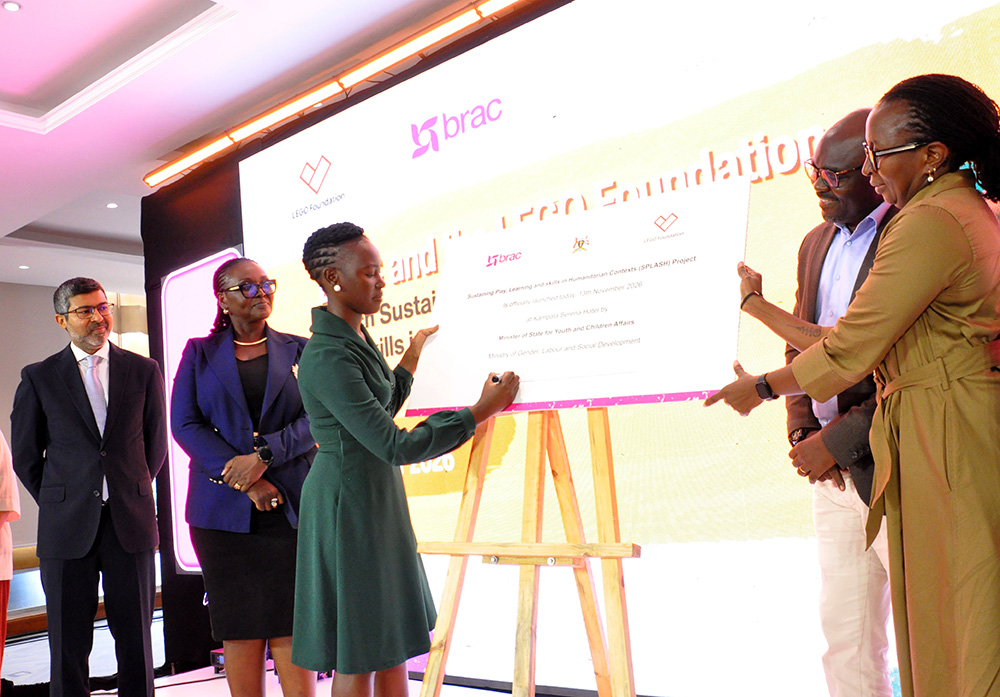
Mercy Faith Lakisa, State Minister for Youth and Children Affairs, signing on a board while other officials look on. This was during the launch of the SPLASH project at Serena Hotel on November 13, 2026. (Photo by Nancy Nanyonga)
It comes amid concerns that funding constraints have forced several humanitarian organisations to scale back their activities in refugee settlements, leaving children with limited access to education, safe spaces for play and other essential support.
Children traditionally acquire important developmental skills through play and interaction with their peers, including language, communication and social skills. However, displacement and the difficult conditions in refugee settlements have disrupted these opportunities for many children.
Speaking at the launch, Abed Shameran, the executive director of BRAC International, said decades of global research had demonstrated that the earliest years of life were critical in shaping children's brains, health and future potential.
"Yet, for children growing up in conflict, displacement and humanitarian crises, these years are often marked by uncertainty, disruption and a lack of access to the support they need," Shameran said.
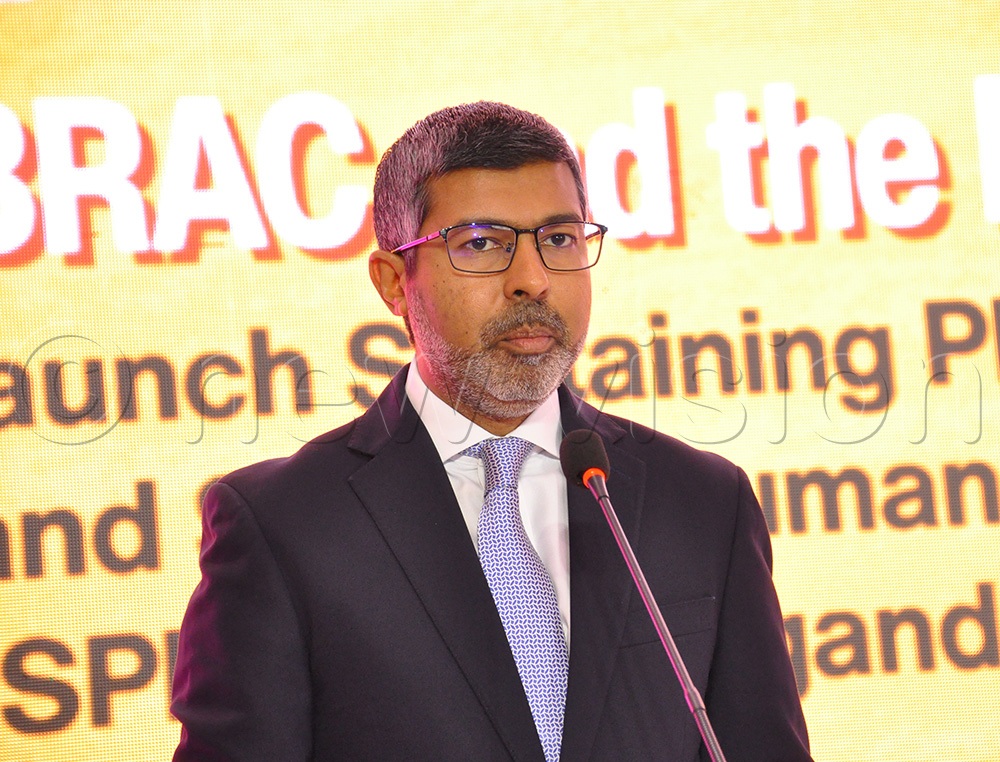
Shameran Abed, the Executive Director of BRAC International, speaking during the launch of the SPLASH project at Serena Hotel on November 13, 2026. (Photo by Nancy Nanyonga)
He said the initiative would help address the challenges facing children in humanitarian settings by providing opportunities for learning and development despite the difficult circumstances.
Joseph Kabanda, BRAC Uganda's programmes director, said the organisation had previously received support from the Hilton Foundation, enabling it to reach 5,000 children and more than 700 caregivers through a two-generation approach.
However, he said current global funding challenges had increased the demand for humanitarian support in refugee settlements, making interventions such as SPLASH necessary.
"With the current funding situation and global funding challenges, you find that there is a lot of desperate need in the refugee settlements," Kabanda said.
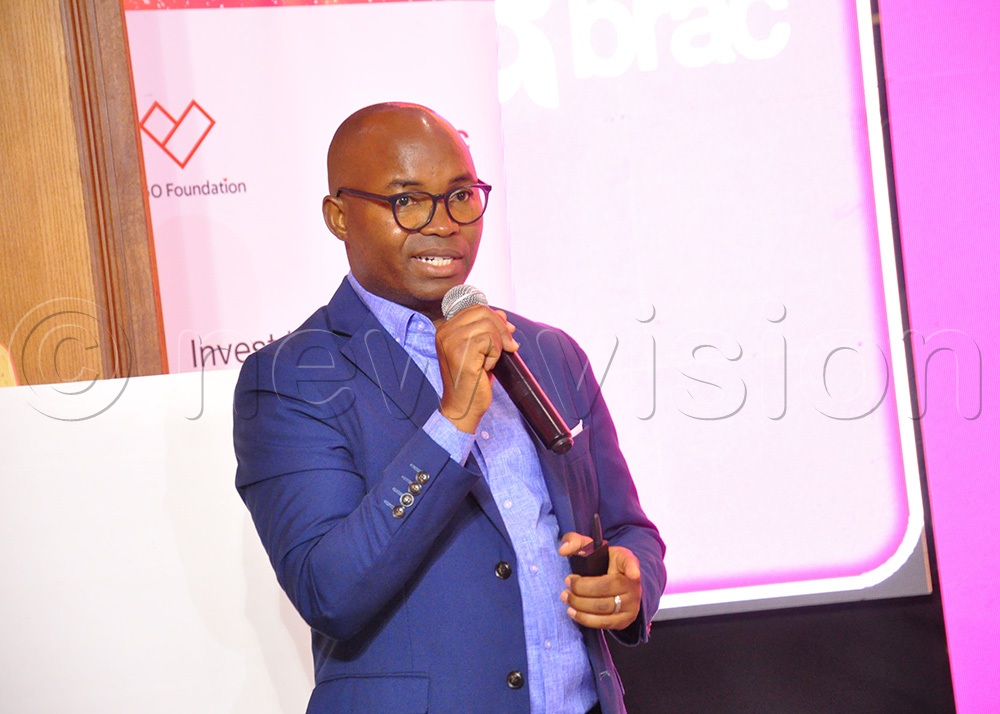
Joseph Kabanda, SPLASH Programme Manager, speaking during the launch of the SPLASH project at Serena Hotel on November 13, 2026. (Photo by Nancy Nanyonga)
Kabanda said the programme would also incorporate cultural heritage and traditional stories into play activities while encouraging communities to use locally available materials.
"We could use sticks or stones, or any materials. When those are brought to our play labs, we work with the parents to ensure that the materials are improved, either painted or made safe, decorated and made purposeful to support children's learning," he told New Vision.
He said involving parents and caregivers would ensure that children benefit from supportive learning environments both within and outside the play spaces.
The project will also build on BRAC's Humanitarian Play Lab model, which provides displaced children with opportunities to play, learn and heal while supporting caregivers through livelihood initiatives.
BRAC Uganda's intervention also comes as the Government continues to emphasise play-based learning in early childhood education.
Dr Safia Mutumba, the assistant commissioner in charge of pre-primary curriculum implementation at the Ministry of Education and Sports (MoES), said Uganda had developed a national pre-primary curriculum that integrates learning through play.
"We have already come up with a national pre-primary curriculum which has fully integrated learning through play," Mutumba said.
Ann Mutta, BRAC's regional director for Africa, said she hoped the project would enable children in refugee settlements to develop confidence and aspirations beyond the difficult circumstances surrounding them.
"I am looking forward to seeing children being able to dream and envision themselves beyond the communities where they are in and overcome the challenges that they are facing," Mutta said.
The initiative is also expected to contribute to Uganda's Vision 2040 and the Fourth National Development Plan (NDP IV), which prioritise human capital development and improved social wellbeing.
The chief guest, Dr Mercy Faith Lakisa, the youth and children's affairs state minister in the Ministry of Gender, Labour and Social Development, said the Government supported initiatives that enabled children to grow, develop and live fulfilling lives, particularly those in refugee settlements.
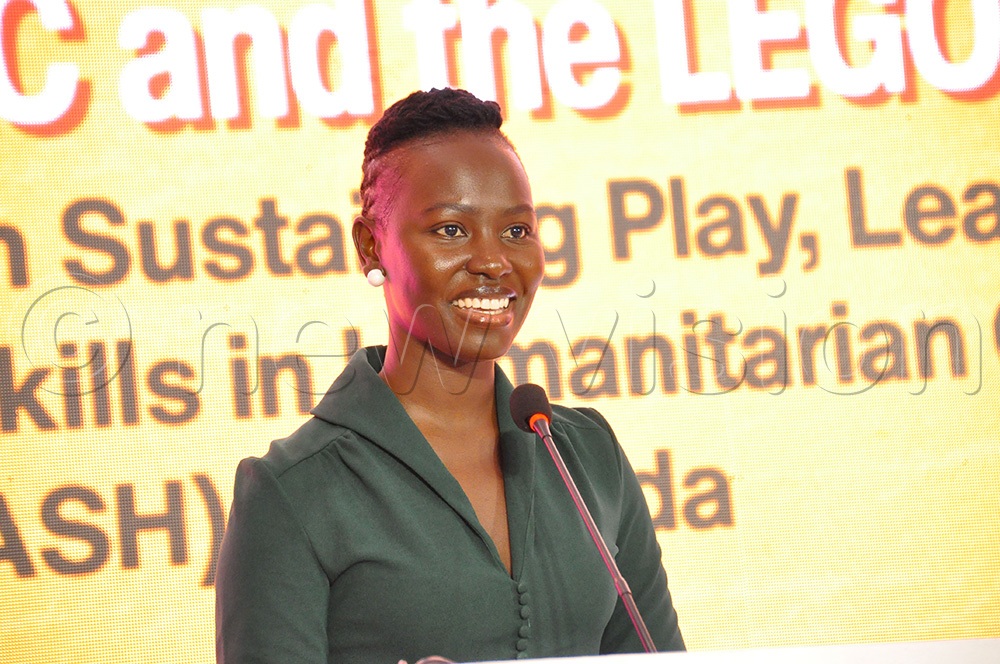
Mercy Faith Lakisa, State Minister for Youth and Children Affairs, speaking during the launch the SPLASH project at Serena Hotel on November 13, 2026. (Photo by Nancy Nanyonga)
"Play is not simply recreation; it enables children to build confidence," Lakisa said.
According to BRAC Uganda, the project will have different implementation components targeting children and caregivers across the beneficiary communities.
The pilot component will target 5,000 children aged between zero and three years and 2,500 caregivers, with implementation supported through Village Health Teams (VHTs).
Another component will target 47,000 children aged between zero and six years, contributing to the project's overall target of 92,406 children and 44,500 caregivers.
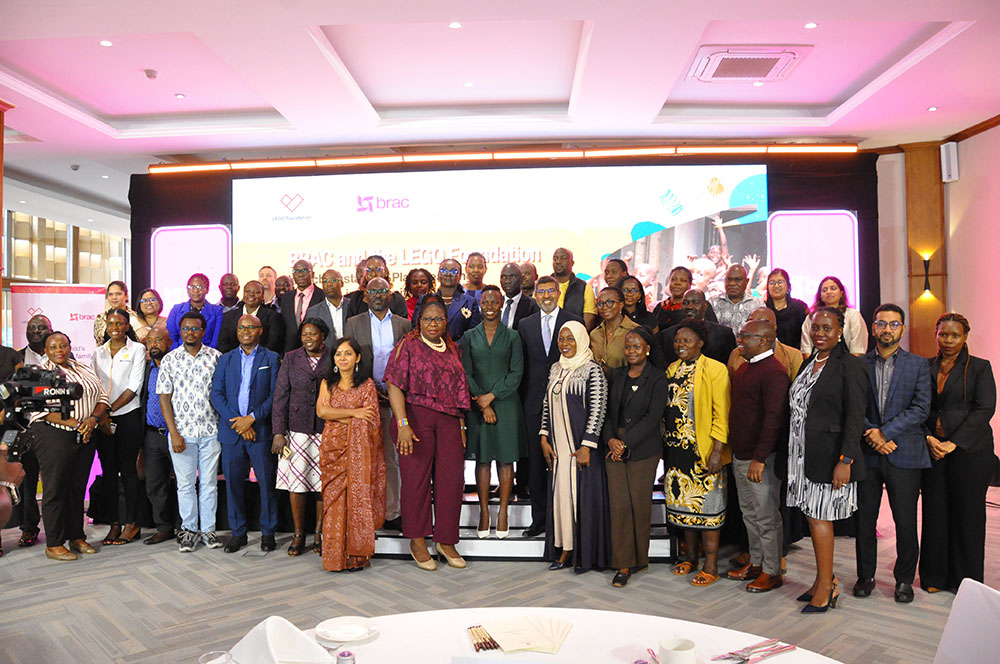
The launch was attended by BRAC's senior management team, including Michael Opio, BRAC Uganda's country director; Ann Mutta, the regional director for Africa; Tarek Alami, vice-president and head of Children's Learning and Development at the LEGO Foundation; and Abed Shameran, the executive director of BRAC International.
The Ministry of Health was represented by primary healthcare state minister Dr Charles Ayume, while the Ministry of Gender, Labour and Social Development was represented by Dr Safia Mutumba.
Development partners at the event included representatives from the Royal Danish Embassy, the Netherlands, the Irish Embassy and the World Bank.
Civil society organisations present included Plan International, War Child Alliance, Windle International, AfriChild, CARE International, Innovations for Poverty Action and Finn Church Aid.
Faith-based institutions represented included the Uganda Muslim Supreme Council, Church of Uganda and Uganda Episcopal Conference.
Uganda hosts more than 1.9 million refugees, the largest refugee population in Africa. More than one million are children, many of whom face limited access to education, safety and psychosocial support.
BRAC has been working in Uganda since 2016 to expand access to affordable, quality early childhood development services.
About SPLASH
SPLASH is a five-year, $50m partnership between BRAC and the LEGO Foundation aimed at supporting 400,000 children and adolescents living in humanitarian settings in Uganda and Bangladesh.
Built on BRAC's evidence-based Humanitarian Play Lab model, the initiative seeks to expand access to play-based education and skills development for children affected by humanitarian crises.