
Museveni talks justice, trade order and environment in latest address
"I cannot allow impunity in our system even on the side of the security forces," says President Yoweri Museveni.
Museveni talks justice, trade order and environment in latest address
____________________
PRESIDENTIAL ADDRESS
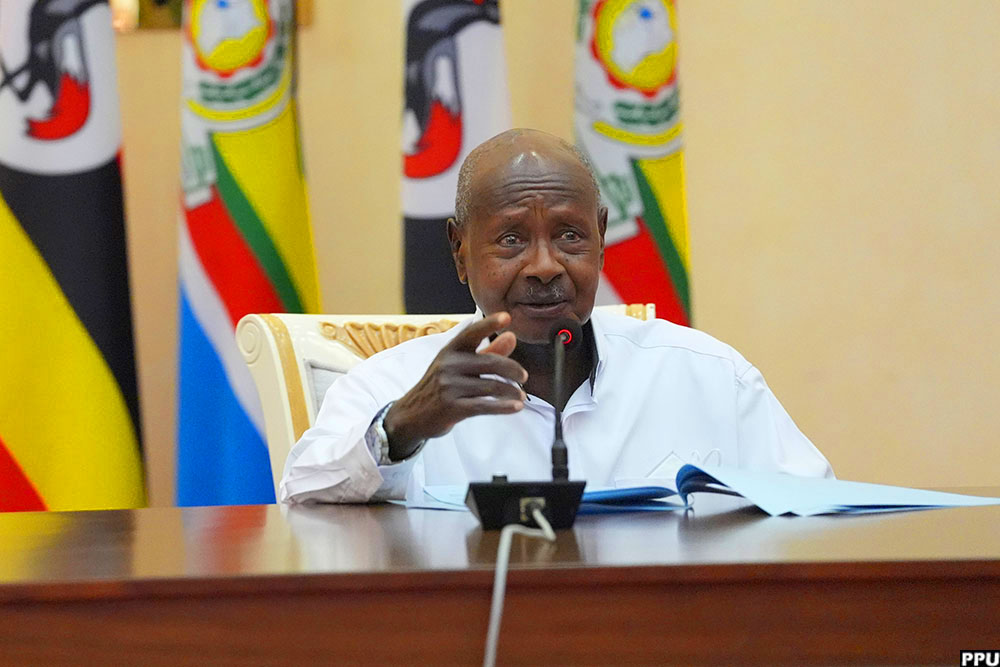
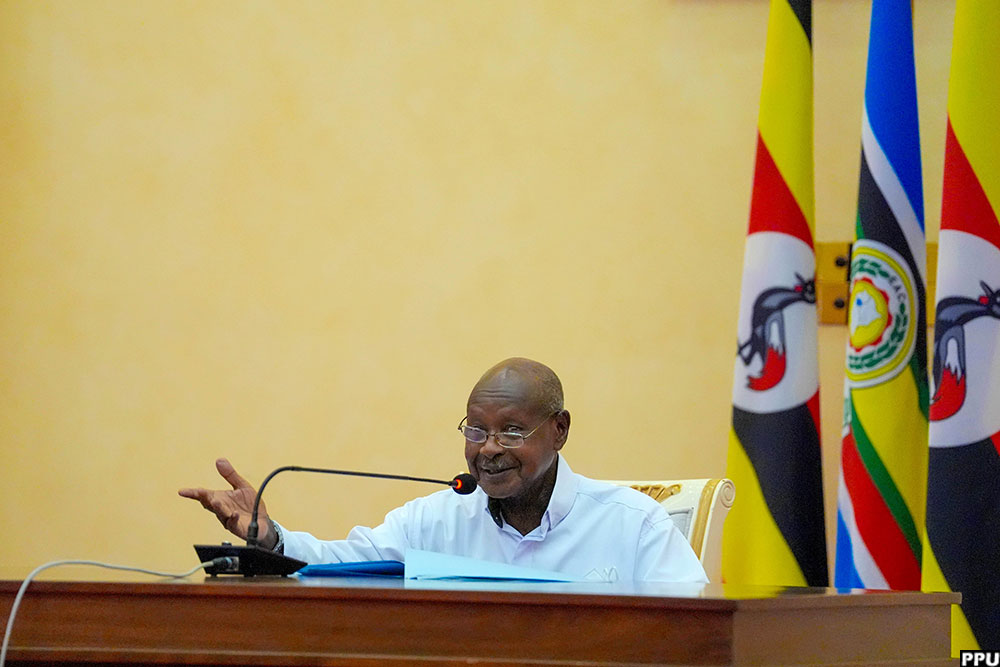
Ugandan President Yoweri Museveni on Saturday (July 4) addressed the nation on several issues of national importance, including justice and human rights, at State House Entebbe.
Below is his address in full:
*************
❝Fellow Ugandans, especially the Bazzukulu. Greetings.
Recently, I had two meetings with the Inter-Religious Council. In those meetings, they raised a number of issues, including the following:
a) The issue of justice and human rights
b) The Trade Order
c) Environment, especially the wetland reclamations
They, of course, also saluted the NRM for the achievements during the last 40 years.
Regarding the issue of justice and the human rights, they were concerned that the historic achievement of the NRM of bringing peace and the respect for human rights that led Ugandans to universally say: “Wakili, twebakka kutulo” — which translates as: “At least we sleep peacefully after many years of fear, insecurity and lack of peaceful sleep”, may be in the danger of being ended by “disappearances” of people, “illegal detentions”, etc.
Since this is a subject I know well, having spent 75 years watching events in Uganda and 65 years of them as an active participant, I gave them the history of the NRM contribution to the “Wakili, twebakka kutulo!”.
As we were fighting, our concept of justice was mainly based on the indigenous concept of justice. The indigenous communities insist on full accountability or restorative justice. Unlike the colonial and neo-colonial justice of actors in wigs, sometimes trying to obscure facts, the indigenous communities, insist on substantive justice.
With the indigenous justice system, in the end, there are no two sides: defence and prosecution. In the end, what matters is: “What was the truth?”
The tragic-comic practice of the defence dedicating itself to obscuring the facts is foreign to our indigenous system. It is this frame of mind that guided us in the Luwero Triangle. I have told different fora of the incident of Zabuloni and his colleagues in the area of Semuto, the village of Mulule, in 1982. 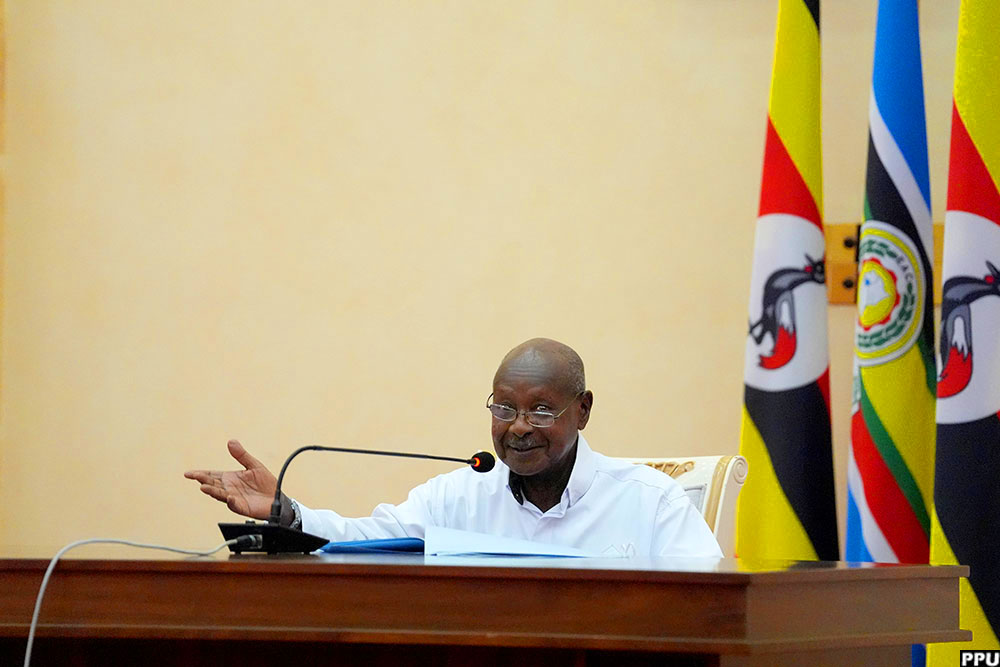
Zabuloni and his colleague drank alcohol and killed three villagers on account of their alcohol. Janet Mukwaya was a Government magistrate in the area when we captured the area. She tried the case and passed a sentence that I don’t remember well. Then the matter came to the High Command, of which, I was chairman.
In the High Command, we had somebody that had studied as a neo-colonial lawyer at Makerere, Jim Muhwezi, who was our secretary. He advised that, according to the colonial law, Zabuloni did not kill the three villagers in Mulule. That it was the beer inside Zabuloni that had killed the people and, therefore, Zabuloni could not be guilty.
The indigenous communities had two systems of offences. The first category were ebichumuro — these were offences short of murder. These included insult (okujuma): mistreatment of spouse such as kuguunga (denial of sex) or kwitsa enjara (not feeding the partner well); okushenda — denying shelter to somebody who had kwiririrwa (caught by night while on a journey); kwonesa (livestock eating somebody’s crops); kuteera ente ahabwato (denying water to cattle that are not yours); etc.
The remedy for all these, after you have been through the court of the chief, eishaazi (an assembly of elders sitting outside the kraal) or a tribunal, such as in a matter of okugarura mukazi oyangaine (trying to bring back one’s wife after she has gone back to her parents in protest against mistreatment), is okuhoonga (to pay a fine). This can be a cow, goat, etc. The action is called okuhongyesa.
The other category of offense is murder, which would create enzigu (vendetta). With enzigu, there were two solutions. These were either to revenge (okuhoora), hence — the name Muhoozi, or to kukaraba (blood-settlement).
If the offending clan did not want to suffer revenge, they would reach out to the victim’s clan and offer to kukaraba — which is to pay big compensation in cattle for the murdered person and the abafumu (the priests) to wipe out the enmity with some rituals that cleanse away the blood.
Since Zabuloni had made himself a jerrycan of alcohol and that jerrycan had killed three Ugandans, Zabuloni and his colleague had to be shot in public, at a point where they had killed people. It is that initial act of balanced justice that catapulted the prestige of the NRM in Buganda and Uganda.
The Baganda said: “Banobalina amazima — these are people of truth and justice.” Hence, the "wakili twebakka kutulo.” Even when we came into the Government, the same was maintained. Indeed, some soldiers have been executed in public for killing people. Examples are: Sgt. Kibonge, Sgt. Omona, Pte. Kodet, etc.
If Uganda had been peaceful in 1982, in the case of Zabuloni and group, we could have explored the option of okukaraba. Therefore, on the side of the NRA, we came with the spirit of the indigenous justice. However, in the wider system, the legal practitioners and some of the elite adhered to the colonial system that is quite ridiculous in some cases.
Take the example that sometimes the accused can refuse to answer. Then there is the issue of granting bail, even when the accused can interfere with the case. Apart from the disconnected colonial system, you also get actual abusers of that system because they are dishonest.
Even with the colonial law, bail is, apparently, only given when the accused cannot interfere with the case. However, you have seen rampant cases of policemen giving bonds or magistrates giving bail to village thieves that are threatening rural agriculture.
Then, there was the deaths of many of the original NRA commanders by, mainly, dying from natural causes. The regiments that brought victory on the 26th of January, 1986, were; 1st Bn – dead; 3rd Bn – dead; 5th Bn – alive; 7th Bn – dead; 9th Bn – alive; 11th Bn – dead; 13th Bn – alive; 15th Bn – alive; 17th Bn – dead; 19th Bn – dead; 21st Bn – dead;
These were 11 regiments although they were being called battalions. 19th Bn, for instance, had 1900 soldiers, yet our battalion that time would have had about 750 personnel. Seven of these regiments had their commanders dead in the early years after 1986.
Instead of having the original NRA basesodooti commanders, we started having either careerist commanders (nkora mulimo) or, even, actual ppportunists (najja-kulya). This is how you started having corruption in the army ─ stealing army ration, stealing army fuel, stealing army funds.
In the wider society, however, the prestige of the NRA/NRM on account of wakili twebakka kutulo as well as repairing the ruined economy, goods in the shops being plentiful, some of the infrastructure being repaired, grew. The NRM, therefore, attracted big membership, standing at 18 million by May 2025, when we checked the registers.
However, gaps in observing human rights, on fighting corruption and fighting crime, mainly on the part of the political class, the bureaucracy and the Judiciary, remained. This meant that there was peace and the economy was growing, but it would have grown even more, if we did not have those gaps.
I noticed that danger and for the NRA/UPDF, I encouraged young Muhoozi after he had finished Senior Six to mobilize some of his colleagues and come to Kasenyi training wing for ideological and military training. You remember the stories that time by the negative forces that I was recruiting an illegal army.
Those cadres, unlike their bush predecessors, had more time and opportunity for professional development by attending all military and ideological courses systematically ─ level by level. The recent limited actions by security forces against some individuals and institutions are, really, long overdue actions to fill those gaps.
Wakili twebakka kutulo created mainly by the UPDF, boona bagaggawale (wealth for all) created by the NRM that have resulted in metamorphosing Uganda into a lower-middle income country, must also be reinforced by no more sleep, no more kukongola, no more corruption and, now, no more impunity by the selfish people and agents of foreign interests to systematically denigrate the efforts of the people to develop themselves and also some people endlessly committing crimes and using the law to shield them.
There was a weakness on the part of the political, administrative and legal cadres of the Government in allowing this impunity to continue for so long. Some people say: “People have been abusing Museveni, but Museveni has been ignoring them.’’ That is true; but those malignments were slowing down our growth. Some investors and tourists are scared away from coming to Uganda on account of those false stories. I have many examples.
When people come here, they get amazed about the progress. It is, therefore, good that the security forces have come in to fill the gap. In the past, I did not have enough cadres to fill this gap. It is not only the security forces that are filling this gap. A year or two back, Hon. Fred Byamukama helped Uganda to expose the criminals that had turned the State House into a mafia centre.
In order to have your document brought to the President, you had to pay sh30 million as a bribe. He reported the matter to me and we arrested the gangs. There is, therefore, a counter–offensive against corruption, crime and impunity.
To show the impunity, take the case of Besigye. He was arrested on the 17th of November, 2024. All this time, however, he has been refusing trial, misusing the legal system. Why would this great democrat and human rights fighter spend so many calories on refusing to come to trial where he has got opportunity to prove his innocence and expose the undemocratic behaviour of the dictatorship of Museveni and his family?
Second question: “why should the legal system for so long allow an accused person to just refuse to be tried?”
This allowing of impunity to continue for so long is responsible for the culture of mob justice. The population suspects that the Police and the Judiciary may not hold the criminal accountable. Hence, the mob justice, which is unfortunate.
The fascist tendencies among some elements of the opposition have for a long period provoked the patriots. See, again, when in 2020, the rioters were undressing women because they were dressed in NRM colours. See the picture when an unarmed Policewoman was attacked by hooligans. Quite often, you have heard slogans: “tugenda kwokya Kampala” — “we are going to burn Kampala.” What did the slogan “Tajja kulayira” mean? The translation is: “the elected President of Uganda will not be allowed to swear-in.”
How will you stop the swearing in except by violence if you are not using the courts? How many times have you heard the taunting by hooligans of especially the NRM women supporters in the words: “mwe ebikazi, y’ emwe abatusibyeko akassajja” — “you stupid women are the ones that have failed us to remove this man?” It is the democratic right of those women to kubasibako the kassajja if they support the kassajja.
The arrested opposition law-breakers may not get bail because they threaten the security of the witnesses. It is this undemocratic culture of some of the opposition elements that has been provoking the security forces to fill these gaps. Therefore, what the security forces have been doing recently is not a regression in the fight for freedom but a consolidation of our long fight for the principles of patriotism (mwooyo gwa’ Uganda), Pan-Africanism (mwooyo gwa’ Africa), social-economic transformation and democracy.
On the contrary, here you see Besigye creating scenes in the courts of law. I could even see my sister [Miria] Matembe limping into court but forgot to limp when she was leaving court. Therefore, those who want to know the truth, wait for the trials of the accused people.
I cannot allow impunity in our system even on the side of the security forces. In 2021, there was the death of a Ugandan nicknamed Zebra in the Kawempe area in unclear circumstances after he got in contact with our security forces. I had to organize okukaraba (blood settlement) with his family in Entebbe State House.
It is, therefore, the impunity promoters that have been inviting the security forces to finally do something. It is the security forces that die to keep peace in Uganda and in our turbulent region. If the security forces give their lives to keep peace in the country, why can’t some of the political actors give up their egos and greed to make a contribution to that peace?
It is, therefore, in order for us to insist on full accountability and no impunity for our words or our actions. I hope these comments have illuminated what the gaps were and why the limited, supportive actions of the security forces to the real rule of law in the country.
Once we have known the why and the what, then there is the issue of the how. This is an issue we handled from the early days of our resistance and I will share it with you separately, so as not to render this piece too long.
We now come to the issue of Trade Order, that the Inter-Religious Council also raised. One of the points mentioned by a number of people is that hawkers have been earning a living by violating common sense and selling products on the side-walks, etc.
I told the bishops and the sheikhs that I can see that I am in real trouble. Very soon, I will be charged for damaging the business of the coffin makers by reducing the deaths of Ugandans from AIDS, corona, Ebola, measles, etc, etc. Yes, the coffin makers will lose business, because it was a bad business that was at the expense of society. Instead, they should make chairs and beds for Ugandans that did not die.
Hawking is an economy and health killer.
How does it kill the economy? It kills the economy by denying the users of shops and markets business because customers buy from hawkers who do not pay tax because they are not identifiable; they do not pay rent. How will the economy survive if people do not pay taxes on rent and sales?
On the issue of health, having products exposed to the atmosphere, including food, is very dangerous. Yet, the one who sells a dangerous product is not identifiable. Then, there is the issue of blocking pedestrians from using the side walks and forcing them to compete with cars and boda bodas on narrow roads. This means accidents, road jams, etc.
Selling must be in shops, markets or supermarkets. Even there, you must be registered so that you are accountable for what you sell and you also pay tax. The local governments should look into the possibility of giving land for workplaces for the hawkers that have been sent away from the side walks. However, even there, everybody must be licensed, identifiable, accountable and must be paying taxes.
Coming to the issue of the wetlands, this shows you how unpatriotic some Ugandans can be. Who does not know what a wetland is? Ekisaaru, olutobazi, omugga, enyanja, are known by even a child. Nobody can say that I came to the wetlands without knowing that it was a wetland because the features are unmistakable: water, ebigugu (Cyperum latifolia), ebitoogo, etc.
Ever since 1986, we have been telling you about the forests, the wetlands, etc. Yet, except for the Busoga, Bukedi and Kigezi areas, most of the swamps in other parts of Uganda were not encroached on. Mabira Forest had been encroached on by the population because Idi Amin had told them that forests had no value. When we came into Government, we chased all the encroachers and Mabira Forest came back.
However, these days when I fly over Mabira Forest, I see some smoke in the forest here and there. Does it mean that some people are making charcoal in the forest? Where is NFA? Where are the chiefs of the surrounding administrative units? They will have to answer.
With Busoga, Bukedi and Kigezi, I have been trying to build up a fund to compensate the people in the swamps by shifting them to fish farming and other enterprises because it was the colonial government that misled our people into those swamps, saying that it had been done in Holland and I do not know where else. Yet, it is a disaster for us.
It is estimated that 40% of our rain comes from the local wetlands and those in Congo and South Sudan. What is the proof? Why does West Nile get 1270mm to 1524mm of rain per year and Karamoja only gets 700mm to 900mm, yet they are on the same latitudes? The answer ─ the swamps in South Sudan and Congo.
Why does Kalangala get 2000mm to 2090mm of rain per year? The answer ─ the water of Lake Victoria that evaporates and reinforces the moisture from the oceans. Who, then, has a right to ruin our heritage of this abundance of water and our future?
There are those who say that they were allowed by Government authorities to ruin the wetlands. Did those who allowed them do so rationally and legally? We shall study those excuses and decide on the way forward for those mistake makers. However, the operation to restore the wetlands and protect our natural forests, will continue.
I appeal to the Ugandans to participate in the NRM barazas for LC1s and the Women Councils on the 10th of July, 2026, the LC1 elections on the 28th of July, 2026 and the Women Council elections of 23rd July, 2026.
Ugandans, I am hearing of the corruption in the health centres, in the PDM, etc. The medicines for those problems are two. One, report the corruption to a government official or a religious leader or anybody you think will bring up the matter. Action will be taken.
Secondly, use the LC1s elections and the Women Council elections to elect leaders that will fight corruption. Corrupt Ppeople are easy to defeat ─ just report them.
May God bless Uganda and Africa.
Yoweri Kaguta Museveni Ssabalwanyi
PRESIDENT OF THE REPUBLIC OF UGANDA.