
Museveni orders sacking of six works ministry engineers
“The issue of corruption has really contributed much to the failure of these projects and has hindered even good contractors from delivering their work. Some delays are deliberately created in approving designs, processing certificates and handling contract variations, eventually increasing the cost of projects,” Byamukama said.
Museveni has ordered the dismissal of six engineers from the Ministry of Works and Transport over their handling of major road infrastructure projects.
KAMPALA - President Yoweri Museveni has ordered the dismissal of six engineers from the Ministry of Works and Transport over their handling of major road infrastructure projects, Works Minister Fred Byamukama revealed to Parliament.
Appearing before Parliament's Committee on Physical Infrastructure chaired by Mwine Mpaka Rwamirama (Mbarara City South MP), Byamukama said he had received communication from the President directing the removal of the engineers, adding that several other technical officers were under investigation over alleged irregularities that have delayed road projects, including the Busega–Mpigi Expressway and increased costs.
“As I was leaving my office this morning, I saw a letter from the President sacking six engineers, including a few I am seeing on this front bench, on projects such as Busega-Mpigi, Mityana and Fort Portal roads,” Byamukama told the committee.
He added that a number of engineers were already recording statements before the Inspectorate of Government (IGG), while others who had since left government service were also being investigated.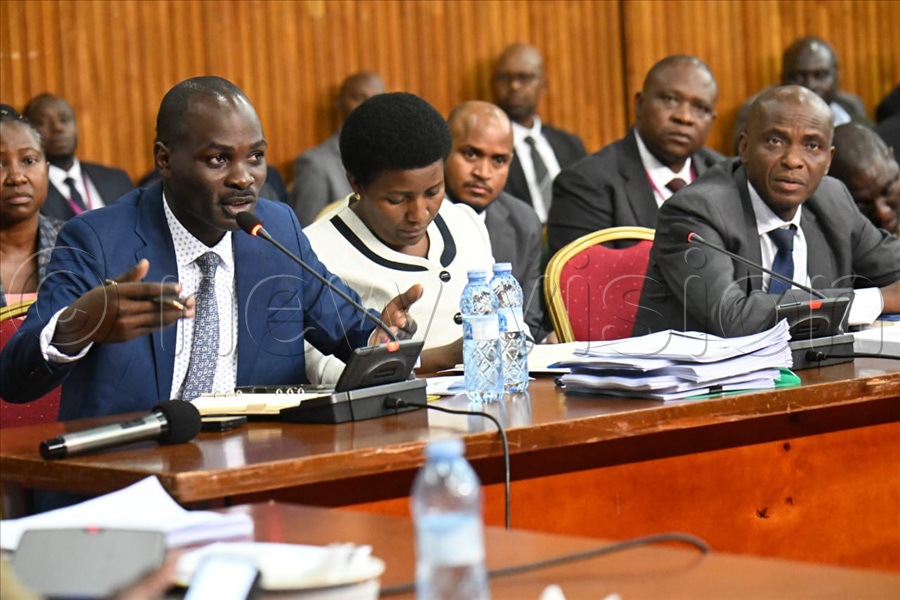
“We must be honest. Even after 2028, we may not complete depending on the challenges we have seen. However, the contractor is doing good work and government is committed to ensuring the project progresses,” Byamukama said. (Credit: Maria Wamala)
“The people who are suspected were implicated. That is why you saw the Permanent Secretary (Bageya Waiswa) being interdicted. We have a number of engineers recording statements at the IGG, and even those who left government are being investigated following the President's guidance,” he said.
The minister said corruption had significantly contributed to the poor performance of road projects, affecting both contractors and government.
“The issue of corruption has really contributed much to the failure of these projects and has hindered even good contractors from delivering their work. Some delays are deliberately created in approving designs, processing certificates and handling contract variations, eventually increasing the cost of projects,” Byamukama said.
Among the measures, Byamukama said no future road contracts would be signed before government acquires at least half of the required right of way, noting that the President had advised that land acquisition should ideally reach 75% before commencement of construction.
“There will be no signing of road contracts unless the right of way has substantially been secured. We must stop exposing government to unnecessary claims arising from delayed land acquisition,” he said.
The committee was particularly concerned about the Busega-Mpigi Expressway, whose completion has repeatedly been pushed back amid funding constraints, land acquisition challenges and allegations of irregular design changes.
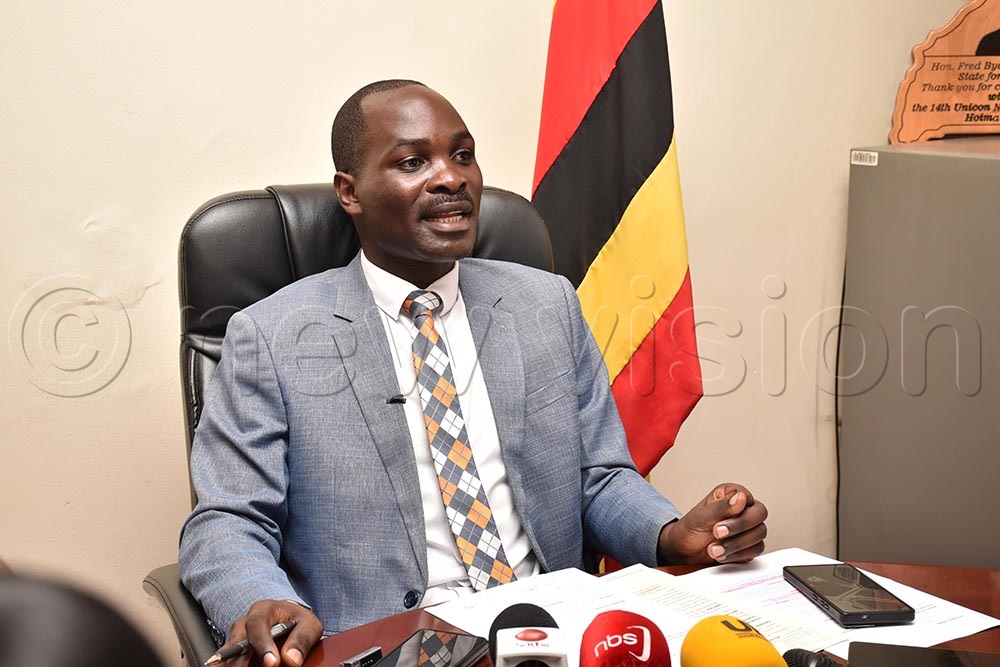
Minister Fred Byamukama
According to documents presented by the ministry, the 23.7-kilometre expressway, funded by the African Development Bank (AfDB) and constructed by China Civil Engineering Construction Corporation (CCECC), had reached 47.15% physical progress and 49.44% financial progress by June 2026.
The project, which commenced in November 2019, is now expected to be completed by December 2028, although the minister acknowledged the deadline may not be achieved.
“We must be honest. Even after 2028, we may not complete depending on the challenges we have seen. However, the contractor is doing good work and government is committed to ensuring the project progresses,” Byamukama said.
He said government had already invested Sh547.5b in the project and was processing additional financing after Parliament approved a new AfDB loan. The contractor is still owed about Sh82.1b, which the minister said had affected the pace of construction.
“I personally met the contractor and officials from the AfDB because we wanted work to resume. This is an important project and it must move regardless of the challenges we inherited,” he said.
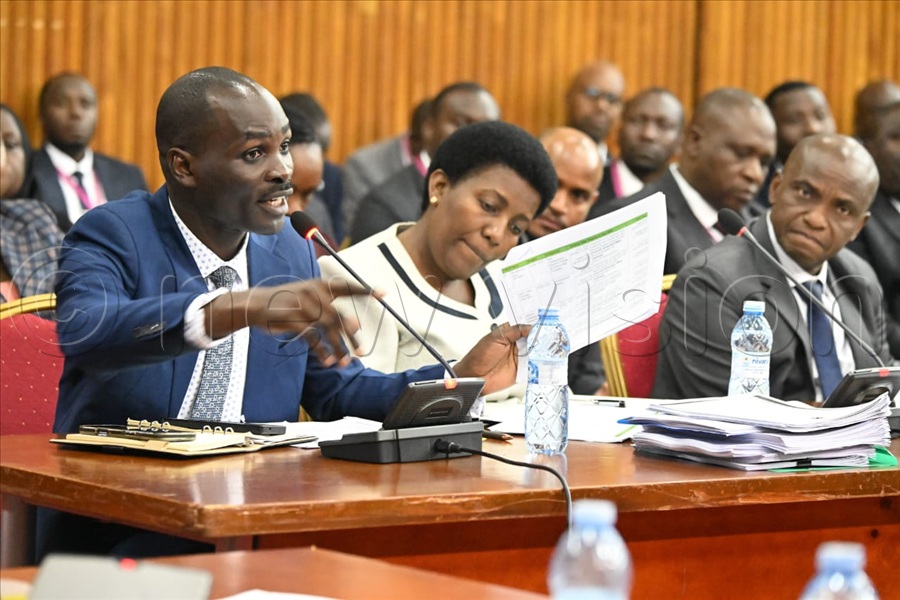
During the meeting, MPs questioned ministry officials over changes to the original road design, alleging that sections of the alignment had been diverted from dry land into wetland, resulting in increased costs and disputes over land compensation. (Credit: Maria Wamala)
“We want to know who changed the design. The original alignment was on dry land, but somebody changed it into the wetland. We also want to know who owned the land titles in the swamp and who approved those changes,” Mpaka said.
The committee also demanded details of consultants involved in the project and payments made during the design stages, saying the changes had contributed to significant cost variations.
Responding to the committee, Eng. Isaac Wani, the Commissioner for National Roads at the Ministry of Works and Transport, explained that the project had initially stalled because the contractor had not been paid and the original financing had been exhausted.
“The project was suspended because of two reasons. First, the contractor had not been paid under the former Uganda National Roads Authority (UNRA). Secondly, the original loan had been fully utilised, and there was uncertainty over additional financing,” Wani told MPs.
He said following Parliament's approval of additional AfDB financing, the contractor had resumed mobilisation after receiving part payment. Wani also disclosed that the ministry had introduced new procedures governing design changes and contract management to improve accountability.
“We now have regulations and a design policy that clearly assigns responsibility. Going forward, every officer involved in approving design changes will sign off on their respective responsibilities so there is no ambiguity over who made which decision,” he said.
However, Wani acknowledged that ministry officials had not come prepared with historical records on earlier design decisions and consultant payments, prompting MPs to demand that the documents be submitted to the committee before the inquiry concludes.
The committee is expected to continue examining several road projects as Parliament seeks accountability for persistent delays, escalating costs and allegations of corruption within the country's road infrastructure programme.