
Museveni asks African states to strengthen cooperation in tackling health emergencies
Museveni said Africa must prioritise cooperation among its own countries, particularly in sharing health expertise, information and resources, to protect populations during epidemics and humanitarian crises
The 5th International Conference on Public Health in Africa (CPHIA 2026). (Courtesy)
__________________ Vice-President Jessica Alupo meets Ethiopian Prime Minister Abiy Ahmed. (Courtesy)
President Yoweri Museveni has called on African countries to strengthen regional cooperation and invest in their own capacity to respond to public health emergencies.
He warned that disease outbreaks, conflict and food insecurity cannot be tackled by individual countries acting alone.
Museveni said Africa must prioritise cooperation among its own countries, particularly in sharing health expertise, information and resources, to protect populations during epidemics and humanitarian crises.
In a keynote address delivered on November 23 by Vice-President Jessica Alupo at the Fifth International Conference on Public Health in Africa (CPHIA 2026) in Addis Ababa, Ethiopia, Museveni said insecurity and population displacement were creating gaps in disease surveillance, making it difficult for health authorities to detect and respond to outbreaks.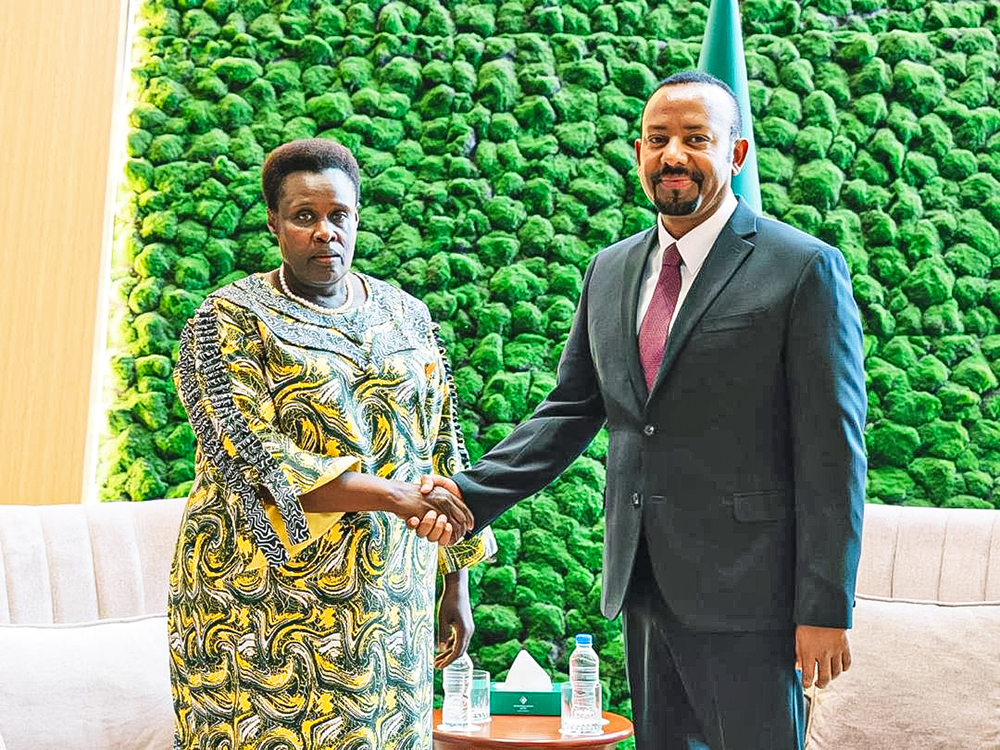
He cited Uganda’s experience in responding to HIV, Ebola, Marburg, COVID-19 and Monkeypox as evidence that countries must build resilient health institutions capable of managing recurring emergencies.
Museveni also pointed to Uganda’s involvement in Somalia and cooperation with the Democratic Republic of Congo (DRC) and South Sudan as examples of how peace and security efforts are closely linked to public health.
He said Uganda had worked with Congolese counterparts to strengthen response capacity, including treatment arrangements at Aru, Kasenyi and Butembo, as well as communities along the Kasindi corridor.
On South Sudan, he cited a memorandum of understanding on cross-border health security signed between the two countries, saying such arrangements were necessary for sharing information and coordinating responses to health threats.
Museveni urged African governments to place greater emphasis on South-South cooperation, arguing that countries on the continent could learn from one another's experiences and strengthen their collective ability to respond to emergencies.
Museveni further called for countries to utilise the capabilities of their security institutions, including military medical services, engineering, transport and logistics, to support civilian authorities during health and humanitarian emergencies.
However, he emphasised that such support should remain under civilian leadership and comply with national laws and humanitarian principles.
The President also urged governments to invest in health workers, scientists and public health institutions, saying sustainable preparedness required more than emergency deployments.
The conference was officially opened in Addis Ababa on November 23 during a ceremony presided over by Burundi’s President and African Union chairperson, alongside Ethiopian Prime Minister Ahmed Ali Abiy.
On the sidelines of the conference, Alupo also held bilateral talks with Abiy, focusing on strengthening historical relations between Uganda and Ethiopia as well as expanding cooperation in areas of mutual interest.
The meeting sought to translate the longstanding diplomatic ties between the two countries into practical partnerships for economic cooperation and regional development.