
IGP Byakagaba, Media Centre boss meet over police image
The meeting, which brought together police communication officials and government communication stakeholders, comes as the force embarks on a new initiative, dubbed the 'Trust Campaign', aimed at changing its public communication approach from reactive responses to proactive reputation management.
IGP Byakagaba, Media Centre boss meet over police image
________________
The Inspector General of Police, Abas Byakagaba, has met Uganda Media Centre Executive Director Alan Kasujja to discuss strategies for rebuilding the Uganda Police Force’s public image and restoring public confidence in the force through improved communication, accountability and sustained engagement with citizens.
The meeting, which brought together police communication officials and government communication stakeholders, comes as the force embarks on a new initiative, dubbed the 'Trust Campaign', aimed at changing its public communication approach from reactive responses to proactive reputation management.
Byakagaba said the force had recognised the need to change how it communicates with the public, arguing that its previous approach had largely been reactive, allowing incidents and external narratives to shape its reputation.
“We are making deliberate efforts to shift how we communicate with the public. Our communication has largely been reactive, responding to incidents after they occur and allowing external narratives to define our institution. We are changing that narrative. We are moving from reaction to reputation,” Byakagaba said.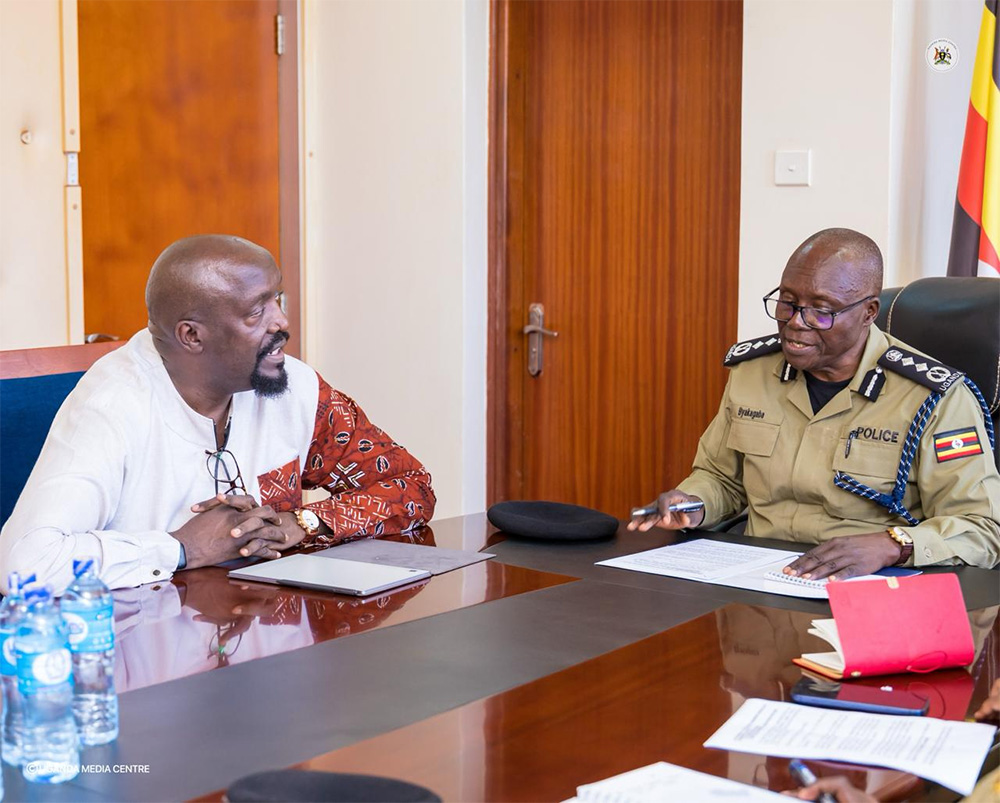
He said effective policing could not thrive without public confidence, prompting the establishment of the Office of the Head of Strategic Communications, headed by Assistant Commissioner of Police Susan Kasingye, to work alongside police spokesperson Rusoke Kituuma.
“Our goal is to transition from reactive updates to sustained, proactive and citizen-centred communication,” Byakagaba said.
He described the 'Trust Campaign' as more than a public relations exercise, saying it was an institutional framework intended to bridge the gap between the police and communities through transparency, accountability, professionalism and mutual respect.
He added that the police could not achieve the objectives of the campaign alone, underscoring the need for cooperation with the public and other government institutions.
On her part, Kasingye said the force was changing its approach from crime prevention to safety promotion, with the understanding that public safety should not be left to law enforcement agencies alone.
“We are changing our approach from crime prevention to safety promotion so that everybody is on board. It is not about safety when an attack has already happened. It is about us working together with the public because when it comes to safety promotion, everybody has a responsibility,” she said.
According to Kasingye, the force is developing monthly campaigns aligned with different seasons and public safety concerns, starting with road safety as the country approaches the festive season.
“Then, we will do a campaign for safer homes during holidays,” she said.
Police spokesperson Rusoke Kituuma said the campaign would equally prioritise internal communication and sensitisation, arguing that the institution’s reputation was heavily dependent on the conduct and performance of its officers. “The reputation of the force hinges on the conduct and performance of our officers,” Kituuma said.
He added, “It is crucial to have what we usually call our heavy lifters, the officers who are at the frontline of police operations, as primary drivers of this campaign. We must ensure that they understand that this is essentially a reputation issue because our reputation has a significant bearing on whether we succeed or fail as an institution.”
Marcella Karekye, the Special Presidential Assistant in charge of Communications and Director of the Government Citizen Interaction Centre, said the changing media environment had made public perception and institutional image increasingly important for security agencies.
“By nature, security institutions were not traditionally very open or communicative. But in the era of social media, perception and image are very important in helping to build trust,” she said.
Kasujja, who was appointed Executive Director of the Uganda Media Centre by President Yoweri Museveni in late 2025 and officially assumed office in March 2026, challenged the police to undertake a comprehensive, evidence-based audit of its public image before implementing the campaign.
He said strategic communication officers should be involved in decision-making at every level instead of being brought in after decisions have already been taken.
“They have to be where decisions are being taken. In every meeting, at every point, you must have your strategic communicators because when they understand what needs to be communicated, they are then able to package and market it,” he said.
He questioned why the police continued to attract negative public perception despite his own positive experiences interacting with officers.
Kasujja also challenged the force to publicise its achievements more aggressively, saying government institutions often allow their successes to go unnoticed while negative incidents dominate public discussion.
“Positivity has to be communicated. You don’t win in silence. You win very loudly,” he said.
Kasujja further identified three areas requiring attention: internal communication among police officers and across government security institutions, communication with the public, and the availability of equipment and resources to support effective information dissemination.
He said strategic communication required investment in equipment, content production and the capacity to disseminate information across different platforms.