
Minister Babalanda wants RDCs in the field, not behind desks
The Minister for the Presidency, Milly Babirye Babalanda, made the call on August 19, 2026, while addressing a workshop for RDCs, deputies, assistants and security officers from the Busoga sub-region at the Source of the Nile in Jinja.
The Minister for Presidency Milly Babirye Babalanda, remarks while closing the RDCs workshop at the Source of the Nile Hotel in Jinja City on August 19th. (Photo by Donald Kiirya)
_________________
Resident district commissioners (RDCs), resident city commissioners and their deputies and assistants have been urged to step up field-based monitoring of government programmes, with greater emphasis on accountability, tangible results and fighting corruption.
The Minister for the Presidency, Milly Babirye Babalanda, made the call on August 19, 2026, while addressing a workshop for RDCs, deputies, assistants and security officers from the Busoga sub-region at the Source of the Nile in Jinja.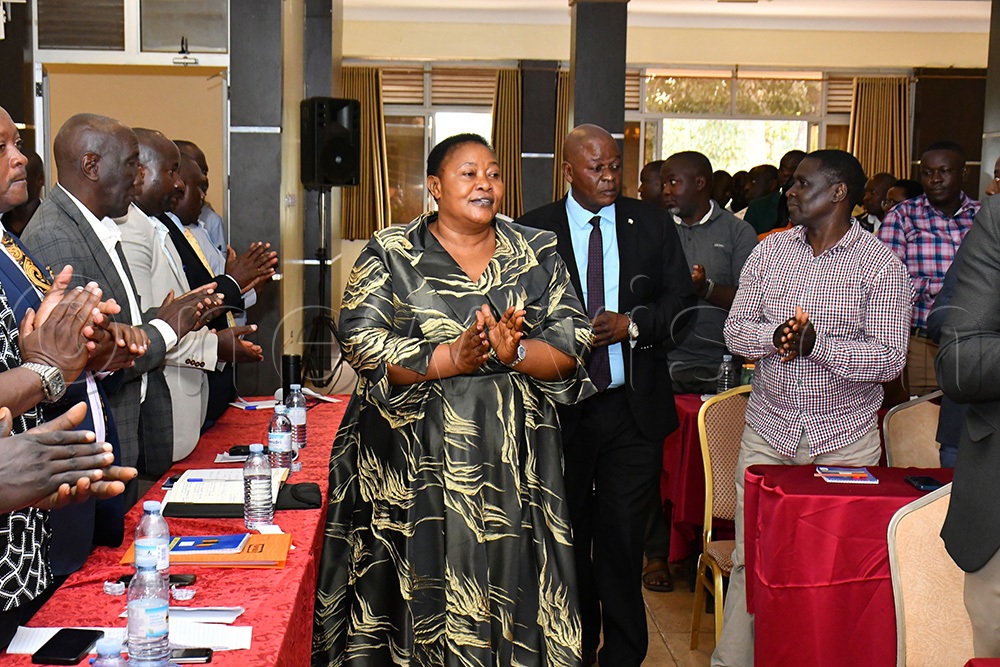
The Minister for Presidency, Milly Babirye Babalanda (middle), arriving at the Source of the Nile Hotel in Jinja City to close the RDCs workshop on August 19th. 2nd right is the RDCs' Whip in Busoga sub-region and also Bugiri RDC Richard Gulume. (Photo by Donald Kiirya)
She cautioned the officers against participating in acts of corruption and urged them to intensify monitoring of government programmes.
“You should not be given anything, and you should not give anything. Because corruption begins with you and me, the giver and the receiver,” Babalanda said.
She urged them instead to help the government fight corruption on all fronts, protect public programmes and assets from diversion, manipulation, negligence and personal interests, and act on credible indications of wrongdoing without becoming part of the problem.
The minister emphasised that monitoring is among the most important responsibilities of the RDC structure and must be approached seriously and professionally.
“You cannot effectively monitor government programmes from your offices. This time round, be field officers and not office bearers. Officers must visit sites, establish facts, engage intended beneficiaries, verify whether projects are progressing according to plan, whether funds and resources are properly utilised, whether contractors are meeting obligations, and whether services are reaching the people,” she said.
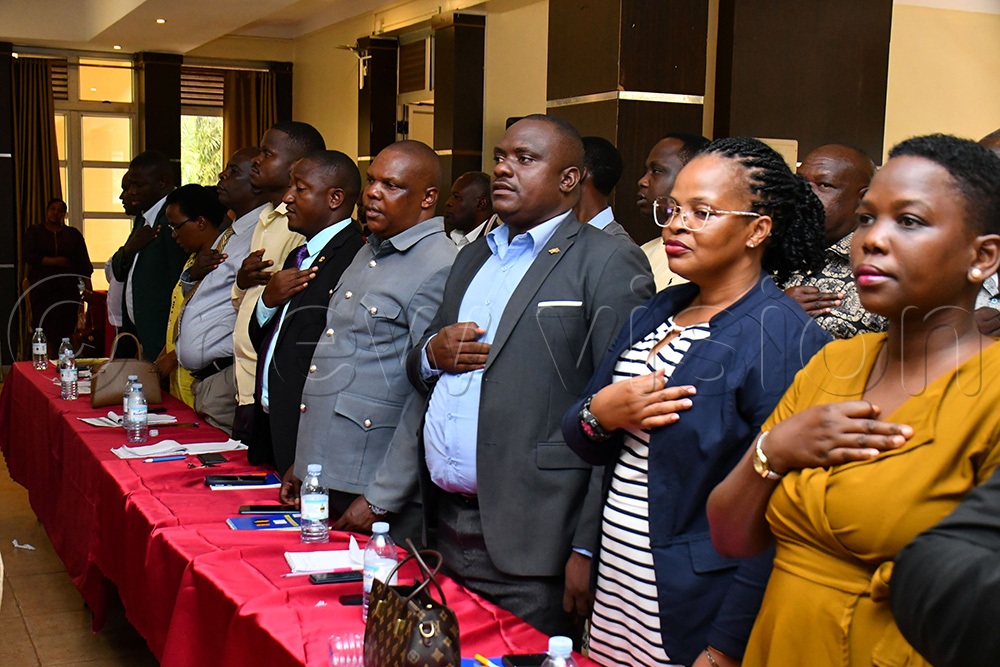
Some of the RDCs singing the Busoga Anthem at the closing ceremony of their workshop at the Source of the Nile Hotel in Jinja City on August 19th. (Photo by Donald Kiirya)
Monitoring, she added, should not end with a visit or report. Where problems are identified, officers must establish the causes, identify responsible parties, communicate through appropriate channels and follow up until corrective action is taken.
Successful implementation should equally be documented.
“I therefore expect the RDC structure to move away from monitoring for the sake of reporting to monitoring that produces accountability and results,” Babalanda said.
Reports should provide reliable information for decision-making and help institutions correct weaknesses.
She reminded the officers that they represent the government at district and community level and that citizens form impressions of the government and the presidency through their work.
“The responsibility goes beyond occupying offices or attending meetings; it requires presence in the field, understanding local realities, identifying problems, protecting government interests and ensuring programmes deliver results. Be visible, interact with the community because these are your people—work with them,” she said, noting that ground-level fact-finding would equip them with accurate information.
Babalanda called for teamwork among RDCs, local government structures and technical departments, who serve the same government. Internal competition, undermining or working against one another, is unacceptable.
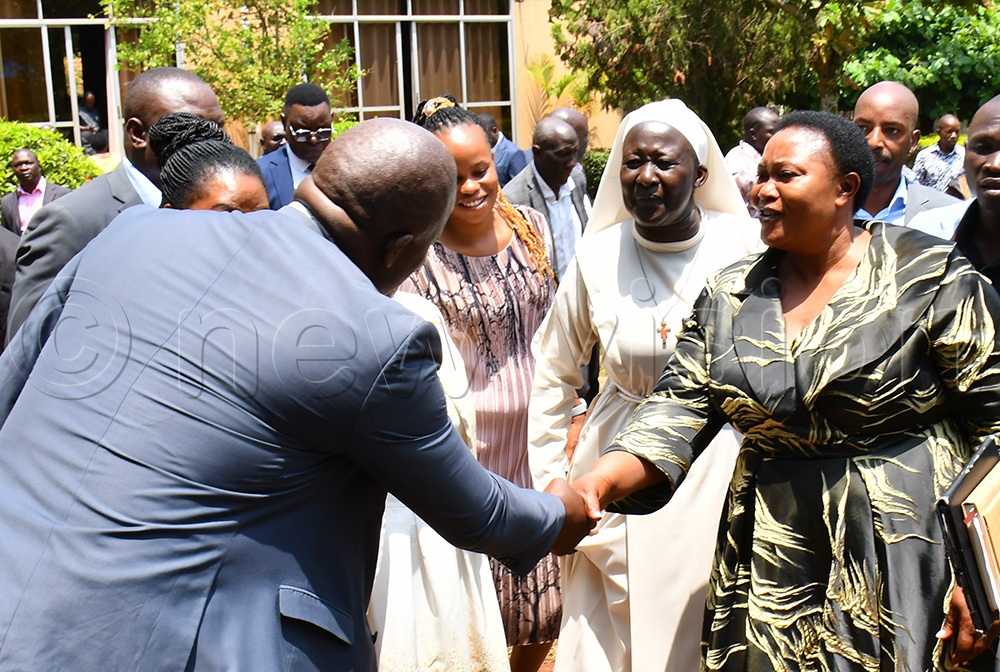
The Namayingo RDC Emmy Mitala (left) greeting the Minister for Presidency, Milly Babirye Babalanda (right), as Sister Grace Akiror (2nd right) looks on after closing the RDC's workshop at Source of the Nile Hotel in Jinja City on August 19th. (Photo by Donald Kiirya)
She advised officers not to be distracted by political propaganda, rumours or commentary, nor to spend time on speculation about appointments and transfers.
On discipline, the minister was clear that indiscipline within the RDC structure will not be tolerated, as individual conduct affects the image of the presidency.
She urged renewed commitment to strengthening monitoring, protecting public resources, reporting accurately, fighting corruption, working as a team, maintaining discipline, ensuring security and supporting government programmes focused on the priorities of President Yoweri Museveni.
Earlier, Daudi Migereko, chairperson of the Uganda Railways board, addressed the workshop on the four-acre model, describing it as a key presidential message for wealth creation and poverty reduction in Busoga.
He urged RDCs to mainstream the model, particularly for households with less than five acres, shifting from sugarcane to intensive agriculture guided by science, such as one acre of coffee, one of vegetables, plus poultry, piggery or zero-grazing. Concentration on specific high-return crops in given areas would enable economies of scale.
He cited a farmer who earned substantial weekly income from spinach on a small plot through consistent irrigation and later acquired a pickup for market deliveries. Migereko stressed the need for self-reliance, noting that tomatoes, Irish potatoes and rice are still being imported while local production remains under-optimised.
Jinja RDC Ahmed Katerega Musaazi welcomed the guidance, stating that officers had been reminded they are field officers who must work twenty-four hours on the ground.
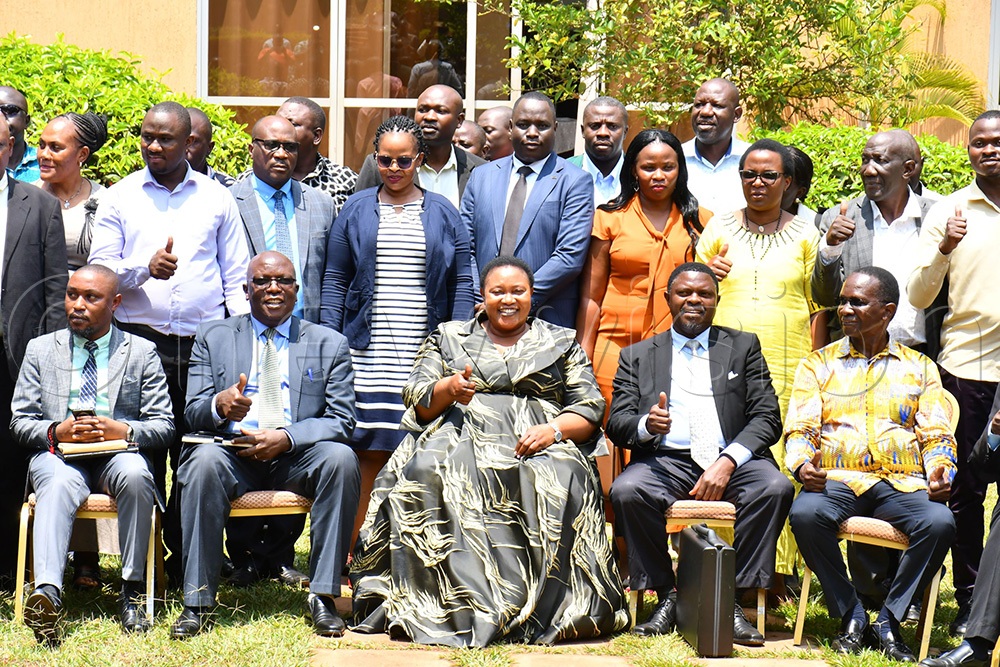
The Minister for Presidency, Milly Babirye Babalanda (seated middle)v flanked by Daudi Migereko (seated right) and Jonah Jackson Bakalikwira (seated 2nd left), in a group photograph with RDCs after closing their workshop at Source of the Nile Hotel in Jinja City on August 19th. (Photo by Donald Kiirya)
He said districts will convene planning committees with elected leaders to identify at least one model farmer per parish for intensive farming and irrigation, focusing on bananas, coffee and cocoa rather than large-scale sugarcane.
He noted that the Tooke project under President Museveni, supervised by Prof. Florence Muranga Isabirye, had requested four acres in Jinja for a model farm to supply banana seedlings.