
Kampala showcases clean air progress, community-led solutions at Africa forum
Kampala aims to halve its average air pollution levels, currently at 39 micrograms per cubic metre (µg/m³), by 2030.
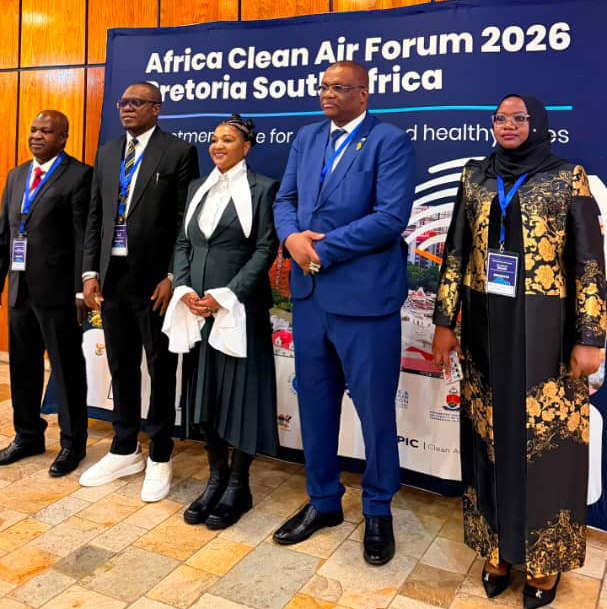
Organised by the Africa Clean Air Network (AfriCAN) under the theme "Investment Case for Clean Air and Healthy Cities," the forum has brought together policymakers, scientists and civil society leaders from across the continent. (Courtesy photos)
________________
The Kampala Capital City Authority (KCCA) has showcased the Ugandan capital's progress in tackling air pollution at the Africa Clean Air Forum 2026, highlighting community participation, real-time monitoring and green transport as the key drivers of its clean air agenda.
KCCA executive director Sharifah Buzeki presented "The Kampala Experience" on July 13, 2026, detailing how the city has expanded its air quality monitoring network from a single installation in 2018 to 134 stations that now provide real-time public data.
Kampala aims to halve its average air pollution levels, currently at 39 micrograms per cubic metre (µg/m³), by 2030.
The target is guided by national environmental and public health laws, the Kampala Clean Air Action Plan (2025–2030), and the proposed Kampala Air Quality Management Bill.
Buzeki attributed the programme's success to robust community involvement, according to a communication shared by KCCA.
During the forum, Buzeki said that under KCCA's programme, residents now organise weekend clean-up exercises, journalists have been trained as clean air champions, and Village Health Teams (VHTs) actively support air quality monitoring at the grassroots level.
Complementing this civic engagement, the city is investing heavily in sustainable transport.
Additionally, a new traffic control centre is being established to manage signalised junctions, with the aim of reducing traffic congestion and vehicle emissions.
"These initiatives are not only about reducing pollution, but about building a culture of green mobility and healthier living," Buzeki said.
Kampala's efforts have recently earned international recognition.
In June 2026, the city won the National Environment Sustainability Award, was shortlisted among 15 cities for the Guangzhou International Award for Urban Innovation after being selected from more than 265 global entries, and became the first African city to join the International Network of Tree Cities.
Organised by the Africa Clean Air Network (AfriCAN) under the theme "Investment Case for Clean Air and Healthy Cities," the forum has brought together policymakers, scientists and civil society leaders from across the continent.
A major focus of this year's discussions is the critical role of community participation.
Advocates emphasised that high-tech monitoring and top-down government policies are only part of the solution, arguing that real progress requires shifting air quality management from a purely state-led responsibility to a shared civic effort.
This emphasis on local action was central to discussions on municipal waste management, particularly the widespread practice of open waste burning.
Advocates from organisations such as GAIA Africa argued that, instead of relying on expensive, high-emission waste incinerators, cities should invest in community-led circular economies.
By integrating informal waste pickers, establishing decentralised composting sites, and teaching households to separate waste at the source, African cities can significantly reduce toxic emissions while creating local jobs and empowering the communities most affected by air pollution.
Urging African cities to strengthen collaboration, Buzeki described air pollution as a transboundary challenge requiring shared solutions.
"Pollution knows no borders," Buzeki said, calling for greater community participation, wider use of real-time air quality data and integrated urban planning.