
Judiciary equips mediators to speed up dispute resolution
“Do not let what you have learned remain in this room. Translate it into action in every matter that comes before you,” Justice Jane Frances Abodo, the Principal Judge, stated in her speech delivered by Justice Kwemara Kafuuzi Gelase, the resident judge of Mbarara High Court.
Participants were also guided on incorporating clear obligations, default provisions and dispute-resolution escalation clauses into settlement agreements where appropriate. (Photos by Abdulkarim Ssengendo)
________________
A total of 45 court-accredited mediators and judicial officers from Mbarara, Kabale, Bushenyi and Rukungiri have completed a 40-hour intensive multi-disciplinary mediation skills training programme aimed at strengthening the resolution of disputes outside formal court proceedings.
The five-day training programme, held at Hotel Triangle in Mbarara city, concluded on August 21, 2026, with a call for the graduates to return to their respective stations and facilitate the expeditious resolution of disputes in a manner that promotes harmony and lasting peace within their communities.
“Do not let what you have learned remain in this room. Translate it into action in every matter that comes before you,” Justice Jane Frances Abodo, the Principal Judge, stated in her speech delivered by Justice Kwemara Kafuuzi Gelase, the resident judge of Mbarara High Court.
Justice Kafuuzi also charged judicial officers with creating accounts on the computerised court case administration system or the electronic court information system for each mediator deployed to their stations. The accounts will enable the tracking of performance and targeted interventions by the ADR Registry.
“Research and experience have consistently shown us that courts decide, but mediation resolves. If what we seek is long-lasting peace, and I believe we all do, then mediation is the path we must wholeheartedly embrace," She added.
The training was conducted by the Judicial Training Institute with funding from the International Development Law Organization (IDLO) and NLinUganda.
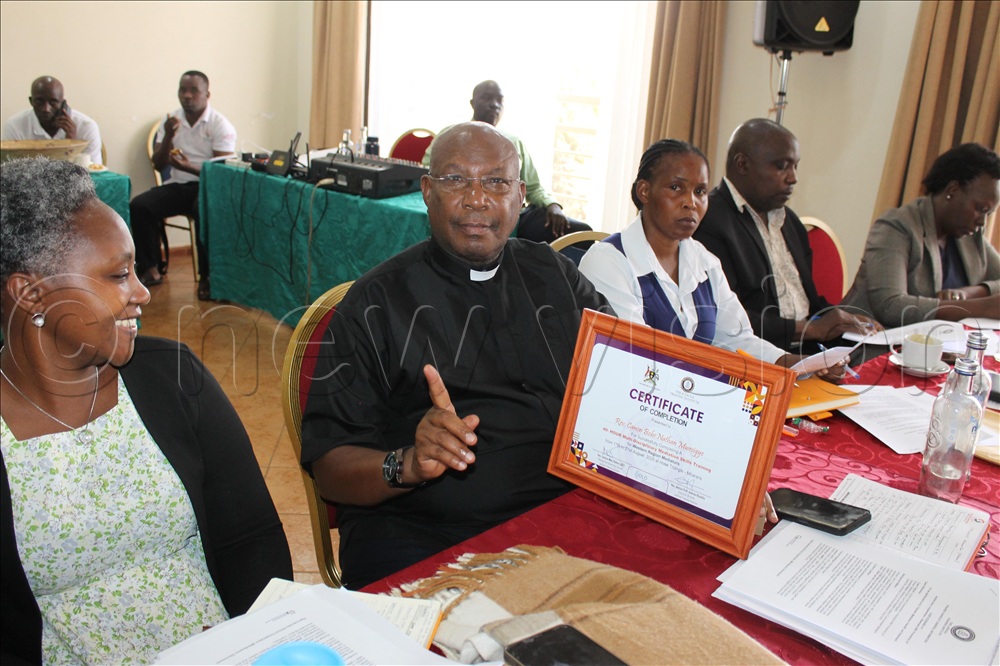
Participants were also trained in the mechanics of settlement agreements, with particular attention to translating verbal understandings reached during mediation into clear and enforceable commitments.
The training highlighted the importance of precision when drafting settlement terms to minimise the possibility of fresh disagreements arising from ambiguity.
Participants were also guided on incorporating clear obligations, default provisions and dispute-resolution escalation clauses into settlement agreements where appropriate.
The training exposed participants to some of the practical complexities mediators may encounter when handling family and land disputes, including heightened emotions, power imbalances and negotiation impasses.
Rev. Canon Bobs Mwesigye, the Dean of St James Cathedral in Ruharo, praised the Judiciary of Uganda and its partner organisations for investing in a programme aimed at improving local justice and development.
Damari Katuhairwe, an advocate with Butagira and Company Advocates, also hailed the training, saying the participants had acquired specialised skills in resolving conflicts through alternative dispute resolution.