
Inside Lavrov’s Africa visit
As he departed Africa, Russia's foreign minister invited leaders to the forthcoming Russia-Africa summit scheduled to take place in Moscow in October
Russia’s foreign minister Sergey Lavrov meeting Burundi leader Evariste Ndayishimiye. Courtesy Photo
BUJUMBURA — Russia’s foreign minister Sergey Lavrov finalised his tour of Africa on July 11, signalling his country’s renewed push for influence on the African continent.
During his four-day visit to four African countries - Ethiopia, Niger, Mozambique and Burundi – Lavrov committed Russia’s support in security, energy and infrastructure development.
With Mozambique, Russia agreed to deepen cooperation in trade, investment, education and security during talks with President Daniel Chapo and Minister of Foreign Affairs and Cooperation Maria Manuela Lucas in Maputo.
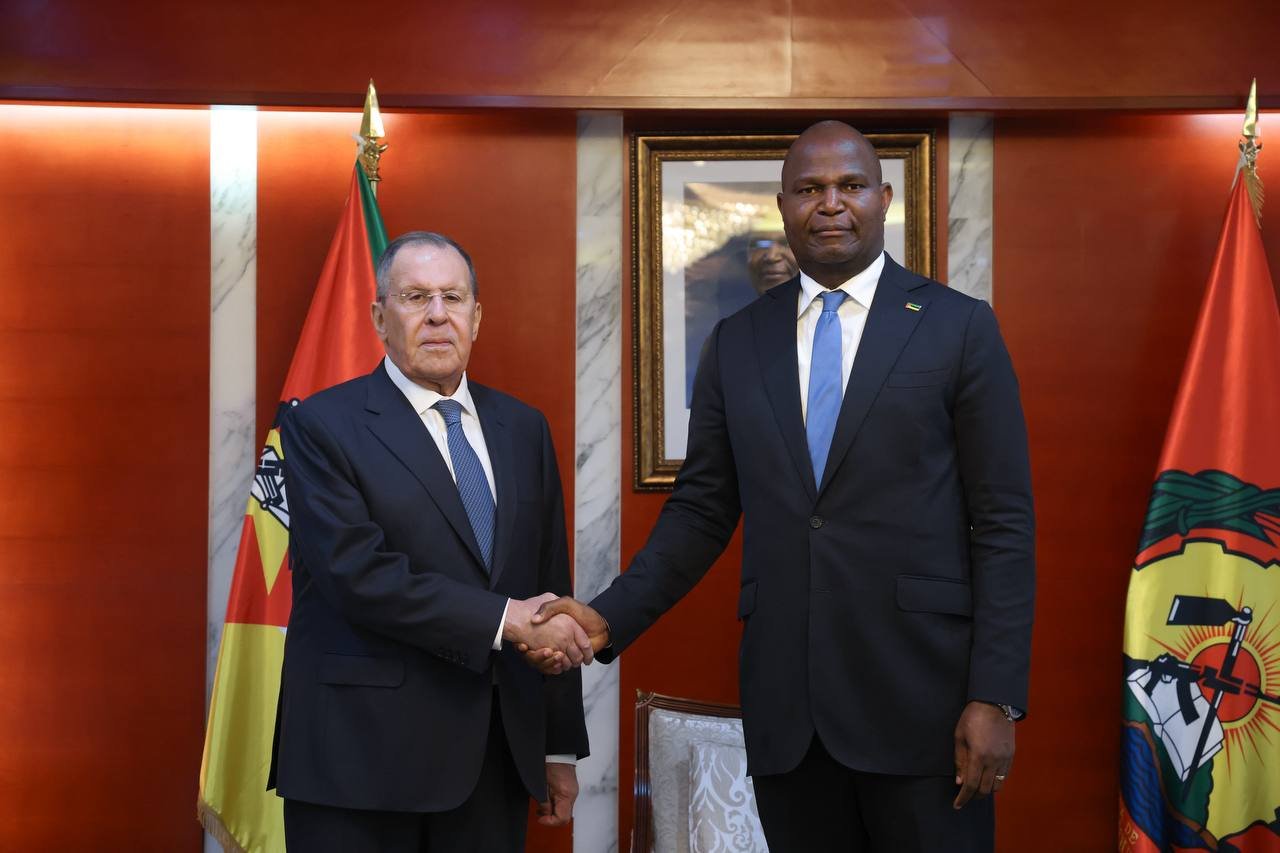
Lavrov (left) with president Daniel Chapo of Mozambique during his tour. Courtesy Photo
At a joint press conference, Lavrov reaffirmed Russia's support for Mozambique's efforts to combat terrorism and restore stability in the northern province of Cabo Delgado.
He said Russia would continue assisting Mozambique through personnel training and the supply of military equipment.
Niger
In Niger, Russia promised to continue to provide military backing to the junta-led governments of Burkina Faso, Mali and Niger, which have formed a breakaway regional alliance that has strained ties with the West. In a joint statement during a visit to Niger by Russian Foreign Minister Sergei Lavrov, the Alliance of Sahel States (AES) and Russia said Moscow would "continue its support for strengthening the operational capacities of AES member states' armed forces."
Lavrov was in Niamey to attend a "high-level" meeting with the foreign ministers of the three West African countries, following up on a similar format meeting in April 2025 in Moscow.
Ethiopia
Lavrov, on an official visit to Ethiopia on July 7, 2026, met with Ethiopian Prime Minister Abiy Ahmed as well as his Ethiopian counterpart Gedion Timothewos in the country's capital, Addis Ababa.
The two foreign ministers, during their meeting, underscored the relations between the two nations and expressed optimism for future collaboration, the Ethiopian Ministry of Foreign Affairs said in a statement issued on July 11, 2026.
AU
As part of his official visit, Lavrov and AU Commission chairperson Mahmoud Ali Youssouf on July 11, 2026, conducted high-level consultations at the AU headquarters in Addis Ababa, aiming to review the two sides' ongoing cooperation while also exploring fresh avenues to enhance their partnership. As he departed Africa, Lavrov invited the leaders to the forthcoming Russia-Africa summit scheduled to take place in Moscow, Russia, from October 28–29, 2026.
Burundi
In Burundi, Lavrov met President Evariste Ndayishimiye and agreed to provide support in energy, health, agriculture, transport, security, infrastructure development and education.
The agreement was reached during talks on July 10, 2026, between the two sides in Bujumbura, Burundi's commercial capital, according to Nancy Ninette Mutoni, spokesperson for the Burundian president.
"They also addressed the urgent issues facing the African continent, particularly the security situation in the sub-region, especially in the eastern Democratic Republic of the Congo, and terrorist attacks in the Sahel. The urgent African response to the Ebola virus disease was also discussed," she said, adding that Russia had pledged support for Ebola testing.
During the meeting, Lavrov delivered an invitation from Russian President Vladimir Putin, requesting Ndayishimiye to attend the third Russia-Africa Summit, scheduled for October 28–29, 2026.
Lavrov arrived in Burundi for a working visit and was welcomed by his Burundian counterpart, Edouard Bizimana, minister of foreign affairs, regional integration, and development cooperation.
Before meeting Ndayishimiye, who currently serves as AU chairperson, the Russian delegation held bilateral talks with a Burundian delegation led by Bizimana. Lavrov departed Burundi on Friday evening after concluding his visit.
Moscow Security Summit
Lavrov’s charm offensive across Africa comes less than six weeks since his country organised the International Security Forum, which took place on May 26-29 in Moscow. The summit was attended by over 145 intelligence chiefs from different parts of the world, including 40 from Africa.
Observers noted that although the meeting was convened to discuss issues of mutual interest between Russia and representatives of countries from the Global South, many sticking issues, especially the deceptive recruitment of Africans for the Ukraine war, were not discussed.
Officials at the meeting said the most prominent subjects discussed were cybersecurity, counter-terrorism and the new multipolar world.
Internal Security Organisation director general Arthur Mugyenyi, who attended the gathering in Moscow, declined to comment on the issues when contacted.
For the last six months, more than 50 Ugandans have been reported missing in Ukraine, where they were trafficked to fight on behalf of Russia.
Early this month, foreign affairs ministry permanent secretary Vincent Bagiire directed the Ugandan Embassy in Moscow to probe reports that Ugandans were trapped at the front line. This was after over 80 Ugandans were reported missing at the war front.
A recent report titled ‘The Business of Despair’ released on February 11, 2026, indicated that over 1,000 Africans had been trafficked by Russia to the war front in Ukraine.
The report also detailed the number of Africans killed at the frontline in Ukraine.
Commenting on the development, Ugandan security analyst David Rusa said Russia is courting Global South countries to access their natural resources, especially rare earth minerals.