
ILO calls for inclusive social protection systems to leave no one behind
“Uganda is one of the eight countries benefitting from the PROSPECTS programme, which seeks to improve livelihoods for refugees and host communities through education, employment, infrastructure and social protection,” Kapasa said.
Kapasa noted that Uganda is among eight countries benefitting from the PROSPECTS programme, an international initiative aimed at improving livelihoods for refugees and host communities through investments in education, employment, infrastructure and social protection.
KAMPALA - The International Labour Organisation (ILO) has called for the strengthening of Uganda's social protection systems to ensure that vulnerable populations, including refugees and host communities, are not left behind amid growing economic challenges.
Speaking during an orientation workshop on social protection advocacy and dissemination of the Social Economic Status Report at the Imperial Royale Hotel in Kampala on June 18, 2026, ILO technical officer for social protection Mwenya Kapasa emphasised the need for inclusive systems that provide support to all people regardless of their social or economic status.
“Our focus is ensuring that we have social protection systems that bring everybody on board and ensure that no one is left behind,” Kapasa said.
Kapasa noted that Uganda is among eight countries benefitting from the PROSPECTS programme, an international initiative aimed at improving livelihoods for refugees and host communities through investments in education, employment, infrastructure and social protection.
“Uganda is one of the eight countries benefitting from the PROSPECTS programme, which seeks to improve livelihoods for refugees and host communities through education, employment, infrastructure and social protection,” he said.
Her remarks come against the backdrop of findings from a new Social Economic Status Report, which paints a worrying picture of financial vulnerability among refugees and host communities.
According to the report titled ‘Social Economic Status Survey on Extending Social Security to Informal Sector Workers in Refugee and Host communities’ was presented by the UPFSP Secretariat, presented by Gloria Nakajubi, Communications and Advocacy Officer at the Uganda Parliamentary Forum on Social Protection (UPFSP), only five percent of Ugandans are currently covered by formal social insurance schemes, while health insurance coverage remains below three percent.
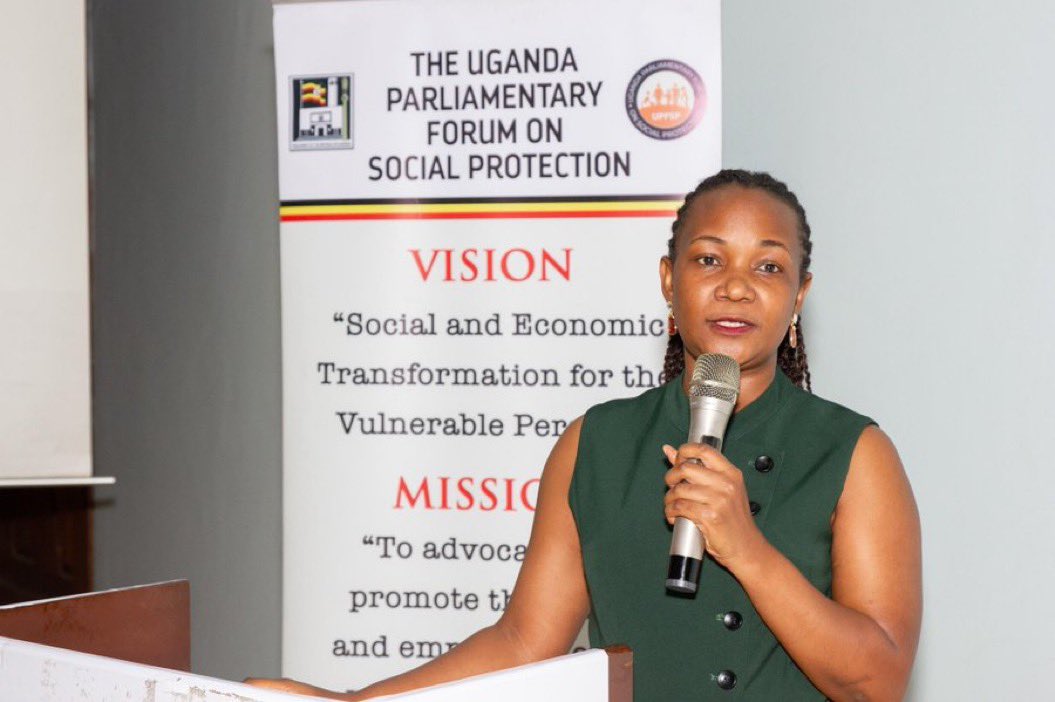
Gloria Nakajubi
The report further found that about 75 per cent of refugees and host community members surveyed earn less than shillings 250,000 per month, limiting their ability to save or contribute to social security programmes.
She added that more than half of the respondents reported having no savings at all, exposing them to significant financial shocks in times of crisis.
Nakajubi also highlighted that elderly persons, pregnant and lactating mothers, persons with disabilities and people living with chronic illnesses remain the most vulnerable groups within refugee and host communities.
“The elderly, pregnant and lactating mothers, persons with disabilities and people with chronic illnesses remain the most vulnerable groups in refugee and host communities,” she said.
The findings have prompted renewed calls from lawmakers and social protection advocates for the expansion of social safety nets and the implementation of the National Health Insurance Scheme.
Paul Onana, Deputy Head of the Expanding Social Protection Programme (ESP) at the Ministry of Gender, Labour and Social Development, said social protection should be viewed as a critical tool for managing risks and building resilience rather than simply addressing poverty.
“Social protection is not about poverty reduction alone. It is about addressing the risks and vulnerabilities within our society before they push people into poverty,” Onana said.
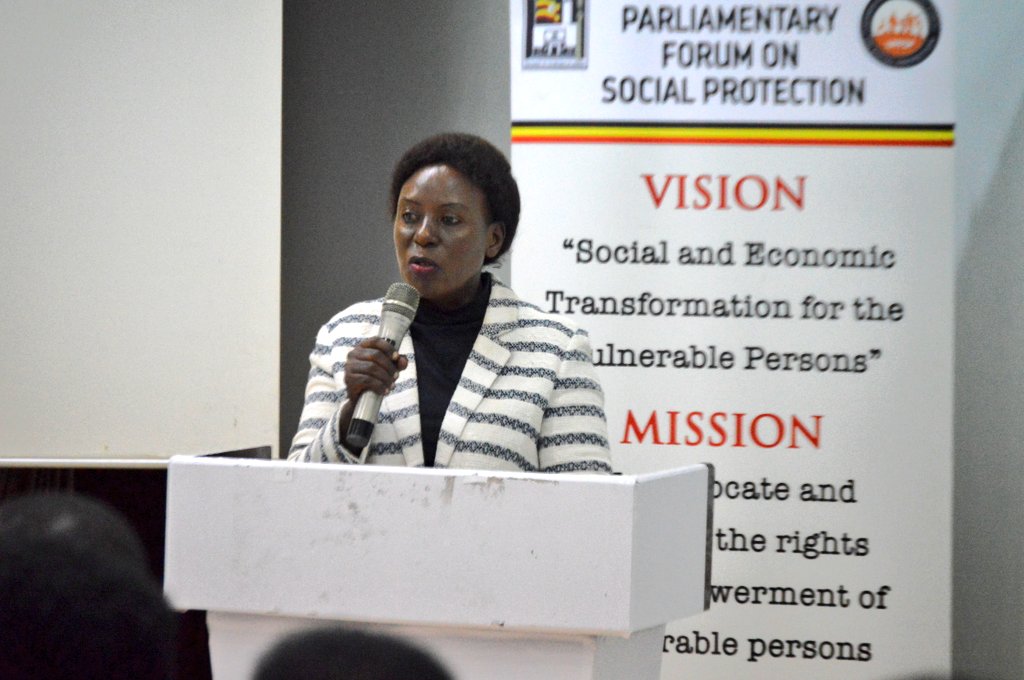
MP Flavia Rwabuhoro
He explained that effective social protection systems help people cope with shocks such as illness, disability, drought and the loss of household income.
“Social protection is about protecting, preventing and building resilience so that even when people face drought, illness, disability or the loss of a breadwinner, they can still cope with dignity,” he added.
“If we are to live with refugees in peace and stability, we must invest in social protection for both refugees and host communities,” Kabahenda said.
She argued that many informal sector workers, especially women engaged in small-scale trade, remain excluded from existing social protection arrangements.
“Those women you see laying their tomatoes on the ground deserve social protection. They do not have pensions; they do not have anywhere to fall back. We need a social protection system that covers them,” she said.
Kabahenda stressed that social protection is a constitutional right and should be available to all Ugandans.
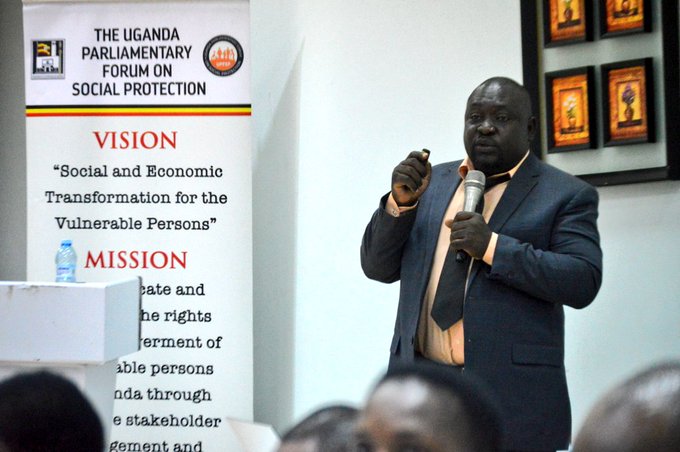
Paul Onana
“We are not asking for a favour. We are asking for a right that is in the Constitution. It is a right for the people of Uganda to live in dignity,” she said.
She further described social protection as a lifelong necessity that should support individuals from birth through old age.
“Social protection starts from birth until you die. It is a life-cycle approach, and at every stage of life, you need a social protection component to support you,” Kabahenda added.
The workshop, attended by more than 60 Members of Parliament, government officials and representatives of development partners, aimed at strengthening parliamentary advocacy and policy interventions to improve the welfare and resilience of refugees, host communities and other vulnerable populations across Uganda.
Other notable speakers included Patrick Katabaazi Kiconco, the MP for Rukiga county and Emmanuel Onyeto, the MP for Nebbi municipality, who is also the vice chairperson for the UPFSP.