
Forgiveness key to healing, Soroti bishop tells inmates
Bishop Eciru cautioned inmates against harbouring thoughts of revenge, warning that such sentiments only deepen wounds and prolong suffering
Some of the inmates shaking hands with the bishop. (Credit: Habert Eyoku)
____________________
The Bishop of Soroti Catholic Diocese, Rt Rev. Dr Joseph Eciru Oliach, has called on inmates to embrace forgiveness, reject revenge and avoid despair, saying these virtues are essential pathways to inner healing and eventual freedom.
The bishop made the call while delivering a homily centred on love, reconciliation and trust in God during a pastoral visit to Soroti Government Prison. Addressing inmates and prison officials, Bishop Eciru reminded those in custody that imprisonment does not define the totality of their lives or determine their ultimate destiny.
“Your present situation does not cancel your future,” the Bishop said. “Incarceration is a chapter, not the whole book of your life. God still sees your dignity, your worth and your potential for transformation.”
Bishop Eciru cautioned inmates against harbouring thoughts of revenge, warning that such sentiments only deepen wounds and prolong suffering. He explained that bitterness and hatred imprison the heart even more than physical walls, denying individuals peace and the opportunity for renewal.
“Revenge may appear attractive, but it poisons the soul,” he said. “It keeps you tied to the pain of the past and prevents healing. Forgiveness, on the other hand, frees the heart and opens the door to true change.”
He encouraged inmates to place their trust in God despite the challenges they face, saying faith provides strength during times of trial. According to the Bishop, hope anchored in God enables individuals to rise above despair and discover meaning even in suffering.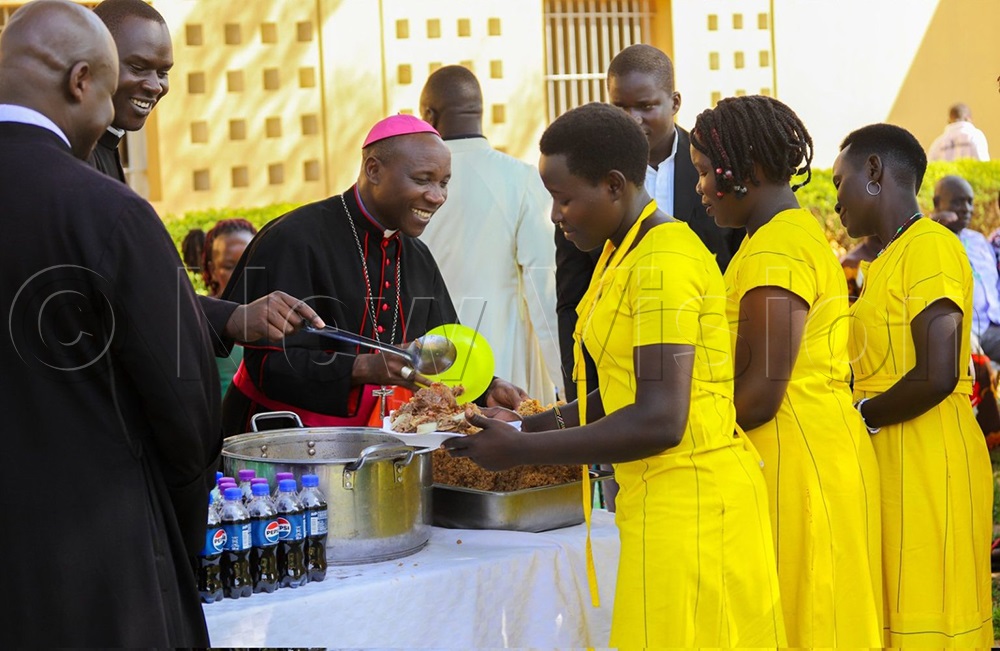
Serving food. (Credit: Habert Eyoku)
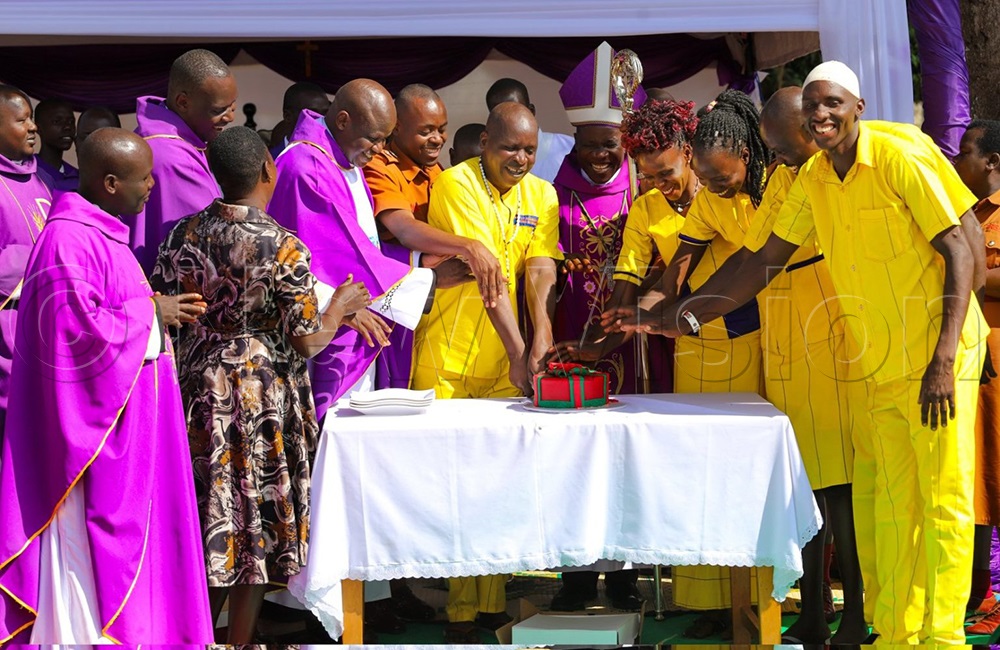
Cutting of the cake with the inmates. (Credit: Habert Eyoku)
In his homily, Bishop Eciru also emphasised the importance of unity and mutual love within prison communities. He urged inmates to “speak one language and wear one uniform, charity,” stressing that love for one another is the foundation of peace, both within prison walls and in society at large.
“When you choose love over hatred, unity over division, you create a peaceful environment not only for yourselves but also for those who work with you,” he said. “Charity must be your common language, because without love, there can be no peace.”
The Bishop further encouraged inmates to use their time in custody for reflection, repentance and personal growth. He said prison should be viewed as an opportunity for self-examination and moral renewal rather than a place of hopelessness.
“Use this time wisely,” Bishop Eciru advised. “Rebuild your relationship with God, reconcile with yourselves and others, and prepare to return to society as renewed and responsible citizens.”
Prison officials welcomed the Bishop’s visit, describing it as timely and impactful. They noted that spiritual engagements and pastoral care play a critical role in inmate rehabilitation, complementing correctional programmes offered by the Uganda Prisons Service.
Officials said spiritual guidance helps inmates cope with guilt, anger and trauma, while also fostering discipline, respect and harmony within prison units. They added that such interventions contribute significantly to positive behavioural change and prepare inmates for successful reintegration into society upon release.
Angela Grace Abio, the officer in charge of the women’s section and a principal officer 1, thanked the Bishop for the visit and the message of hope delivered to inmates. She said the presence of religious leaders brings comfort and encouragement not only to prisoners but also to staff working under challenging conditions.
Abio appealed to the Bishop to remember prison warders and wardresses in prayer, noting that they too face moral and spiritual struggles in the course of their duty.
“We are all human, and not all of us are righteous in the eyes of God,” she said. “We need prayers and guidance so that we serve with compassion, justice and integrity.”
She added that collaboration between religious institutions and the Uganda Prisons Service strengthens rehabilitation efforts and promotes a humane approach to corrections.
According to Abio, when inmates receive moral instruction and spiritual nourishment, incidents of conflict reduce and relationships within the facility improve.