
UGANDA ELECTIONS: Key Issues that defined the campaign trail
Over 21.6 million registered voters were, yesterday, Thursday January 15, 2026, expected to participate in the voting at 50,739 polling stations across the 146 districts in the country.
As we settle down after the just ended national elections, here are some stand out issues from the campaign trail.
John Peter Elasu, 78, and resident of Ourai village in Kamuda sub-county in Soroti district on November 3, 2025 honoured civil responsibility to grace President Yoweri Museveni reelection campaign rally at Soroti City Sports Ground.
Although the crowd was undoubtedly charged with excitement, Elasu, clad in a khaki jacket over a yellow T-shirt bearing Museveni’s image with grey trousers and dusty black shoes with a yellow NRM baseball cap, looked very thoughtful, his brows drawn together as he anxiously waited for Museveni’s campaign message.
The issues of concern he raised were not limited to his grim past experience when the supporters of the Forum for Democratic Change (FDC) allegedly attacked him and his family and touched their grass thatched house, but also the compensation for their lost cattle in Karimong raids and Joseph Kony-led Lord’s Resistance Army (LRA) insurgency.
For the greater north; Acholi, Lango, West Nile, Karamoja and Teso, the issue of compensating for the lost animals and livelihoods due to rustling and insurgency featured prominent on top of other issues such as the need to fix gaps in road infrastructure, addressing human-wildlife conflicts and poverty, among others.
However, Elasu and several others who claim they lost their animals, received respite after Museveni addressed a government plan to restock every family with five cows.
The government has since released sh80b to start off the process.
According to the Electoral Commission (EC), over 21.6 million registered voters were, yesterday, Thursday January 15, 2026, expected to participate in the voting at 50,739 polling stations across the 146 districts in the country today.
The National Unity Platform (NUP) presidential candidate, Robert Kyagulanyi, while campaigning in Teso sub-region, asked the locals to demand broader justice for not only cattle compensation, but all that was lost during the stormy past.
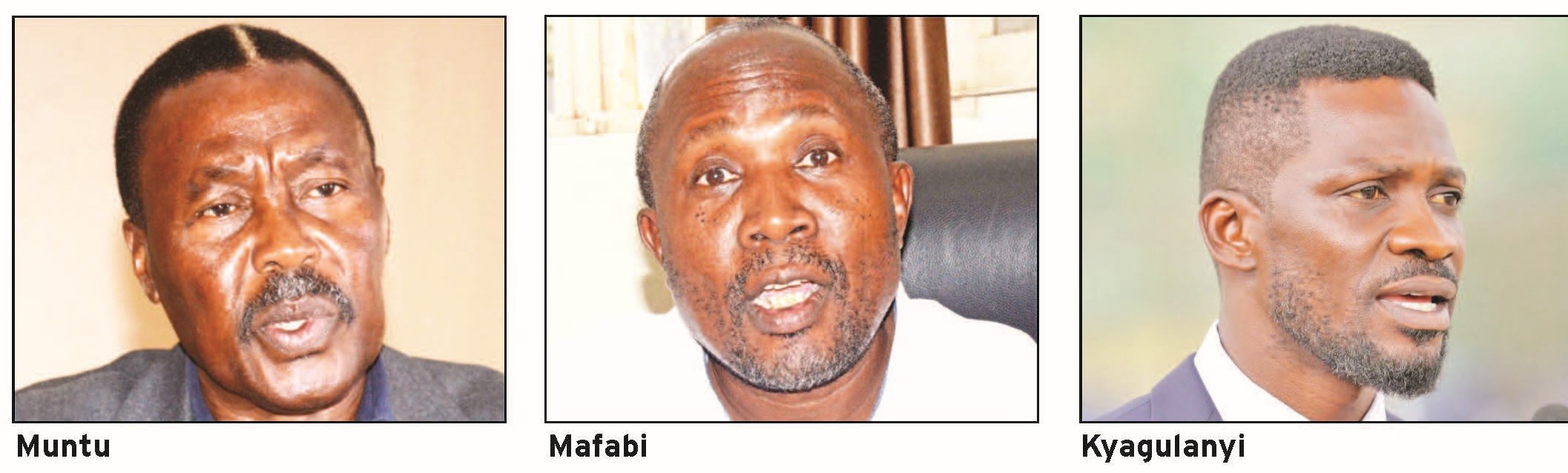
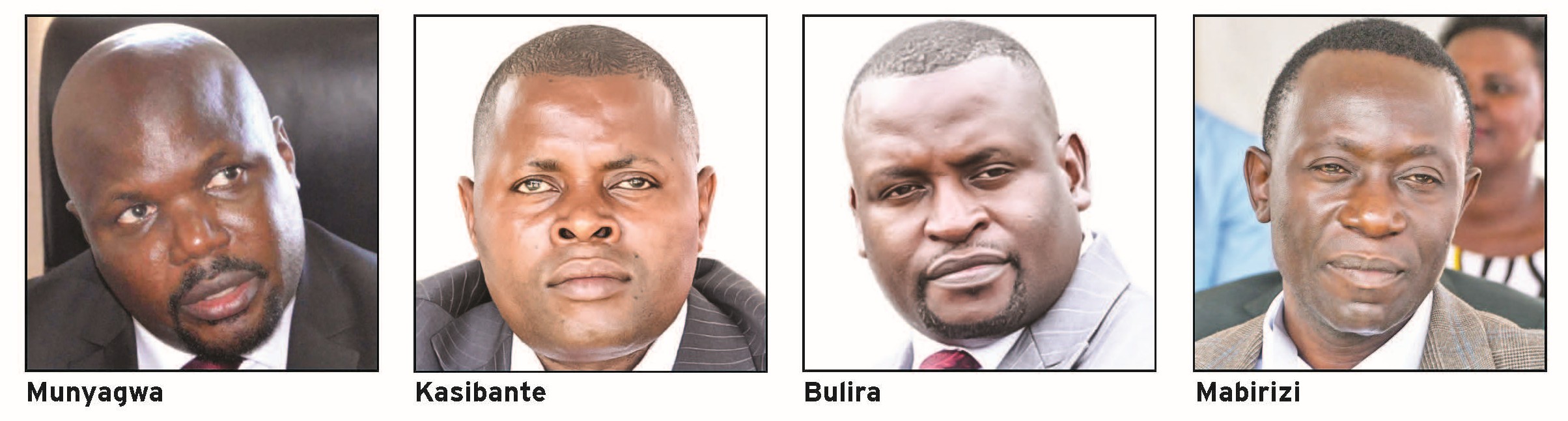
The other candidates in the contest for presidency include; Nathan Nandala Mafabi (Forum for Democratic Change), Mugisha Muntu (Alliance for National Transformation), Joseph Kasibante (National Peasants Party), Mubarak Munyagwa (Common Man’s Party), Frank Bulira Kabinga (Revolutionary People’s Party) and Joseph Mabirizi (Conservative Party).
LAND
Land evictions is the other issue which dominated the campaigns especially in the country side and Patrick Mucunguzi, a resident of Kigorobya town council in Hoima district, called for state-led redress mechanisms.
“Many of our people have been evicted from their land and they are currently landless, we are appealing to the Government to consider giving free land titles to the people so that they can legally own their lands,” Musinguzi said.
In a number of local governments including Kamwenge district, voters and local authorities expressed concern of limited funding which has undermined effective service delivery. They blamed it for limited clean water accessibility, wanting state of feeder roads, among others.
In the new cities such as Mbarara, Hoima, Jinja, Mbale, Gulu, Soroto, Lira, Arua, authorities indicated that priority was to achieve well planned modern cities while imploring the central government to enact a dedicated law for these regional cities stressing that the lack of legal clarity and funding was undermining service delivery in all these cities.
“Since we got a city, we have never received a governing law/document.
While the number of political and administrative structures increased, the necessary funding did not come along because the legal framework is not clear,” Robert Kakyebezi, the mayor of Mbarara city said.
HEALTHCARE
The fixing of gaps in the delivery of healthcare, education services, agriculture, among others, were highlighted with prominence in the different parts of the country.
For instance, in Ssembabule district, they demanded for a district hospital to improve healthcare services which the residents sometimes seek in Masaka district.
“I was forced to buy land to construct a modern health centre and also ensure several free medical camps to have people treated. Lwemiyaga lacks health services nearer to them,” Brig. Gen. Emmanuel Rwashande, the National Resistance Movement (NRM) party flag-bearer for Lwemiyaga County in Ssembabule said.
ELECTRICITY
Electricity was another issue which was highlighted with prominence.
For instance in some districts such as Madi-Okollo, the voters and administrators complained that the entire district was not on the national grid.
ENVIRONMENT
In areas such as Masaka, the issue of restoring the destroyed wetlands emerged and the local leaders appealed to the authorities to ensure wetland encroachers are evicted and environmental favourable projects are promoted.
MARKETS
In areas such as Kiboga, Kamwenge, among others, voters appealed for modern markets, saying the available structures were in an appalling state.
Candidates
CANDIDATES’ VIEWs
In his key re-election campaign Museveni focused on addressing infrastructure, peace, wealth creation, youth empowerment and anticorruption efforts While in Luwero where he launched his campaign on September 29, 2025 Museveni blamed gaps in service delivery to the residents’ decision to vote opposition leaders, citing their lack of capacity to push for services or confront rising crime.
On land evictions, Museveni linked the crime to weak leaders more especially those in opposition, promising to crack down on theft of drugs and Parish Development Model (PDM) funds.
Museveni also pledged to tarmac key roads, including the Kumi–Ngora–Serere–Kagwara road and improved connectivity across rural Uganda.
On peace and stability, he emphasised that it was the foundation of development, recalling Teso’s troubled past and urging residents to use stability for wealth creation.
Addressing youth concerns, Museveni encouraged entrepreneurship and skills development through government programmes like Emyooga.
On corruption, Museveni urged Ugandans to report corruption, promising action through the State House Anti-Corruption Unit.
For the agriculture sector, Museveni advocated commercial farming, citing progress in Kawumu village in Nakaseke district, where 571 households shifted from subsistence to commercial farming.
On his part, Kyagulanyi centred his message on equal share of the country’s resources. He also promised to institute land reforms and restore ownership rights. This, he added, will address the escalating cases of land grabbing.
Kyagulanyi has also pledged to improve healthcare, revamp the education sector and address poverty-related challenges.
Yet for Mafabi, economic transformation, anti-corruption efforts, and social welfare improvement were the fulcrum that he swung his campaigns on.
Mafabi also pledged to transform household incomes by allocating sh100m to every village if elected president. Currently, under the PDM, government allocates sh100 per parish. He vowed to end corruption and mismanagement of government funds, pledging to redirect stolen funds to support village development projects.
For Muntu, the pledge to voters was the need to provide a robust system to eliminate corruption and ensure accountability.
He also pledged to address congestion in Kampala by implementing a robust transport system by widening roads to create bus and ambulance lanes and introducing rails for small city commuter trains.
In the fifth week on the trail, Muntu pledged affordable housing through government construction projects, ensuring citizens can afford homes with flexible payment plans.
He also promised to make basic health services free and affordable, and also called for tax reforms, citing the need to revise the tax regime to support businesses. Muntu further cautioned security actors on impunity.
On top of the promise to stamp out corruption and reduce wastage of public funds, Munyagwa pledged free education, school meals and medical services while criticising current development programmes like PDM and universal primary and secondary education as “not well implemented”.
The former Kawempe South MP, also vowed to expel all non-professional foreign workers from Uganda within 48 hours if elected president.
In his second week on the presidential trail, he also promised agricultural transformation through improved market networks.
On the other hand, Mabirizi promised to re-examine the Constitution for good governance and entrench equitable sharing of national resources. He also promised to release all political prisoners within the first 100 days of taking office.
FEDERAL SYSTEM
In his third week on the trail, Mabirizi, promised to introduce a federal system of governance, reduce the size of the cabinet, Members of Parliament and resident district commissioners.
For Kasibante, his pledge to Ugandans is to provide free internet across the country.
He has also promised to pay sh200,000 monthly to unemployed youth and elderly citizens.
While in Jinja, he vowed to address structural causes of poverty and ensure equitable Muntu.
In his message on the presidential trail, Bulira has equally advocated for a federal system of governance, arguing that it can address Uganda’s challenges in infrastructure, education, health, governance and security.
He also pledged to construct the Dr Aggrey Kiyingi Memorial Building, including a nursing home, youth rehabilitation center, and heart training institute, honouring the late founder of the Uganda Federal Democratic Organisation (UFDO).
Bulira’s Revolutionary People’s Party (RPP) emerged after an alliance with UFDO.
In the sixth week, Bulira emphasised transparency and accountability, rallying citizens to send him to State House, if they want corruption to end.