
Experts say funding gaps hurting Uganda’s forestry ambitions
Scientists and policymakers say while land encroachment and rising demand for wood products continue to exert pressure on forest resources, the deeper and more systemic challenge lies in chronic underfunding of the sector.
International day of Forests participants plant trees to mark the day. (Credit: John Musenze)
Uganda’s ambitions to restore and protect its shrinking forests are increasingly being undermined by persistent funding gaps, with experts warning that without sustained investment, efforts to reverse deforestation may fall short.
Scientists and policymakers say while land encroachment and rising demand for wood products continue to exert pressure on forest resources, the deeper and more systemic challenge lies in chronic underfunding of the sector.
Speaking during the International Day of Forests commemorations organised by the National Forestry Resources Research Institute (NaFORRI) on March 31, researchers highlighted the mismatch between the scale of the forestry challenge and the financial resources allocated to address it.
Forestry, they noted, is a long-term investment that requires consistent funding over decades, something current financing structures have failed to guarantee.
“Forestry is not like other sectors where you can see results quickly. To develop a new tree variety can take up to 20 years. But there is no agency that will fund research consistently for that long,” said Dr John Adriko, the director of Research at NaFORRI.
This long gestation period makes forestry less attractive to both government and private investors, despite its critical role in environmental protection, climate resilience and economic development.
Available data shows that in the 2023/24 financial year, the National Forestry Authority (NFA) received a planned expenditure budget of approximately sh34.8 billion, a figure experts said is modest compared to the scale of degradation facing Uganda’s forests.
Recognising this gap, the Parliamentary Committee on Environment and Natural Resources recommended an additional sh4 billion for the NFA to procure tree seedlings, alongside another sh30 billion allocation to the Ministry of Water and Environment to support tree planting initiatives.
While these supplementary allocations signal growing awareness, sector players argued they remain insufficient to meet national restoration targets.
Uganda loses an estimated 200,000 hectares of tree cover annually, driven largely by demand for charcoal, firewood and construction materials. Reversing this trend, experts say, requires not only planting more trees, but also investing in research, enforcement and community engagement.
“There is a clear imbalance between what we are losing and what we are investing to restore,” said Dr Samson Gwali, a principal research scientist at NaFORRI.
“You cannot solve a long-term ecological problem with short-term or inconsistent financing.”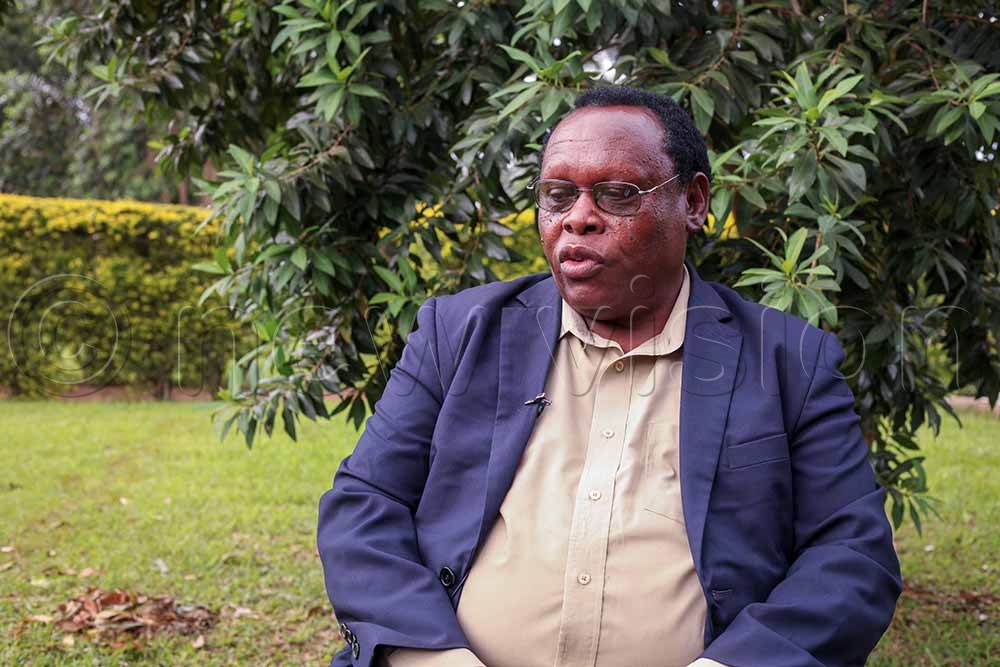
Dr. Samson Gwali, a principal research scientist at NaFORRI.
'National asset'
The funding challenge is partly being mitigated by development partners. In 2025, the European Union pledged €48 million (approximately sh200 billion) to support forest restoration and environmental protection efforts in Uganda.
However, experts cautioned that reliance on donor funding is not a sustainable solution.
“Donor support is important, but it cannot replace domestic investment. Forestry is a national asset. It requires predictable, long-term financing from government if we are to see real impact," said Gwali.
Beyond funding constraints, land encroachment remains a significant obstacle to forestry research and conservation efforts.
At NaFORRI, ongoing scientific experiments are increasingly being disrupted by individuals occupying land designated for research, undermining years of work.
“We are experiencing intrusion into land that is meant for research. This destroys experiments and leaves our findings inconclusive,” said Adriko.
'Heavy land encroachment'
The problem extends beyond research institutions to forest reserves and public land across the country, reflecting broader challenges in land governance and enforcement.
Dr William Olaho Mukani, the chairperson of the National Agricultural Research Organisation (NARO) Governing Council, acknowledged the scale of the issue, noting that both local communities and opportunistic land grabbers have contributed to encroachment on government land.
“There is heavy land encroachment on government land in general and on NARO land in particular,” Mukani said.
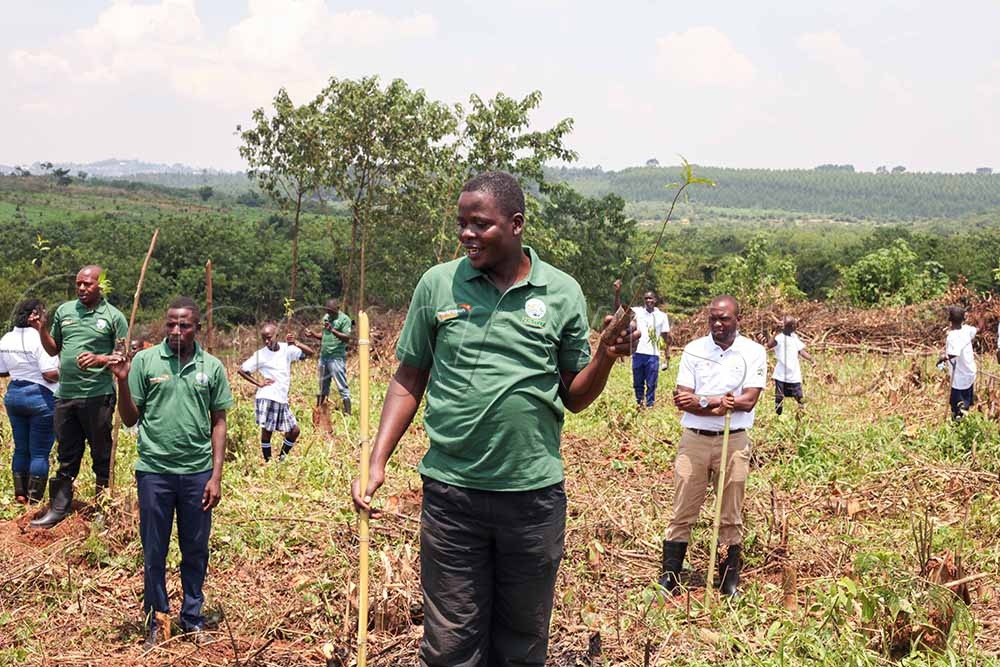
The commemorations was also beefed up with planting 2.5 acres of forest at Kifu with the goal of adding to the forest cover under the theme forests and economies. (Credit: John Musenze)
He added that government agencies are taking steps to address the problem, including surveying and titling land to strengthen legal ownership and prevent illegal occupation.
“We have made sure that this land is properly surveyed and has title deeds. We have also employed a land specialist to handle these issues together with the Ministry of Lands and the Uganda Land Commission."
Mukani said partnerships with cultural and religious institutions are also being strengthened to help safeguard land while promoting community-based forestry initiatives.
Alternative solutions
Despite these challenges, experts emphasised that Uganda’s forestry sector remains a significant contributor to the economy, accounting for about 6 percent of the country’s gross domestic product (GDP) and providing livelihoods for millions of people.
Yet, the sector’s true value is often overlooked, particularly at the household level, where trees are primarily seen as a source of fuel rather than a long-term investment.
“The loss of trees is an indication that demand is high. People are looking for energy, for construction materials and for income," said Gwali.
To address this demand sustainably, scientists are promoting alternative solutions such as bamboo cultivation, energy-saving stoves and biogas technologies to reduce reliance on natural forests.
However, these interventions also require funding, awareness and policy support to scale effectively.
Under programmes like the Parish Development Model (PDM), many households are prioritising enterprises that offer quicker financial returns, such as poultry and crop farming, leaving tree planting largely neglected.
Experts argued that without deliberate incentives, forestry will continue to lag behind other sectors in attracting investment at both household and national levels.
“Tree growing must be positioned as a viable economic activity. Otherwise, people will continue to choose enterprises that give them faster income," said Gwali.