
EU injects sh14.5b into locally led climate adaptation drive
In Uganda, the programme has grown rapidly. From an initial four pilot districts in 2023, LoCAL now covers 14 districts: Agago, Bulambuli, Kasese, Kiboga, Kakuube, Kitgum, Koboko, Kotido, Moroto, Nabilatuk, Nakapiripirit, Nebbi, Nwoya and Zombo, each having completed at least one grant cycle.
Some of the officials participating in the financing locally led climate change adaptation workshop at Hotel Africana Moroto. (Credit: Olandason Wanyama)
The governments of Belgium, Denmark, Ireland, and the European Union have granted $3.9m (about shillings 14.5 billion) to fund 90 small-scale investments across 24 district local governments in Uganda.
This funding is expected to contribute to the implementation of Uganda’s Climate Change mitigation initiative. This initiative, also known as the Nationally Determined Contribution (NDC ) partnership, covers priority areas including climate-smart agriculture, energy conservation, and wetland restoration.
The districts are part of a rapidly expanding programme to put climate finance directly in the hands of communities on the frontlines of climate change.
The money flows through the Local Climate Adaptive Living Facility (LoCAL), a UNCDF-managed mechanism that channels climate finance to local governments in least developed countries through Performance-Based Climate Resilience Grants (PBCRGs), paired with technical support.
Launched in 2011 and now active in 23 countries, it contributes directly to the Paris Agreement, the Sustainable Development Goals, and national development priorities.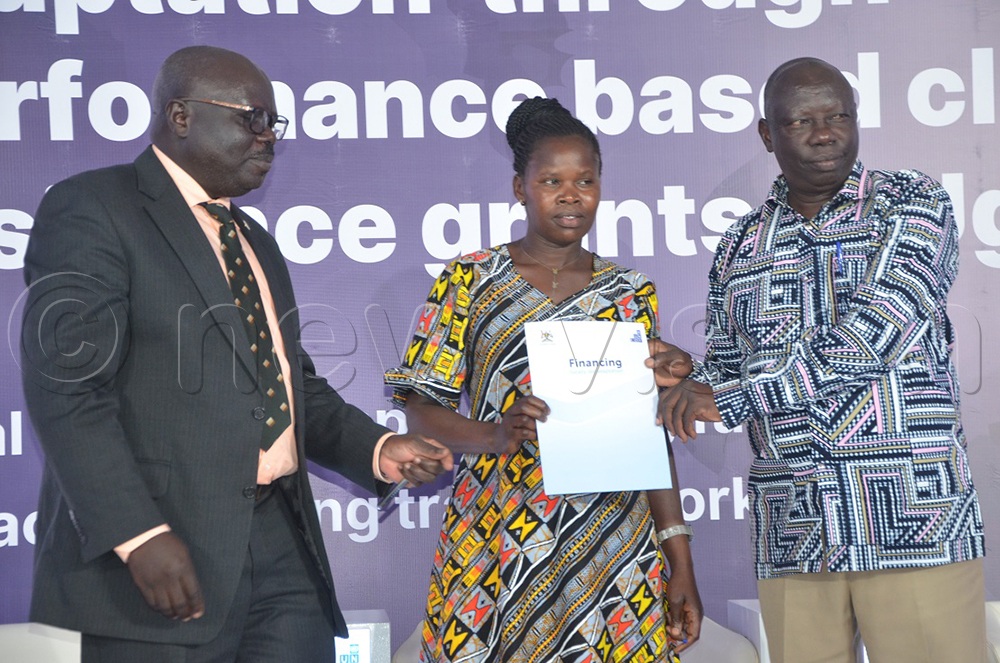
A growing national programme
In Uganda, the programme has grown rapidly. From an initial four pilot districts in 2023, LoCAL now covers 14 districts: Agago, Bulambuli, Kasese, Kiboga, Kakuube, Kitgum, Koboko, Kotido, Moroto, Nabilatuk, Nakapiripirit, Nebbi, Nwoya and Zombo, each having completed at least one grant cycle.
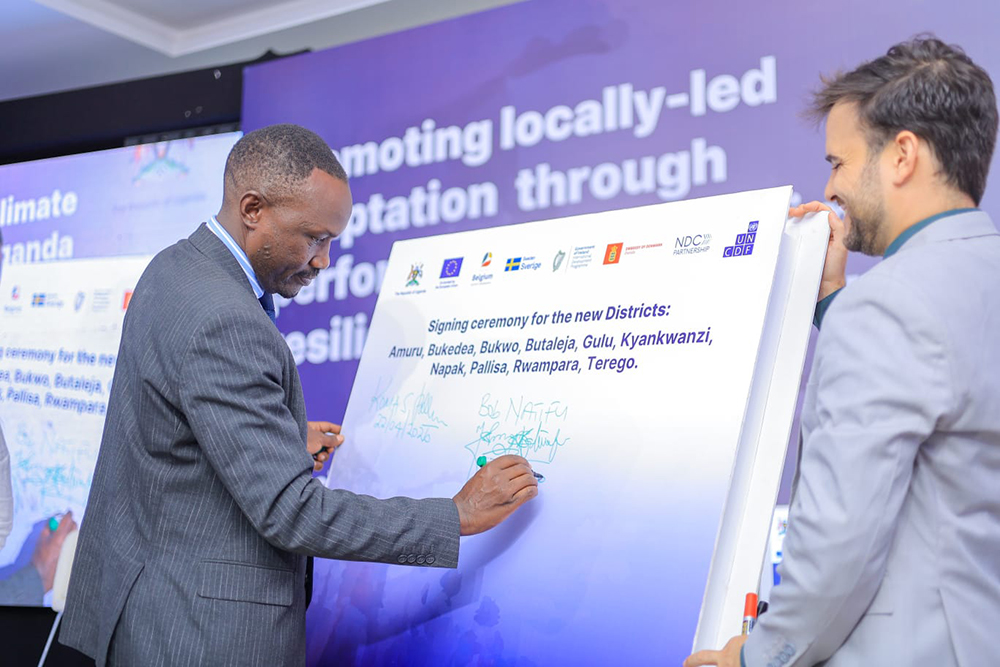
A further 10 new districts: Amuru, Bukedea, Bukwo, Butaleja, Gulu, Kyankwanzi, Napak, Pallisa, Rwampara and Terego are set to begin implementation, bringing the total to 24 local governments, representing nearly 20% of all district local governments in the country.
Acting commissioner for climate change at the water and environment ministry's climate change department, Bob Natifu, said: This year marks a significant evolution: LoCAL+ will expand the model by adding market-based financing, including loans and guarantees to complement the existing grants mechanism, enabling national financial institutions to mobilise private capital for locally led adaptation.
Natifu, who represented permanent secretary Dr Alfred Okot Okidi at the workshop, welcomed the programme's transformative potential while sounding a note of urgency.
"Physical space is already shrinking, and grants are reducing each day," he warned.
"This kind of approach will help us address climate change issues more sustainably."
Natifu reaffirmed the ministry's commitment to walking alongside district local governments through the process, acknowledging that Uganda's diverse terrain means tailored, locally informed solutions matter more than blanket exposure visits.
He also called for LoCAL to be rolled out across the entire country, and paid tribute to the programme's funders.
"I would like to appreciate the governments of Belgium, the European Union, Ireland, and Denmark for their support in piloting and rolling out LoCAL in Uganda," he said.
Locally led, nationally embedded
The scale of the investment reflects the urgency of the challenge. Uganda faces mounting climate shocks, droughts, floods and erratic rainfall that are devastating livelihoods, food security, and local economies, particularly at the district level.
For Maureen Akumu, a 35-year-old farmer in Nebbi district, climate change is not an abstract policy debate; it is a swollen river she once nearly drowned crossing.
Today, a bridge built under a locally driven climate adaptation initiative has transformed her life.
"From the time the bridge was built, crossing became easier. There are no more unattended farms, my crop yields have become better, and I also took advantage to sell produce across the river. My income has increased, and I can pay school fees," she says.
Her story captures precisely the kind of impact the Irish Embassy is working to scale across Uganda.
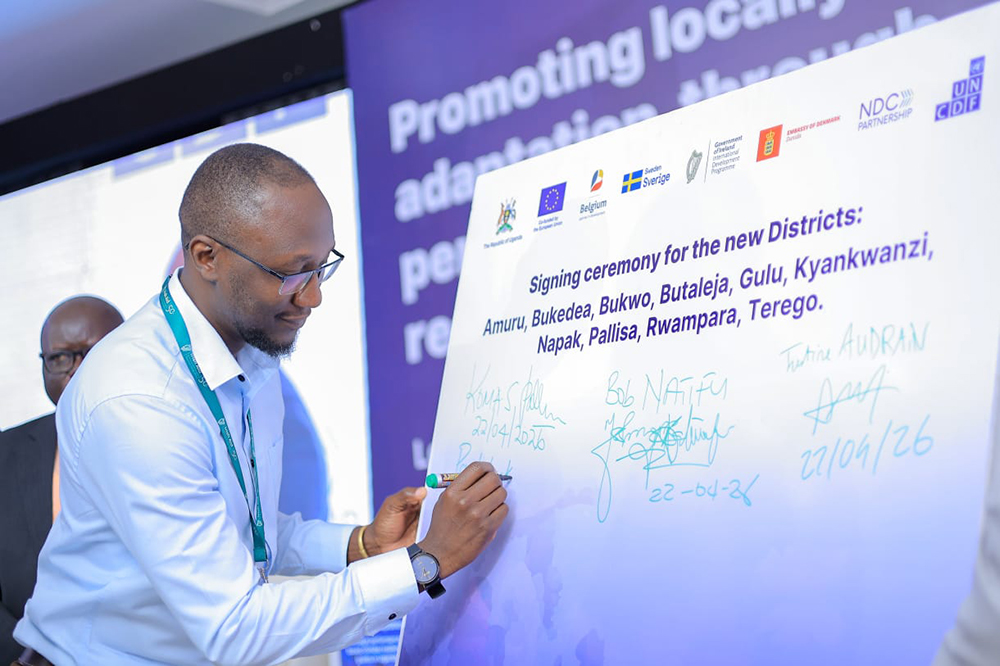
Speaking at a four-day financing workshop for locally led adaptation held at Hotel Africana in Moroto on April 22, 2026, Paul Opiyo Lukwiya, the social protection and climate change advisor at the Irish Embassy, outlined Ireland's strategy with clarity.
A similar session was held in Gulu on Thursday, April 30, 2026, covering the districts in the Acholi sub-region.
"Adaptation is most effective when locally driven, evidence-based, and embedded in government systems," Lukwiya said.
The Irish Embassy's action plan, he explained, is deliberately shifting away from isolated project-based support toward integrating climate adaptation into planning, budgeting, and service delivery at the district level, embedding resilience into the machinery of government itself.
"LoCAL is not only financing adaptation, but also strengthening governance, accountability, and institutional capacity," he stressed.