
Partners call for recognition of urban refugees in Arua
Currently, the Ugandan Refugee Act of 2006, the UN refugee agency (UNHCR) and the Office of the Prime Minister (OPM) only recognise self-settled refugees in Uganda’s capital, Kampala, as urban refugees.
Participants of the Town Hall meeting organised under the SUIDAC project. (Courtesy)
______________
Fred Bada, a local government specialist at VNG International in Uganda, recommends urgent policy review to appropriately respond to the crisis caused by urban refugees in regional cities across the country.
According to him, the ages-old refugee management approach, which has been settlement-based, should be disbanded, and a quick solution should be adopted by recognising self-settled refugees in regional cities such as Arua as urban refugees in order to address the challenges brought about by the presence of the refugees in these cities.
Currently, the Ugandan Refugee Act of 2006, the UN refugee agency (UNHCR) and the Office of the Prime Minister (OPM) only recognise self-settled refugees in Uganda’s capital, Kampala, as urban refugees.
But Bada said when UNHCR changed the policy of providing cash for food, due to donor fatigue and other factors, it only became natural that refugees in most settlements in the West Nile sub-region and other settlements began to move to urban centres in search of more opportunities for survival.
Consequently, the refugee migration and displacement in the region to urban centres exerted pressure on social services.
Bada was speaking as a panellist during a town hall engagement for civil society, the media, and refugee community leaders on the Sustainable Urban Integration of Displacement Affected Communities (SUIDAC) project at the Heritage Courts Hotel in Arua City on Tuesday (April 21).
To address the progressive refugee crisis in the region, ACAV, as a technical implementing partner of UNOPS/Cities Alliance, received $1,077,495 (sh3,8788,982,000) under the SUIDAC project funded by the European Union for the period 2024 to 2028.
The goal of the project is to enhance the sustainable urban integration of displacement-affected communities (DACs) in Arua City.
“The refugee migration and displacement programming had been a new thing in urban management. It came in shortly after the National Planning Authority (NPA) had drafted the National Development Plan (NDP3), where refugee issues had been captured as cross-cutting issues with little prioritisation of integration of the urban refugees in the development process,” said Bada.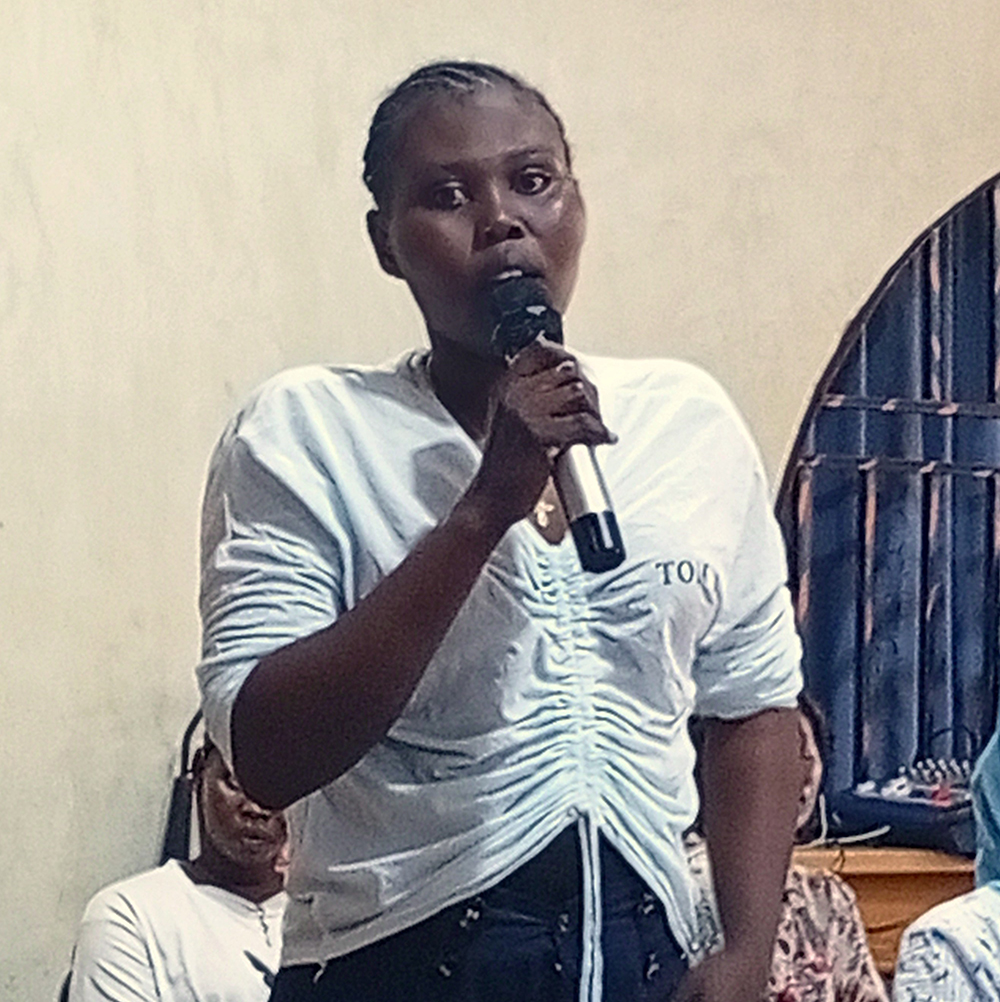
A South Sudanese refugee speaks to the issue of language barriers.
Success stories
With support from VNG, Arua City has conducted a census to ascertain the exact number of urban refugees in the city, who are now slightly over 23,000 as of the last census conducted in 2023.
Bada hailed the leadership of Arua City for opening up space for the partners’ coordination meetings to address the issues of integration of refugees in West Nile’s urban centres, in which the refugees live.
He said the data on the urban refugee population in Arua City has opened up more opportunities for development partners to write financeable proposals to improve on the intervention efforts that target urban refugees in Arua City.
“We have seen targeted invitations for refugee populations to attend council meetings, community barazas, involvement of refugees in schools, health unit management and in monitoring and evaluation of social services delivery. I appeal to you, the partners, to share information with ease and for the establishment of structures for the effective flow of information that seeks to address the plight of refugees in the city,” Bada said.
The Arua City Clerk in charge of Ayivu division, Geoffrey Mugamba, said the African Union (AU) recognises urban refugees’ integration as a critical intervention area that requires sustained efforts for policy review for sustainable living of the urban refugees.
The focal person of the SUIDAC project in Arua City, Denis Asiku, revealed that the project prioritises infrastructure development and other social services opportunities to bolster integration of the urban refugees in Arua City.
While presenting the project scope and progress report during the town hall meeting, Asiku said some of the flagship projects under the SUIDAC in Arua City include; the construction of satellite market shades and stalls, construction of one five-stance VIP latrine at the new satellite market shades, capacity building training for 10 trade associations and market vendors, supporting vocational education and skills training for vulnerable and disadvantaged youths, and training 150 groups on resilient urban farming, extension services provision among others.
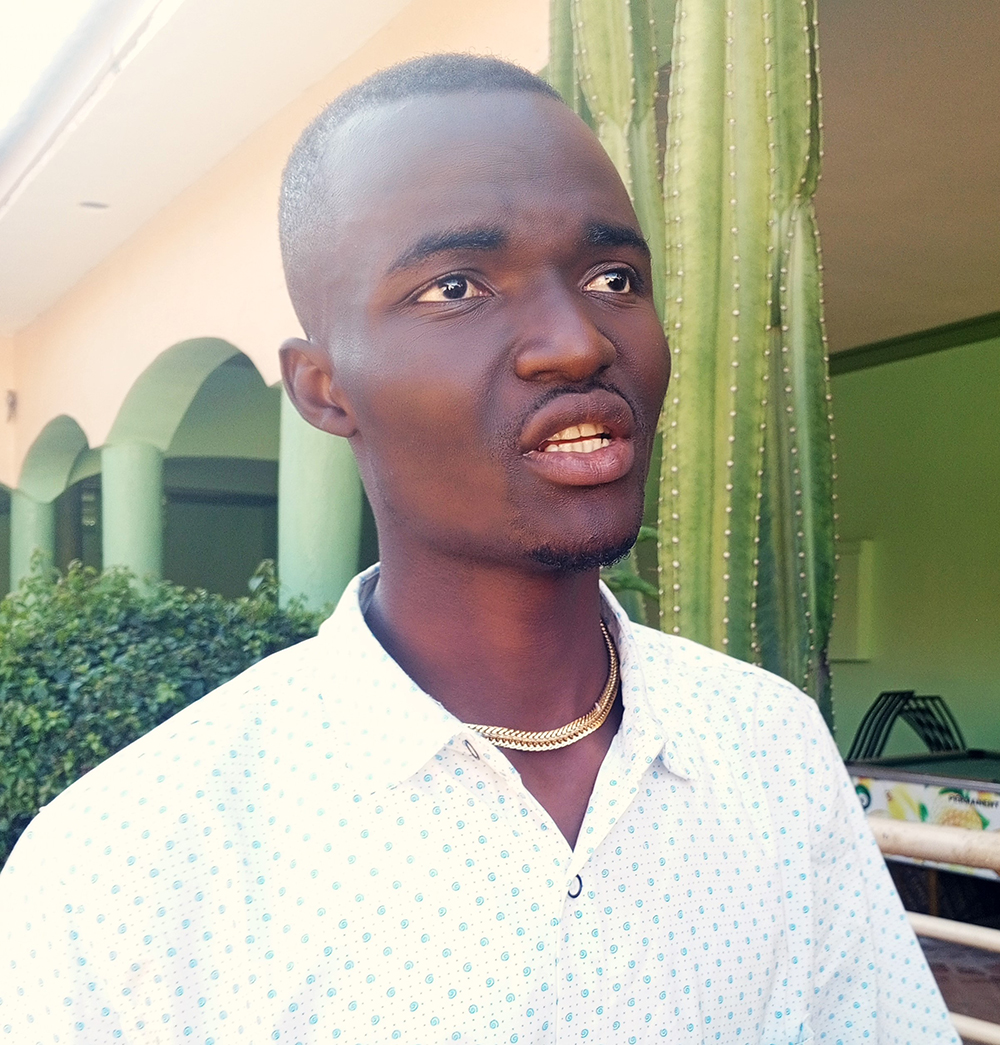
David Oscar, a Congolese refugee.
David Oscar, a Congolese refugee who has lived in Uganda for more than six years, implored partners in the refugees’ interventions to address the issue of disparities in school fees between nationals (Ugandans) and refugees.
“Refugees in the school I study in are currently paying sh65400,000 per term as opposed to sh400,000 paid by nationals per term. This is affecting refugees who are interested in furthering their education to live a sustainable life,” he said.
Earlier on, the parish priest of Christ the King Parish in Arua City, Rev. Fr. Pius Yobuta, deplored the discrimination in school fees payment against refugees in Uganda.
In a bid to harness integration efforts and to demonstrate humanity and compassion for the refugees, Yobuta, who is also the chairperson of the Board of Governors at Christ the King Primary School in Arua City, said he has directed for uniform payment of school fees between refugees and the nationals.
National policy lens
Moses Akuma Odims, the executive director of West Nile Development Association (WENDA), the regional arm of the local governments’ association in the West Nile region, emphasised that it is now old-fashioned to look at refugees as a burden.
"We should look at the refugees as our own brothers because refugees from the neighbouring South Sudan and DR Congo share a cultural affinity and closeness with many communities in West Nile. It is prudent that we drive our compassion and love to the refugees in the region because many of us were once refugees in DR Congo and South Sudan,” said Akuma.
He said WENDA is engaging different players in the refugees’ response to make a case for both recognition of the urban refugees in West Nile’s urban centres and the provision of more resources to address the crisis brought about by the refugees in the urban centres.
He has appealed for inclusive planning in the refugee response and hailed VNG for supporting documentation of urban refugees in Arua City to influence an effective response to the needs of the urban refugees.
Akuma said the government is considering the review of the Refugee Act of 2006, adding that WENDA, in consonance with VNG, drafted an issue paper which has already been responded to by key players during the district’s engagement forum in the refugees’ response.
He said the office of the Prime Minister (OPM) has been tasked with fast-tracking the approval of the National Refugee Policy at the Cabinet level, with the recognition of urban refugees clearly articulated, and the approval of the national localisation strategy by the Comprehensive Refugee Response Framework (CRRF) Uganda, whose implementation is hoped to empower local entities involved in the refugee response, among others.
“Government will provide affirmative action on the wage bill and supplementary conditional grant to refugee-hosting districts of Sh3 billion towards improvement of services in health, education and other sectors," said Akuma.
Patrick Bongo, a representative of the Cities Alliance, congratulated ACAV and Arua City for fully commencing the implementation of the SUIDAC project, saying the project is hoped to address development gaps in the city.
He thanked the government for creating an enabling environment through the open-door refugee policy to host refugees, which subsequently led to the design of the SUIDAC project to improve the lives of the refugees and host communities in the beneficiary cities.
Closing the town hall meeting, the Assistant Resident City Commissioner in charge of Ayivu division in Arua City, Polly Ongom, urged the refugee leaders to sensitise refugees living in Uganda to live in harmony and respect the Ugandan laws and institutions.
He condemned acts of violence in Arua City recently, pitting the Nuer and Dinka ethnic groups, and the cold-blooded murder of some Ugandans in the neighbouring DR Congo for allegedly indulging in theft.
“We don’t condone theft but condemn it. However, if someone is caught committing a crime, let the suspect be handed over to the police and other security agencies so that the culprits are prosecuted in Courts of Law."
The West Nile region in Uganda hosts a high-concentration refugee population. The region hosts over 950,000 refugees, representing approximately 59 percent of Uganda's total refugee population.
Mostly originating from South Sudan and the DRC, these refugees are settled across several districts, placing significant pressure on resources and infrastructure.
As of April 2026, Uganda's total refugee population has surpassed two million, with the West Nile region being a primary host for those fleeing conflict in South Sudan and the DRC.