
Deputy Chief Justice urges judicial officers to uphold human rights
Kawumi argued that every case, whether it is criminal, civil, family, land or labour-related, affects human rights, liberties, property or reputation.
Deputy Chief Justice Hon. Justice Moses Kazibwe Kawumi (3rd right, front row) in a group photo with other participants at the opening of the two-day capacity-building training on human rights protection for High Court judges and Magistrates at the Court of Appeal boardroom in Kampala on Wednesday, June 10, 2026. (Credit: Mpalanyi Ssentongo)
__________________
The Deputy Chief Justice, Moses Kazibwe Kawumi, has urged judicial officers to exercise judicial powers within a framework rooted in human dignity, equality, freedom and justice.
Kawumi argued that every case, whether it is criminal, civil, family, land or labour-related, affects human rights, liberties, property or reputation.
He urged the judicial officers to ensure that the decisions they make strengthen the rule of law and reinforce dignity for all, instead of focusing merely on resolving disputes.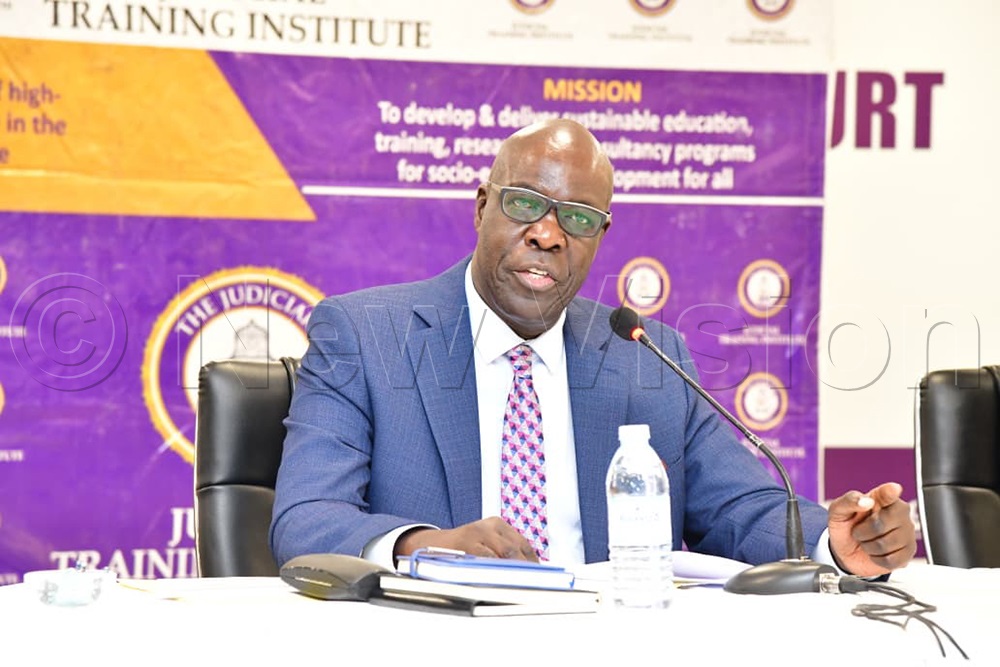
Deputy Chief Justice Hon. Justice Moses Kazibwe Kawumi. (Credit: Mpalanyi Ssentongo)
Using an example of unjust evictions, which he said harm families’ shelter and dignity, Kawumi said observing human rights is central to the judiciary’s constitutional mandate and justice administration.
Kawumi made the call at the opening of the two-day capacity-building training on human rights protection for High Court judges and Magistrates at the Court of Appeal boardroom in Kampala today (June 10, 2026).
“Courts are vital for human rights enforcement within Uganda's constitution, providing a strong basis for the human rights-based approach,” Kawumi noted.
“This obligation transcends mere judgments; rulings must restore or uphold human dignity, thereby reflecting both legal standards and humane considerations,” Kawumi said.
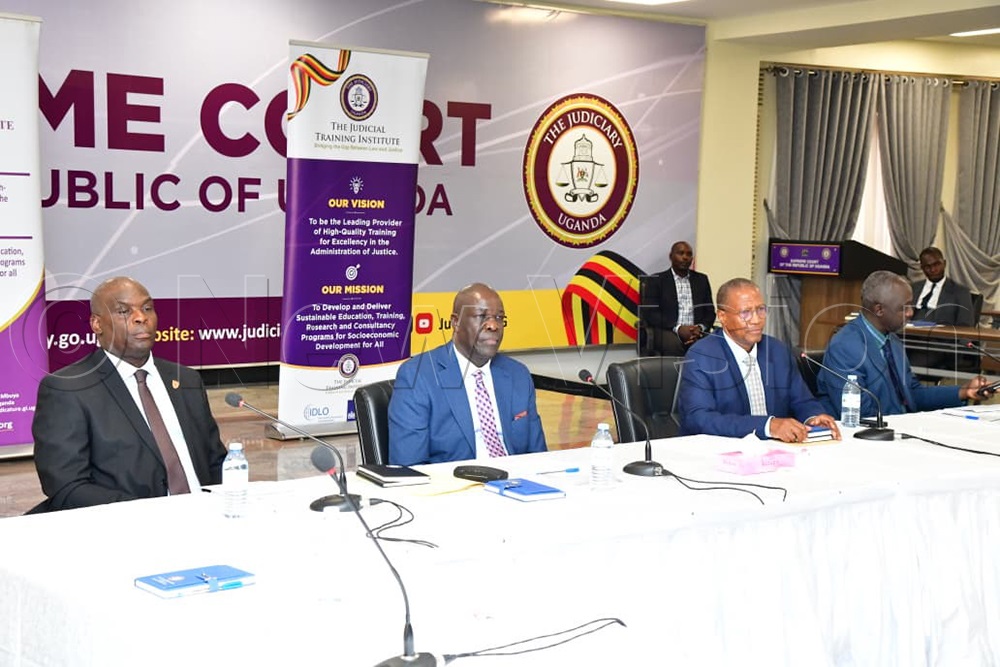
L-R: Justice Mike Chibita, Deputy Chief Justice, Moses Kazibwe Kawumi, former Deputy Chief Justice Richard Buteera, High Court judge Prof. Andrew Khaukha. (Credit: Mpalanyi Ssentongo)
In criminal proceedings, particularly those concerning sexual and gender based violence, Kawumi said courts serve as ultimate recourse for survivors, and thus judicial officers must operate within a framework that guarantees safety, fairness and respect.
“An approach rooted in sensitivity and rights-based principles is indispensable,” the deputy chief justice noted.
High Court judge Prof. Andrew Khaukha, who is also the executive director of the Judicial Training Institute, said the training is aimed at ensuring that judicial officers not only resolve disputes but also uphold human rights.