
Cultural leaders warn troupes against distorting Acholi traditional dance
Martin Okumu, the Deputy Prime Minister of Ker Kwaro Acholi, said the institution had observed individuals and dance groups performing traditional Acholi dances in ways that do not reflect the community's cultural identity and customs
Okumu emphasised that traditional Acholi dances have distinct movements for men and women, with each gender having its own dancing styles and traditional attire. (Credit: Christopher Nyeko)
GULU - The Acholi cultural institution has warned dance troupes in the region against altering traditional Acholi dances, insisting that cultural performances must retain their authentic form.
Martin Okumu, the Deputy Prime Minister of Ker Kwaro Acholi, said the institution had observed individuals and dance groups performing traditional Acholi dances in ways that do not reflect the community's cultural identity and customs
Okumu emphasised that traditional Acholi dances have distinct movements for men and women, with each gender having its own dancing styles and traditional attire
However, he expressed concern over what he described as the increasing tendency among some male dancers to adopt women's dancing styles, while some female dancers imitate the movements traditionally performed by men.
He warned that such practices risk distorting the cultural identity of the Acholi people, urging both men and women to respect and preserve their respective traditional dancing styles.
He explained that during the performance, some female dancers picked up the smaller drum, which is traditionally played by men accompanying the main drum. Adding insult to injury, the women then joined the male dancers and imitated their movements.
The cultural leader said such practices should be condemned and discouraged, stressing that every traditional dance has specific roles and movements that must be respected.
According to Okumu, traditional Acholi dances often carry cultural messages in which women use their movements to attract men, while men showcase their masculinity and physical abilities to attract women.
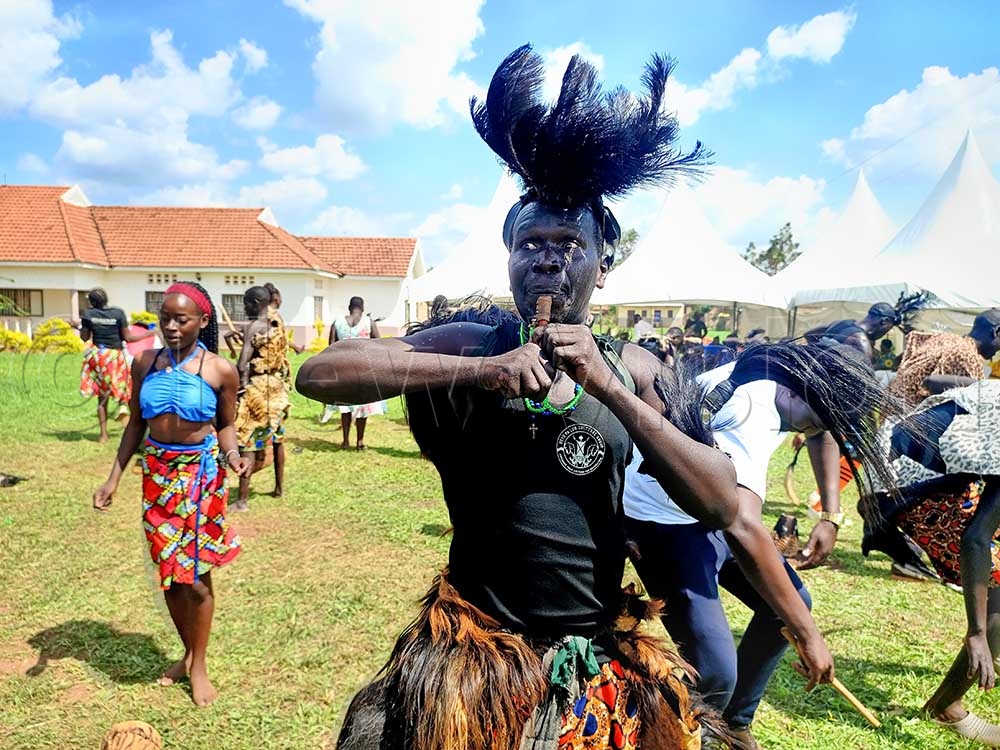
Okumu urged dance groups intending to participate in the festival, particularly those performing Otole, to acquire authentic cultural items, including traditional shields made from animal skin and spears. (Credit: Christopher Nyeko)
Regarding musical instruments, Okumu said men are traditionally responsible for playing the large drums used in dances such as Larakaraka and Otole, as well as playing the calabash.
He expressed concern that some female dancers have increasingly taken over these traditional roles, warning that cultural practices should not be altered without regard for their significance.
Okumu said Ker Kwaro Acholi would enforce strict cultural standards during the forthcoming Acholi Cultural Festival scheduled to take place in Pader District from December 12 to 14
He said the institution would not allow dance troupes to present performances that distort traditional Acholi dances and would also scrutinise the authenticity of their traditional dancing attire and accessories
Okumu urged dance groups intending to participate in the festival, particularly those performing Otole, to acquire authentic cultural items, including traditional shields and spears.
He acknowledged, however, that obtaining some traditional materials, including animal skins, horns and headgear known as Kono, had become increasingly difficult.