
News
Balaam grills Amolatar leaders over school enrolment discrepancies
During a heated exchange with district officials on November 23, 2026, Barugahara questioned deputy resident district commissioner (RDC) Obonyo Magwar and chief administrative officer (CAO) Rhoda Oroma over alleged ghost pupils, teachers and public servants.
Balaam grills Amolatar leaders over school enrolment discrepancies
By: Hudson Apunyo, Journalist @New Vision
_______________
Local government minister Balaam Barugahara Ateenyi has challenged Amolatar district officials to account for discrepancies in school enrolment figures, alleged weaknesses in public service delivery and the management of government programmes as he launched the Expose the Corrupt campaign in the Lango sub-region.
During a heated exchange with district officials on November 23, 2026, Barugahara questioned deputy resident district commissioner (RDC) Obonyo Magwar and chief administrative officer (CAO) Rhoda Oroma over alleged ghost pupils, teachers and public servants.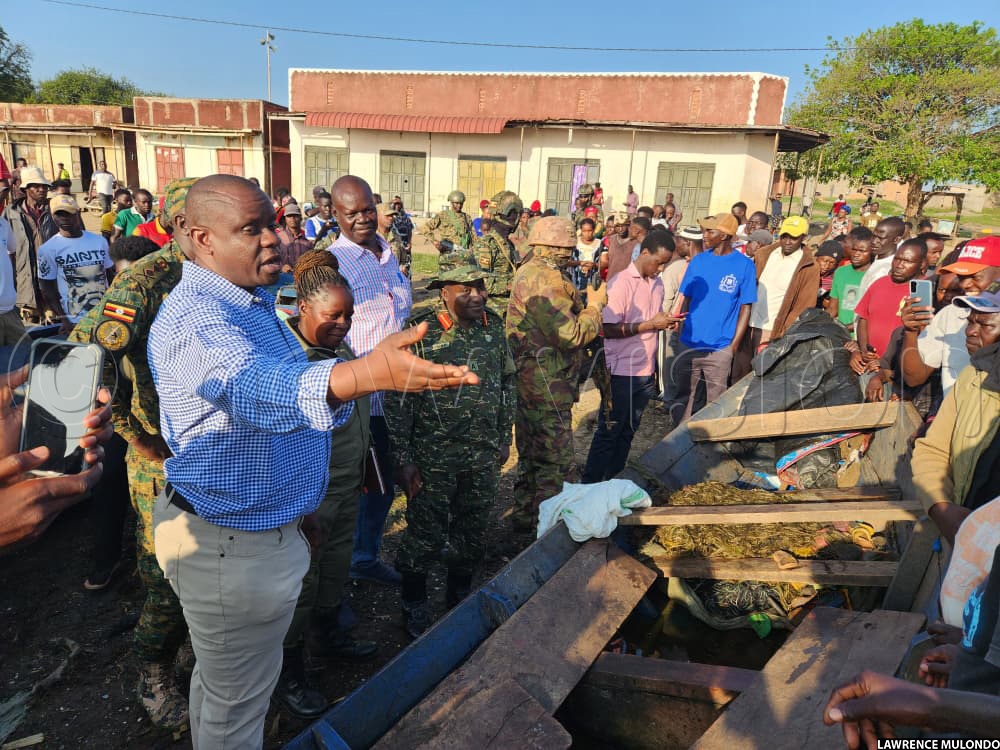
The minister, who arrived in Amolatar aboard the newly introduced ferry connecting Nakasongola to Amolatar, also raised concerns about the poor road network linking the district to other parts of the country.
He said the new ferry, introduced through President Yoweri Museveni's intervention, had significantly shortened the journey from Kampala to Amolatar, but the road connecting Nakasongola to the ferry landing site remained in a deplorable condition.
"I want to thank the President for putting in place a new and bigger ferry connecting Nakasongola to Amolatar. The only challenge has been the road from Nakasongola to the ferry. It is impassable and very bad," Barugahara said.
He added that he had spoken to the works and transport minister and requested urgent intervention to improve the road through better drainage and murram as the government works towards upgrading it to a tarmac road.
Barugahara said travelling via the ferry route had reduced the journey from Kampala to Amolatar to less than three hours, compared with the four to five hours spent travelling through Lira, Dokolo and Karuma.
The minister said his visit marked the beginning of a monitoring exercise across the Lango sub-region aimed at exposing corruption, strengthening accountability and ensuring that government programmes benefit their intended beneficiaries.
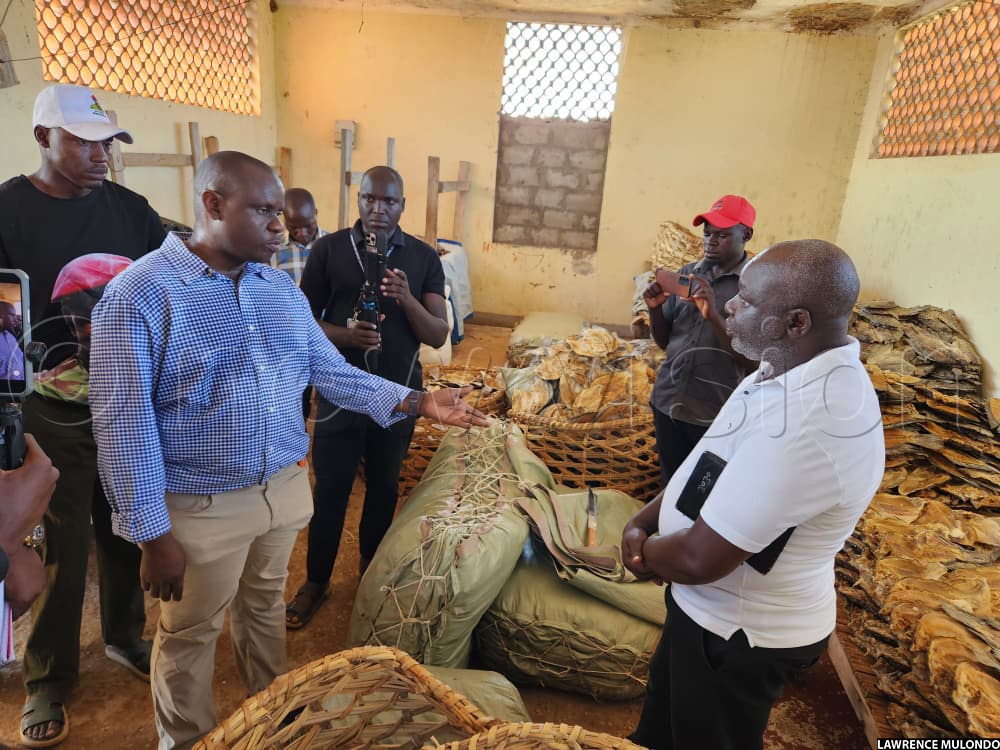
He appealed to residents to report suspected corruption, particularly in the Parish Development Model (PDM), cattle restocking, public service recruitment and the management of government resources.
"Let the people of Lango speak out. Let them expose corruption so that I can take action. One family takes 20 cows while another family has none. We are going to work on this," he said.
Deputy RDC grilled over ghost workers
The minister turned his attention to district leadership when he asked deputy RDC Magwar about the alleged existence of ghost workers and other irregularities in government programmes.
Magwar, who said he was representing RDC Francis Rwotlonyo, told the minister that he had been working with security agencies to address cattle theft, motorcycle theft and irregularities in the implementation of PDM and cattle restocking programmes.
He said security agencies had supported efforts to bring about 19 to 20 cases related to cattle theft before the police.
Magwar also reported that the district faced challenges with prison security, including inadequate fencing and security lighting, which had contributed to incidents of prisoners escaping.
He said the district was also experiencing inadequate police deployment, with some sub-counties having fewer officers than the numbers allocated by the President.
According to Magwar, the staffing gaps affected security operations at landing sites, enforcement of fisheries regulations and efforts to control illegal sand mining and protect the lake ecosystem.
He further told the minister that he had mobilised farmers to embrace high-value crops, particularly coffee, adding that 56 farmers were already harvesting the crop.
However, when Barugahara asked him whether he knew the number of ghost workers in the district, Magwar said the information was held by the RDC.
The minister questioned why the deputy RDC did not have access to such information, including details about ghost teachers and pupils.
Magwar responded that he had not been briefed on the figures, although he was aware of government programmes such as PDM, smart agriculture and cattle restocking.
CAO admits discrepancies in school figures
The minister subsequently questioned CAO Oroma about ghost workers and irregularities in the education sector.
Oroma initially maintained that the introduction of the Integrated Human Resource Management system (ACM), as referred to during the meeting, had helped eliminate ghost workers, adding that cases involving suspected irregularities had been handled.
However, Barugahara disclosed significant discrepancies between the enrolment figures recorded in some schools and the actual numbers of learners found during verification.
He cited Acengryeng Primary School in Aputi subcounty, where school records indicated 223 pupils in Primary Four, yet only 82 were physically present.
In Primary Seven, the school had reportedly declared 45 pupils, but only 16 were found during the verification exercise.
Magwar also reported that the district faced challenges with prison security, including inadequate fencing and security lighting, which had contributed to incidents of prisoners escaping.
He said the district was also experiencing inadequate police deployment, with some sub-counties having fewer officers than the numbers allocated by the President.
According to Magwar, the staffing gaps affected security operations at landing sites, enforcement of fisheries regulations and efforts to control illegal sand mining and protect the lake ecosystem.
He further told the minister that he had mobilised farmers to embrace high-value crops, particularly coffee, adding that 56 farmers were already harvesting the crop.
However, when Barugahara asked him whether he knew the number of ghost workers in the district, Magwar said the information was held by the RDC.
The minister questioned why the deputy RDC did not have access to such information, including details about ghost teachers and pupils.
Magwar responded that he had not been briefed on the figures, although he was aware of government programmes such as PDM, smart agriculture and cattle restocking.
CAO admits discrepancies in school figures
The minister subsequently questioned CAO Oroma about ghost workers and irregularities in the education sector.
Oroma initially maintained that the introduction of the Integrated Human Resource Management system (ACM), as referred to during the meeting, had helped eliminate ghost workers, adding that cases involving suspected irregularities had been handled.
However, Barugahara disclosed significant discrepancies between the enrolment figures recorded in some schools and the actual numbers of learners found during verification.
He cited Acengryeng Primary School in Aputi subcounty, where school records indicated 223 pupils in Primary Four, yet only 82 were physically present.
In Primary Seven, the school had reportedly declared 45 pupils, but only 16 were found during the verification exercise.
At Amolatar Primary School, Barugahara said the school had declared 542 pupils in Primary Six, whereas the actual headcount established that only 160 were present.
In Primary Four, the school had reported 208 pupils against an actual count of 173, while Primary Five had 223 pupils on record against an actual count of 198.
The figures prompted Barugahara to challenge the CAO's earlier assertion that there were no ghost pupils in the district.
He pressed her to explain the discrepancies and establish the total number of learners who could not be accounted for.
Oroma referred the minister to the district education officer for a consolidated figure.
The minister's questioning highlighted the need for further verification of school enrolment records and closer monitoring of government-funded education programmes.
Flooding, poor roads compound service delivery challenges
The minister's visit comes at a time when Amolatar is grappling with serious nfrastructure and service delivery challenges, particularly rising water levels in Lakes Kyoga and Kwania, which have displaced families, submerged farmland and disrupted access to essential services.
Thousands of residents of Amolatar have been affected by prolonged flooding, with local leaders appealing to the government for emergency relief, resettlement and compensation.
The flooding has particularly affected Muchora parish, where submerged roads have isolated eight villages and more than 3,000 households, making access to health facilities, schools and markets difficult.
The situation has also attracted the attention of Parliament's Committee on Physical Infrastructure. During an inspection of roads in Amolatar and neighbouring districts on November 14, 2026, MPs raised concerns about flooded and impassable roads, calling for improved drainage and rehabilitation.
The legislators warned that poor road conditions were disrupting transportation, economic activities and access to essential services.
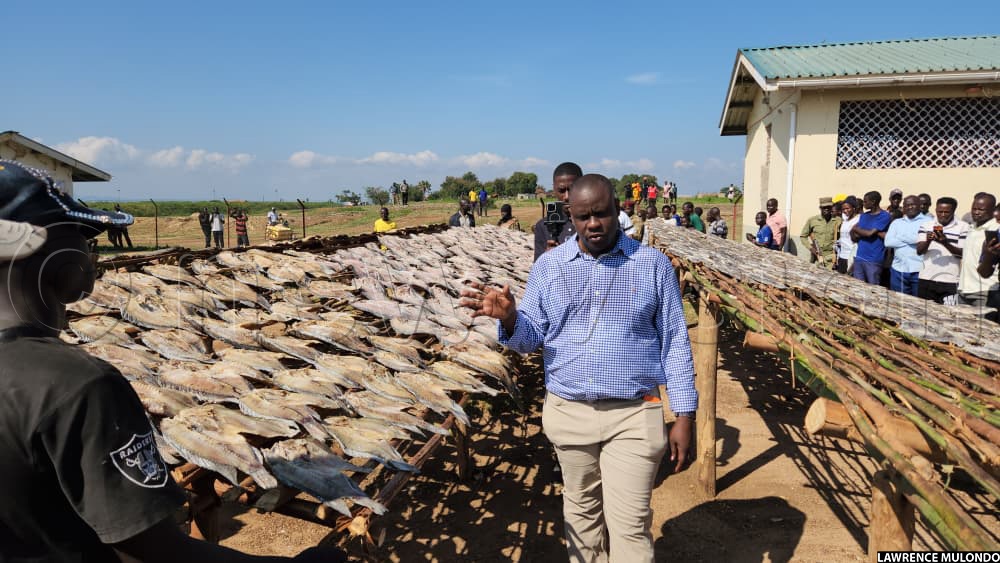
Amolatar's fishing communities are also facing economic difficulties following declining fish stocks in Lake Kyoga, coupled with rising fuel costs and concerns over the enforcement of fisheries regulations.
Fishermen at Namasale landing site, one of the district's major fish trading centres, had reported declining catches and reduced household incomes.
The anti-corruption campaign in Lango follows similar exercises in other parts of the country, including Ankole, where the minister reported irregularities involving public funds, recruitment of unqualified teachers and alleged ghost pupils.
In a November 18 parliamentary debate, Barugahara reported that the nationwide campaign had resulted in the interdiction of 773 officials, with 22 cases pending trial. MPs, however, urged the government to ensure that investigations lead to prosecution, recovery of public funds and improved service delivery.
The minister's Lango tour is scheduled to cover Amolatar, Dokolo, Lira, Apac, Alebtong, Otuke, Kwania and Lira city, with further monitoring activities planned in the sub-region.