
CJ Zeija says mandatory private mediation will reduce case backlog
Zeija said the judiciary has embarked on a campaign of empowering strong cultural and religious institutions to serve as mediators in their respective communities.
Dr Flavian Zeija, Chief Justice of Uganda. (Credit: Mpalanyi Ssentongo)
_________________
Chief Justice Dr Flavian Zeija wants litigants compelled to first explore private mediation in all civil disputes before being allowed to file their cases in the courts for adjudication.
This, he argues, will not only create harmony in society but will also reduce case backlog in the Judiciary.
Currently, the Judiciary is battling with over 167,353 cases, of which over 40,000 cases are categorised as backlog.
Citing South Africa, where he said before filing a case in court, one has to prove that they tried mediation and it failed, Zeija says it is high time to take a leaf out of their book.
“In South Africa, you have to come with evidence that you tried mediation either before a bishop, if it is a family dispute or any other person, and it failed. I believe it is high time for us to think about it to overcome this monster of case backlog,” Zeija said.
Zeija made the proposal at the opening of the week-long Gumzo La Alternative Dispute Resolution (ADR) conference at Mestil hotel in Kampala today, March 9, 2026.
Adversarial dispute resolution mechanisms
“Courts have attempted to rely on adversarial dispute resolution mechanisms, but the case backlog continues to grow. So, ADR has been identified as an effective strategy for managing caseload and reducing case backlog,” Zeija noted.
Under Gumzo La ADR, the stakeholders across Africa seek to establish a distinctive regional-led platform to strengthen dispute resolution practice, regional integration in addition to positioning Africa as a credible, reliable and globally competitive hub for ADR.
Drawing from several decided cases in the United Kingdom, Zeija debunked claims that mandatory ADR is a violation of human rights.
“In the UK, mediation referral was at first looked at as a violation of human rights, but the UK Court of Appeal has since departed from this position, noting that where mediation fails, the parties can approach the court. So, you can see that the resistance has not been only here in Africa generally, but it is now the way for us to go,” Zeija said.
Zeija said the justice ministry must encourage private mediation because there must be so many mediation centres in order for his proposal to succeed.
“I know former Chief Justices Bart Katureebe and Alfonse Owiny-Dollo have established mediation centres, but we need to have many of these for us to succeed,” Zeija said.
Zeija said mediation councils have to be established, like in the UK, to promote mediation.
“For example, in the UK, a family dispute only comes to court for orders of dissolution and other aspects of the case are resolved by the mediators,” Zeija said.
Underscoring the importance of mediation, Zeija said it is the only way to overcome the case backlog.
“We cannot hide our heads in the sand and think that we shall resolve the problem of case backlog without looking at mediation, arbitration and all other ADR mechanisms as we know them,” Zeija said.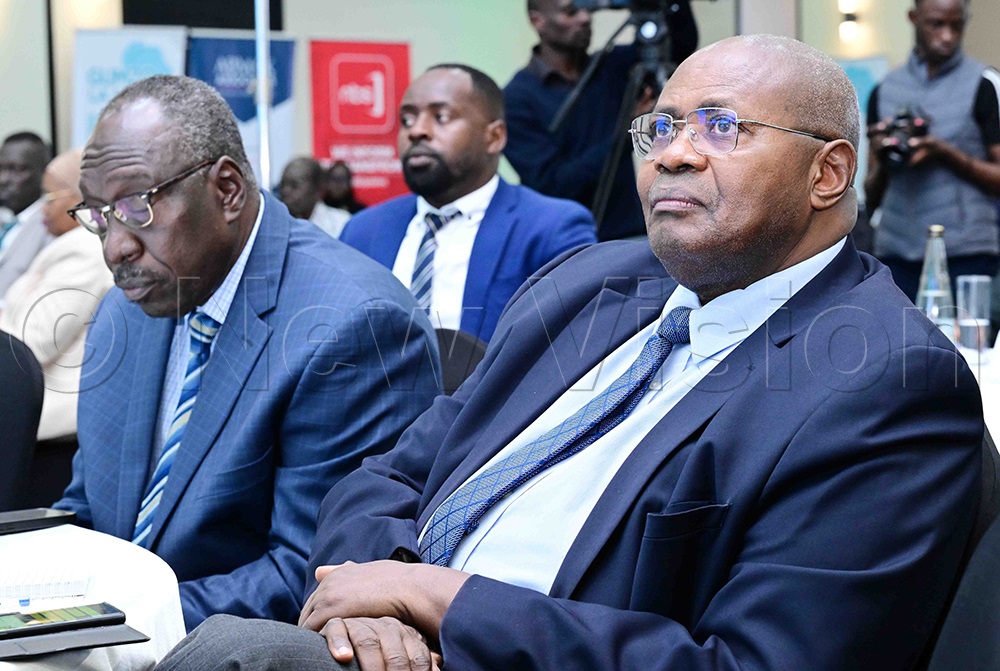
Former Solicitor General Francis Atoke (left) and the principal Judge emeritus, Yorokamu Bamwine (right), attending GUMZO LA ADR conference at Mestil hotel and residences in Kampala on Monday, March 9, 2026. (Photo by Mpalanyi Ssentongo)
Strong cultural and religious institutions
To promote mediation, Zeija said the judiciary has embarked on a campaign of empowering strong cultural and religious institutions to serve as mediators in their respective communities.
“For example, in the Acholi region, there are cases that arose as a result of people being in camps following the Lord’s Resistance Army (LRA) insurgency. But don’t you think that the cultural leaders are best suited to handle these disputes rather than the courts? This is what we are doing to reduce backlog,” Zeija said.
Zeija also underscored the need to ratify the Singapore Convention on the enforcement of mediation settlements, the New York Convention, among others, to provide a solid legal background for mediation in the country.
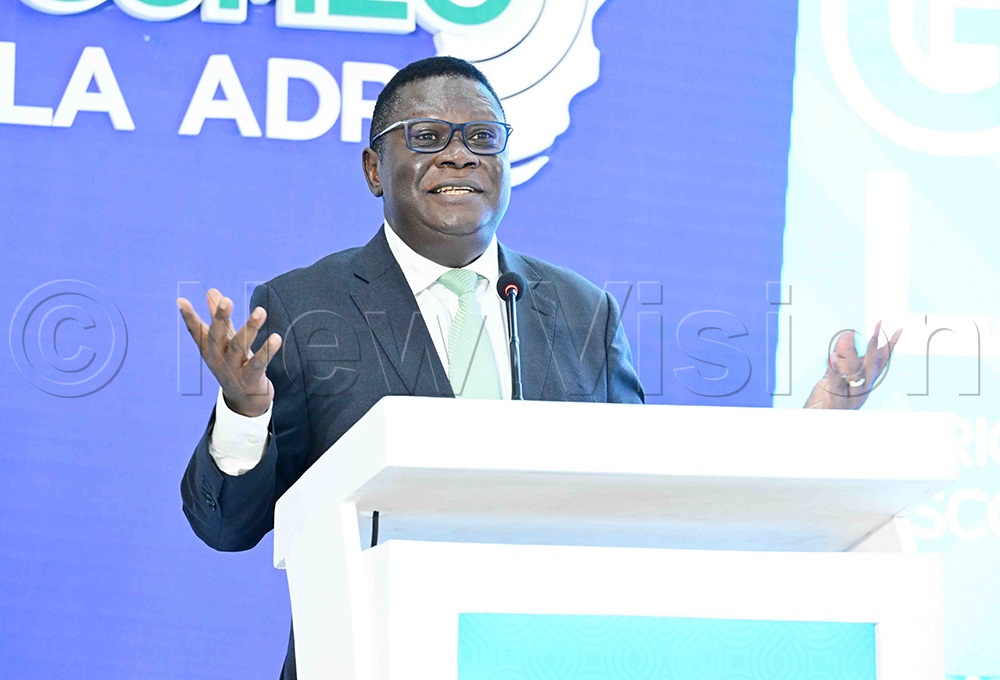
Hon. Norbert Mao, Minister for Justice and Constitutional Affairs. (Credit: Mpalanyi Ssentongo)
Justice minister Nobert Mao underscored the importance of embracing ADR mechanisms in resolving disputes, noting that it is not only efficient but also cost-effective.
“I believe all disputes can be resolved through mediation, including political ones. Therefore, I encourage everybody to embrace it,” Mao said.
While some lawyers are scared of mediation, Mao said they can also make money out of it.
Francis Gimara, the head ALP dispute settlement hub, said the conference was aimed at repositioning ADR as the preferred dispute resolution mechanism on the continent.
Speaking remotely, East African Court of Justice (EACJ) president Nesta Kayobera thanked the organisers of the conference, noting that advancing ADR will broaden regional integration.